
The Difference Between Backhoe Loader and Excavator
When people search for backhoe loader vs excavator, they are usually not looking for a boring machine dictionary. They want a clear answer: which machine should I use for my job site? Both machines can dig, lift and move soil, but they do these jobs in very different ways.
A backhoe loader is like a busy worker with tools in both hands. It has a front loader bucket and a rear digging arm, so it can load, dig, backfill and move around the site. An excavator is more like a focused digging expert. It is built for stronger digging power, better reach, smoother rotation and more stable earthmoving work.
That is why the difference between backhoe loader and excavator matters. If you choose the wrong machine, the job may still get done, but it may take longer, cost more fuel and make the operator quietly question your life choices.
Backhoe Loader and Excavator Comparison
A simple backhoe loader and excavator comparison starts with the machine structure. A backhoe loader is built on a tractor-style chassis. It usually has wheels, a front bucket and a rear articulated arm. When the rear arm is used for digging, the operator often lowers the stabiliser legs to keep the machine steady.
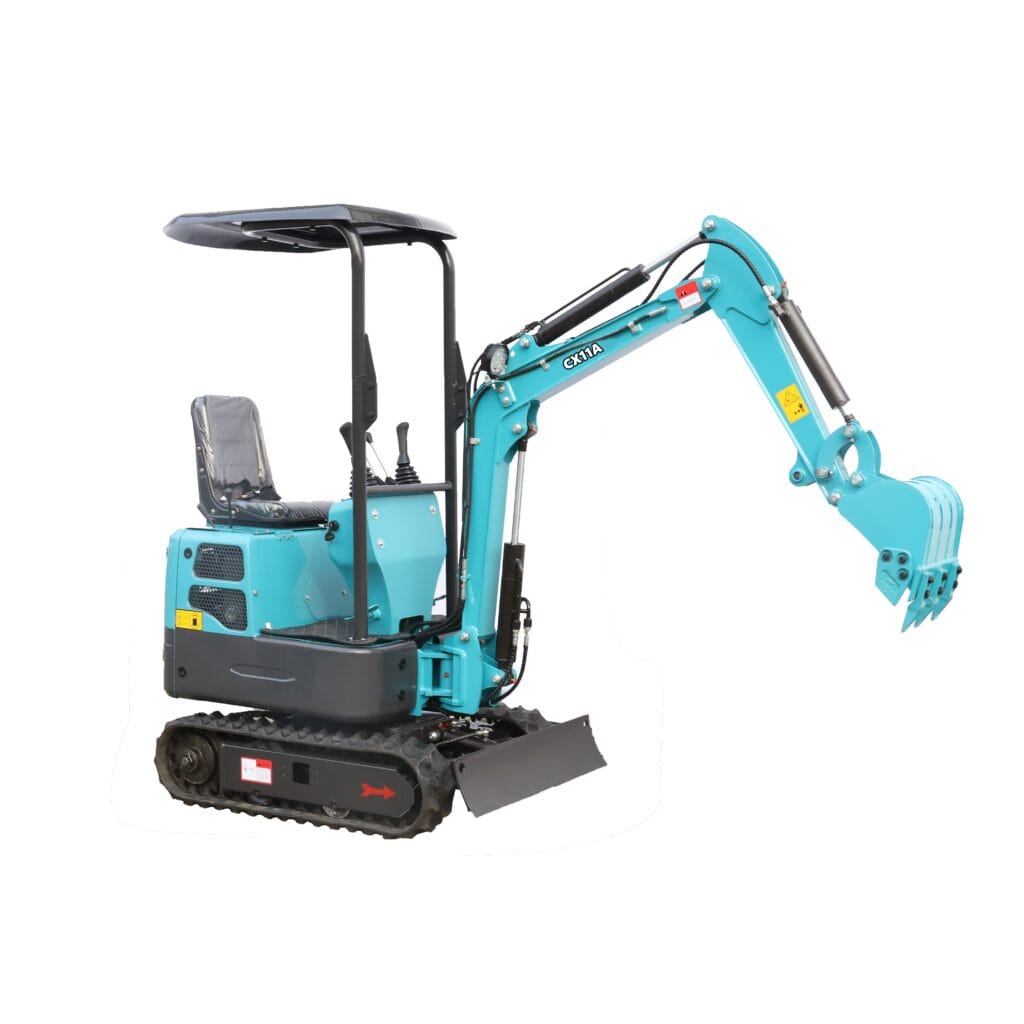
An excavator has a different layout. Its upper body sits on a tracked or wheeled undercarriage, and the boom, arm and bucket work from a rotating platform. This gives the excavator a much wider rotation range. In many cases, the operator can dig, swing and dump material without moving the whole machine.
So the basic rule is simple. A backhoe loader is useful when the job needs digging, loading and frequent movement. An excavator is better when the job needs deeper digging, stronger hydraulic power, better stability and cleaner working control.
What Is a Backhoe Loader?
A backhoe loader is a multi-purpose piece of construction equipment. The front bucket can carry soil, gravel, sand or site debris. The rear digging arm can open trenches, dig small foundations and handle light earthmoving work.
Common backhoe loader uses include road repair, farm work, pipe installation, utility trenching, site cleaning and small construction jobs. It can move around on paved surfaces more easily than many tracked machines, which makes it practical for jobs spread across different areas.
However, this flexibility has limits. A backhoe loader can do many things, but it is not always the strongest choice for one heavy digging task. Its rear arm has a limited working range, and the machine often needs stabiliser legs before digging. This takes time, especially when the operator needs to move again and again.
In short, a backhoe loader is a good “all-round helper”. It is not always the champion digger, but it is very useful when the job site keeps changing its mind.
What Is an Excavator?
An excavator is a digging-focused machine. It uses a boom, arm and bucket system mounted on a rotating upper structure. This design gives the operator strong control when digging, lifting, grading or placing material.
Common excavator uses in construction include foundation digging, trenching, demolition work, slope trimming, landscaping, drainage work and underground utility projects. Larger excavators are used for heavy earthmoving machinery tasks, while mini excavators are popular for small scale projects and tight access work.
The biggest strength of an excavator is efficiency. The machine can rotate smoothly, so the operator does not need to keep moving the whole chassis. This saves time and gives better control, especially when loading soil into a truck or working beside walls, fences or buildings.
That is why many contractors compare Backhoe vs Excavator before buying or renting. The right answer depends less on the machine name and more on the real job.
Digging Depth and Digging Power
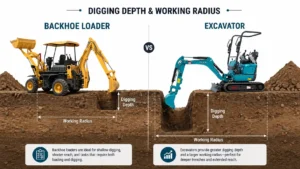
Digging depth is one of the clearest differences between the two machines. A backhoe loader can dig well for light and medium-duty jobs, but an excavator usually offers better reach, deeper digging depth and stronger breakout force.
This is where the keyword excavator digging power vs backhoe loader becomes important. Buyers are not only asking which machine looks stronger. They want to know which one can keep working when the soil is hard, the trench is deep or the job needs long hours.
Excavators are usually designed around continuous digging work. Their hydraulic systems support digging, lifting and swinging in a smooth working cycle. This makes them more suitable for foundations, long trenches, basement work and heavy soil removal.
A backhoe loader can still be a smart choice when digging is only part of the job. But when digging becomes the main job, the excavator usually steps forward and says, “Relax, this is my department.”
Operating Weight and Stability
The operating weight difference between backhoe loader and excavator is not just a number in a product brochure. It affects how the machine behaves on real ground. A heavier and well-balanced machine usually feels more stable during digging, lifting and working on uneven surfaces.
Tracked excavators spread their weight over a wider contact area. This helps reduce ground pressure and improves balance on soft soil, slopes and rough construction sites. That is why excavator stability on uneven ground is often better than a wheeled backhoe loader.
A backhoe loader usually has a wheeled chassis. Wheels are great for movement, especially on roads or hard surfaces. But during digging, the machine often needs stabiliser legs to stay firm. These legs improve safety, but they also take time to set up.
If the site is flat, open and firm, a backhoe loader can work well. If the site is soft, narrow, sloped or uneven, a tracked excavator often gives the operator more confidence and fewer nervous eyebrows.
Rotation Range and Working Efficiency
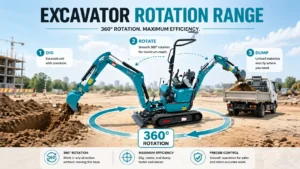
The rotation range is another major difference. An excavator can usually rotate its upper body through 360 degrees. This means the operator can dig in front, swing to the side and place soil behind or into a truck without turning the whole machine.
A backhoe loader has a more limited rear arm swing. It can still dig, but it cannot match the full rotation of an excavator. On small jobs, this may not matter much. On long trenching jobs, it matters a lot.
For backhoe loader vs excavator for trenching, the excavator often has the advantage. It can keep a smooth rhythm: dig, swing, dump and repeat. The backhoe loader may need more repositioning, which slows the job down.
In construction, every unnecessary movement costs time. And as every contractor knows, time on site is not free. It usually comes with fuel bills, labour costs and someone asking why the job is not finished yet.
Wheeled Backhoe Loader vs Tracked Excavator
The comparison between wheeled backhoe loader vs tracked excavator is really about chassis types. A wheeled backhoe loader moves faster on hard ground and paved surfaces. It is useful when the machine needs to travel between different work points during the day.
A tracked excavator moves more slowly, but it offers better grip and stability. Tracks help the machine work on soft ground, loose soil and uneven surfaces. They also make the machine more stable during digging and lifting.
So the choice depends on the work pattern. If the machine needs to travel more than it digs, a wheeled backhoe loader can be practical. If the machine needs to dig more than it travels, a tracked excavator is usually the better choice.
This is a simple but useful rule for engineers, contractors and buyers. Do not only ask how fast the machine can move. Ask what it will spend most of its day doing.
Mini Excavator vs Backhoe Loader for Tight Spaces
The question is a mini excavator better than a backhoe loader for tight spaces is becoming more common. Many modern projects happen in small areas, such as gardens, city streets, residential sites, indoor renovation areas and narrow access construction sites.
In a mini excavator vs backhoe loader comparison, the mini excavator often wins in tight spaces. It has a compact body, better rotation control and lower ground pressure. Some mini excavators also have zero tail swing or compact tail swing designs, which help reduce the risk of hitting walls, fences or nearby structures.
A backhoe loader is useful in open areas, but its longer body and stabiliser legs can make it harder to use in narrow spaces. For small scale projects, landscaping, drainage work and residential construction, a mini excavator can often work more neatly and safely.
In simple words, if the job site feels like a parking space with extra problems, the mini excavator is usually the calmer choice.
When to Choose an Excavator Instead of a Backhoe Loader
The search phrase when to choose an excavator instead of a backhoe loader shows strong buyer intent. Choose an excavator when digging is the main job. It is usually better for deep trenches, foundations, demolition work, slope work, heavy soil and uneven ground.
An excavator is also a strong choice when precision matters. Its rotation range, hydraulic control and stable chassis help the operator work more smoothly. With the right attachments, an excavator can also handle breakers, augers, grapples, rakes and grading buckets.
For contractors who need strong digging performance every day, an excavator is not just a machine. It is a working platform that can handle many site tasks with better control.
When a Backhoe Loader Still Makes Sense
A backhoe loader still has a clear place in construction. It is useful when the project needs both loading and light-to-medium digging. It is also practical for road repair, farm work, municipal maintenance and general site service.
If a team needs to load material in the morning, dig a short trench at noon and backfill in the afternoon, a backhoe loader can be a smart choice. It may not beat an excavator in deep digging, but it can handle mixed jobs with one machine and one operator.
That is the real value of a backhoe loader. It gives flexibility. The excavator gives stronger digging efficiency.
Final Choice: Backhoe Loader vs Excavator
The best answer to backhoe loader vs excavator depends on the job. If the site needs frequent movement, loading work and several light tasks, a backhoe loader may be the better choice. If the site needs stronger digging power, deeper reach, better rotation range and higher stability, an excavator is usually the smarter option.
For tight access work, small scale projects and residential construction, a mini excavator is often more practical than a backhoe loader. It is compact, stable and easier to control in narrow spaces.
So, the best machine is not always the biggest one. It is the one that fits the ground, the task and the operator’s daily workflow. Choose the machine that makes the job easier, not the one that only looks impressive in the yard.
FAQ
What is the main difference between backhoe and excavator?
The main difference between backhoe and excavator is the structure and working style. A backhoe loader has a front bucket and rear digging arm, while an excavator has a rotating upper body with a boom, arm and bucket.
Which machine is better for trenching?
For long, deep or precise trenching, an excavator is usually better. It has stronger digging power, better reach and a wider rotation range.
Is a mini excavator better than a backhoe loader for tight spaces?
Yes, in many tight spaces, a mini excavator is easier to operate. It has a compact body, better control and stronger stability on narrow job sites.
When should I choose a backhoe loader?
Choose a backhoe loader when the job needs both loading and light digging. It is useful for farms, road repair, site cleaning and mixed construction work.