
How to Pick the Best Mini Excavator
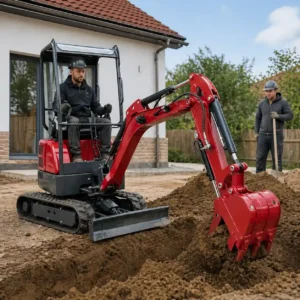
Picking the best mini excavator is not as simple as choosing the biggest machine in the yard. A larger model may look stronger, but it may not fit through a narrow gate. A smaller model may look cute, but it may start crying when the soil gets hard. So, the real question is not “Which mini excavator is the best?” The better question is: which mini excavator is best for your work?
A useful mini excavator buying guide should help you compare the machine with your real jobsite needs. You need to look at operating weight, engine power, hydraulic system, digging depth, travel motor, swing system, stability and attachments. When these parts match your daily work, the machine feels smooth, safe and efficient. When they do not match, even a shiny new excavator can become a very expensive headache.
Understand Your Main Job First
Before you compare models, start with the work. This step sounds simple, but many buyers skip it. Then they blame the machine later, which is a little unfair. A mini excavator cannot read minds. It can only do the job it was built to do.
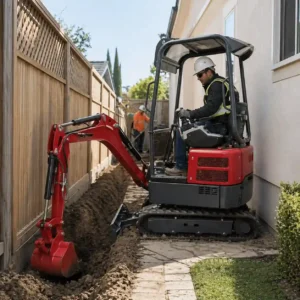
If your main work is trenching, you need enough digging depth, reach and bucket force. If you work in landscaping, you may need smooth control, low ground damage and easy movement around gardens. If you handle residential construction, the machine may need to pass through narrow access points, work close to walls and avoid hitting fences, doors or someone’s very expensive patio.
This is why many buyers search what size mini excavator do I need before making a decision. Size is not only about weight. It also means access width, working range, transport method and the type of ground. A good choice begins with the job, not with the brochure.
Choose the Right Mini Excavator Operating Weight
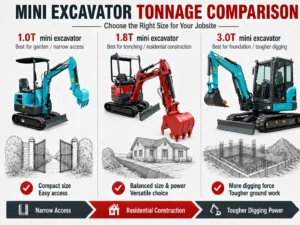
Mini excavator operating weight is one of the most important factors when choosing a machine. It affects stability, digging strength, transport and ground pressure. In simple words, weight decides how firmly the excavator stands while working.
A lighter mini excavator is easier to move and better for tight access sites. It can work in gardens, small yards, narrow paths and indoor demolition areas. It is also easier to transport with a smaller trailer. However, a light machine may feel less stable when digging deep, lifting heavy material or working on uneven ground.
A heavier mini excavator usually gives better stability and stronger digging performance. It can handle tougher soil and heavier attachments with more confidence. The trade-off is that it may need a larger trailer and more space to move. So, what operating weight is best for a mini excavator? The answer depends on your main work. For light landscaping, choose flexible movement. For trenching and construction, choose better stability and digging power.
Match Engine Power with Real Workload
Mini excavator engine power matters, but it should never be judged alone. A strong engine is useful, but only when the hydraulic system, pump and machine weight are matched properly. Otherwise, the engine may shout loudly while the machine still moves like it needs a holiday.
When asking how much engine power does a mini excavator need, think about soil type, working hours and attachment use. Soft soil and garden work do not need the same power as hard trenching, road repair or demolition. For heavy digging, a diesel engine mini excavator is often a practical choice because it provides steady torque and good durability.
Maintenance should also be part of the engine decision. Filters, belts, oil points and cooling parts should be easy to reach. If a simple service job takes half a day, that machine is not saving labour. It is creating a small engineering puzzle nobody asked for.
Check the Mini Excavator Hydraulic System
The mini excavator hydraulic system is where much of the real performance comes from. It controls the boom, arm, bucket, swing, travel and attachments. If the hydraulic system is weak, the machine may look powerful on paper but feel slow on site.
This is why why hydraulic system matters in a mini excavator is a key buying question. A good hydraulic system should feel smooth, fast and easy to control. The boom should lift steadily. The bucket should curl with strength. The swing should move without shaking. Good hydraulic response helps the operator work faster and with less fatigue.
Hydraulic flow is also important if you plan to use attachments. Mini excavator hydraulic flow for attachments must match tools such as breakers, augers, grapples and flail mowers. If the flow is too low, the attachment will feel weak. If the system is poorly matched, it may overheat or wear faster. For engineers, this is not a small detail. It is the heart of daily productivity.
Look at Travel Motor, Swing System and Stability
A mini excavator does not only dig. It also needs to move, climb, turn and stay balanced. That is why the mini excavator travel motor and swing system deserve attention.
The travel motor affects climbing ability, traction and movement on rough ground. If you work on slopes, wet soil or farm tracks, strong travel performance is very useful. A weak travel motor can make the machine struggle before the real digging even begins. That is not a good start to the day.
The mini excavator swing system affects how smoothly the upper body turns. Smooth swing control helps when loading soil, digging beside walls or working in narrow areas. If your worksite is tight, a zero tail swing mini excavator for narrow spaces may be a better choice. It can work closer to buildings and fences with less risk of hitting something behind it. Your customer’s wall will thank you for that.
Compare Digging Depth, Reach and Bucket Size
Digging depth is one of the most common specifications buyers check. It is important, but it should be connected to real work. If most of your jobs are shallow drainage channels or small garden projects, extreme digging depth may not add much value. If you work on utilities, foundations or deeper trenches, then digging depth becomes a major factor.
Reach is also important. A longer reach helps place soil further away and reduces how often the machine needs to move. Bucket size should match the machine’s power and the soil condition. A large bucket may look efficient, but if the excavator struggles to fill and lift it, productivity drops. Sometimes a smaller bucket works faster because the machine can cycle smoothly.
The best setup balances digging depth, bucket force, reach and stability. The bucket should work with the machine, not bully it.
Choose Attachments Based on Daily Use
Mini excavator attachments can make one machine useful for many jobs. Buckets, breakers, augers, thumbs, rippers and grapples can all expand the machine’s value. However, attachments should be chosen for real tasks, not just because they look impressive in a photo.
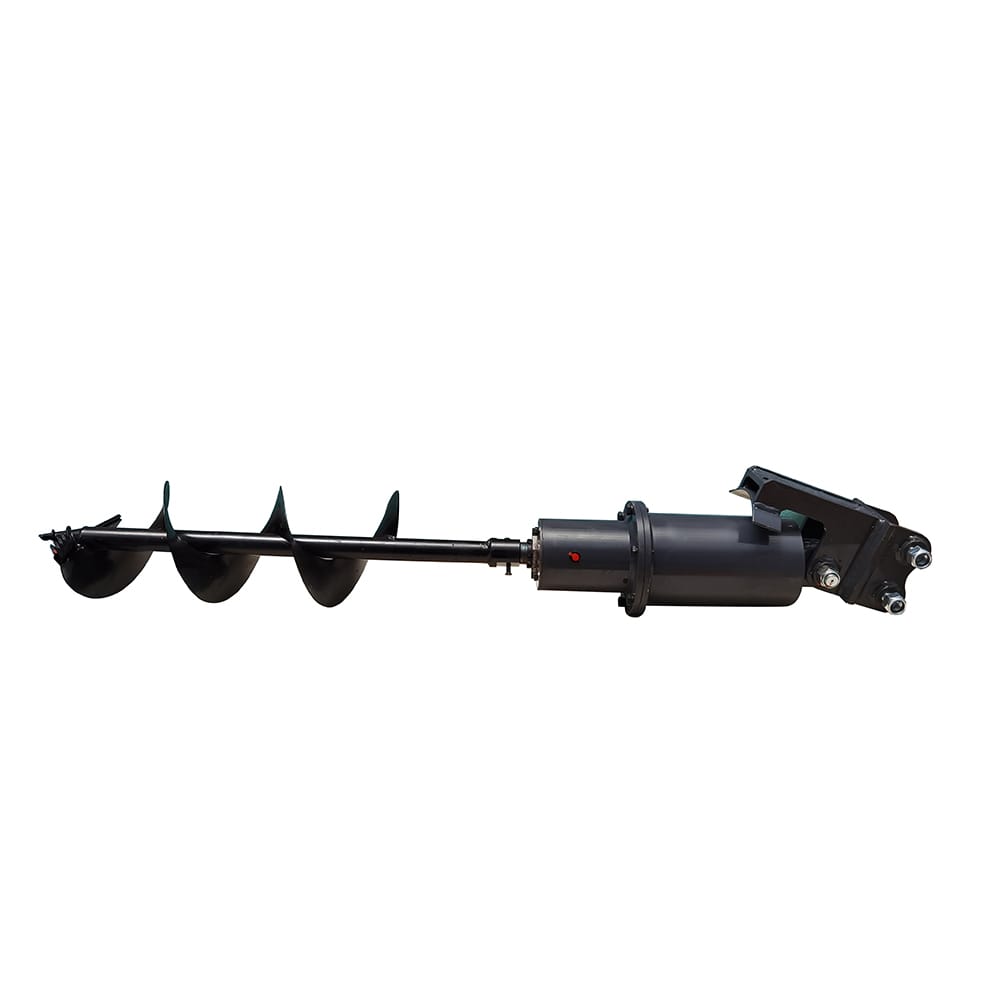
A breaker is useful for concrete and hard ground. An auger is good for posts, planting and foundation holes. A thumb helps handle stones, logs and waste material. A grading bucket is useful for levelling and finishing work. Before choosing attachments, check hydraulic flow, pin size, machine weight and working balance.
A good attachment can help your mini excavator earn more money. A poorly matched attachment can make the machine unstable, slow or uncomfortable to operate. In short, do not buy tools that turn your excavator into a confused octopus.
What to Look for in a Mini Excavator Before Buying
When comparing models, use a clear checklist. Look at operating weight, engine power, digging depth, hydraulic system, travel motor, swing system, tail swing type, track width, attachment compatibility and service access. Also check spare parts support, warranty, transport size and long-term maintenance cost.
One of the biggest mistakes to avoid when buying a mini excavator is choosing by price only. A low price may look attractive, but weak hydraulics, poor stability or difficult maintenance can cost more later. Another mistake is buying too small because the machine fits through a gate, then expecting it to do heavy contractor work every day. That is like asking a small dog to pull a loaded truck. Brave, but not wise.
Final Advice: Pick the Machine That Fits the Work
Learning how to pick the best mini excavator is really about matching the machine to the job. For narrow access work, focus on compact size, smooth control and easy movement. For trenching and construction, focus on operating weight, stability, hydraulic power and digging depth. For long-term business use, also consider service, spare parts and attachment flexibility.
The best mini excavator is not always the biggest or most expensive model. It is the one that starts easily, digs steadily, moves safely and helps your team finish work without drama. In construction, less drama is always a very good feature.
FAQ
What size mini excavator do I need?
You should choose the size based on your main job, access width, digging depth, transport method and ground condition. Small models are better for tight spaces. Heavier models are better for stability and harder digging.
Is engine power important when buying a mini excavator?
Yes, but engine power should match the hydraulic system and machine weight. A strong engine with poor hydraulic matching will not give good performance.
Why does hydraulic flow matter on a mini excavator?
Hydraulic flow affects attachment performance. Breakers, augers and grapples all need the right flow and pressure to work properly.
Is zero tail swing better for narrow jobsites?
Yes, zero tail swing is useful when working close to walls, fences and buildings. It reduces the chance of hitting objects behind the machine.
What should I check before buying a mini excavator?
Check operating weight, engine power, hydraulic system, digging depth, travel motor, swing system, attachments, service access, spare parts and transport size.