
Why the CX12-6 1.2 Ton Mini Excavator Is Ideal for Tight-Space Construction
Small jobs often come with big headaches. Narrow access, indoor work, soft ground, and limited transport options can make a larger machine feel like a giant wearing roller skates in a kitchen. That is where a compact machine makes more sense. The CX12-6 mini excavator is designed for contractors who need practical digging power, flexible movement, and dependable performance on small-scale construction sites.
In this guide, we look at why a 1.2 ton mini excavator fits jobs such as landscaping, trenching, interior renovation, utility installation, and light demolition. We also explain how features like zero tail swing, pilot controls, Kubota engine power, and simple maintenance can improve daily productivity.
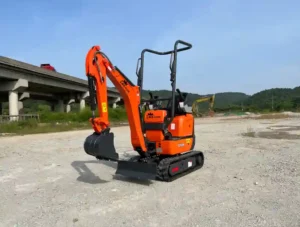
Why Tight-Space Jobs Need a Smaller Excavator
Many residential and urban projects do not fail because of digging force. They fail because access is poor. Gates are narrow, passages are tight, and the operator often works close to walls, fences, trees, or foundations. In these situations, a compact excavator is not just convenient. It is the safer and smarter option.
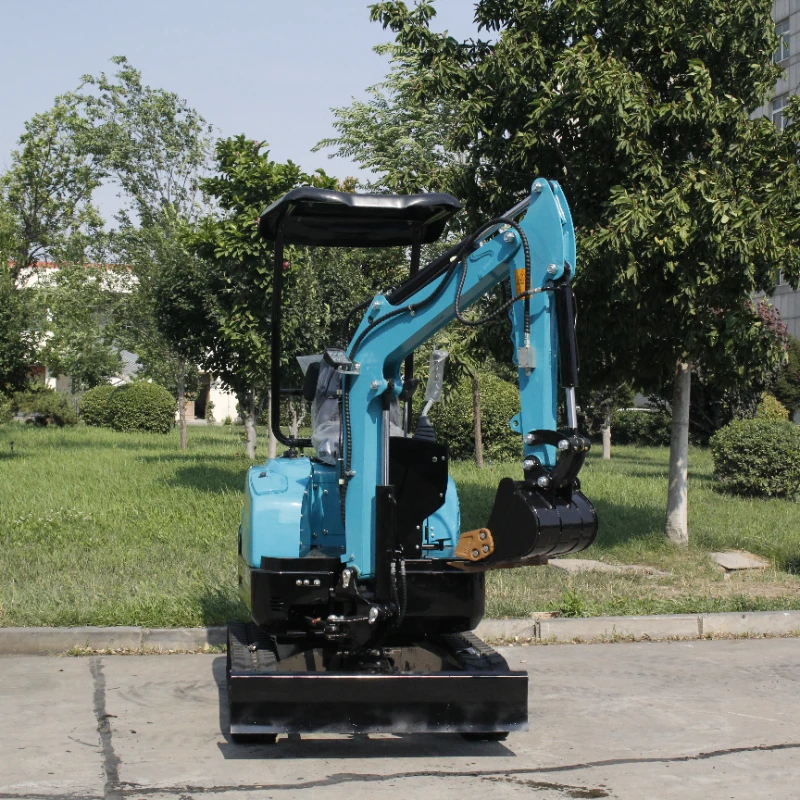
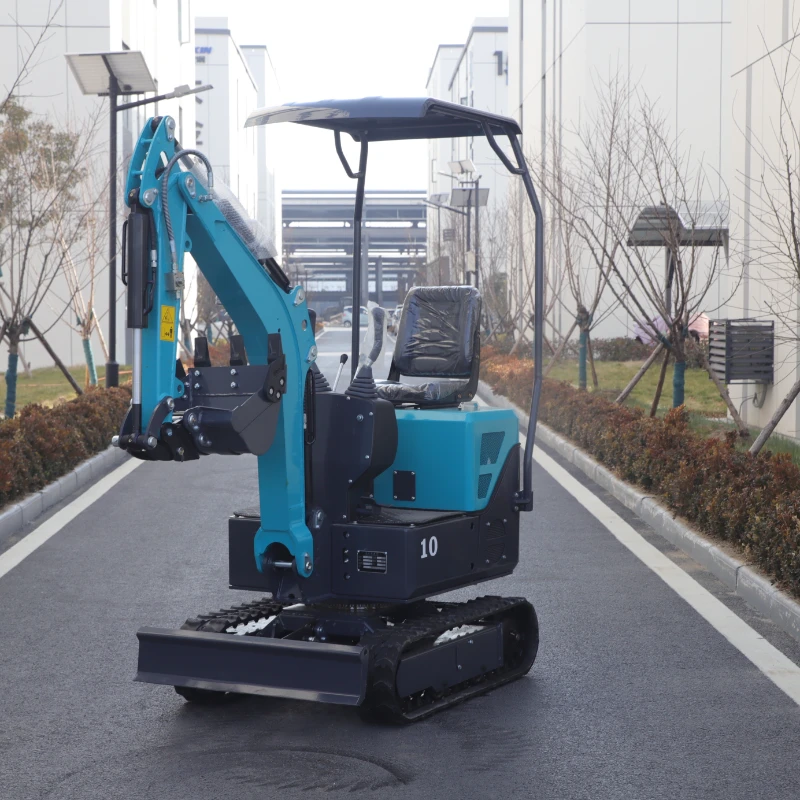
The CX12-6 has an operating weight of 1200 kg and a compact structure built for restricted areas. Its zero tail swing design helps the rear of the machine stay within the track width during operation. That makes it easier to work near obstacles without unwanted bumps, scratches, or expensive site drama.
Zero Tail Swing Makes Real Site Work Easier
A zero tail swing mini excavator is especially useful when space is limited. On indoor jobs, garden walls, pavement edges, and side-yard trenching, every centimetre matters. A machine that keeps its tail inside the machine profile helps reduce collision risk and improves confidence for the operator.
For contractors, this means smoother work in narrow places. For property owners, it means less chance of damage around finished surfaces. For site managers, it means fewer awkward moments that begin with, “That wall was definitely straight this morning.”
Kubota Engine Power for Efficient Daily Use
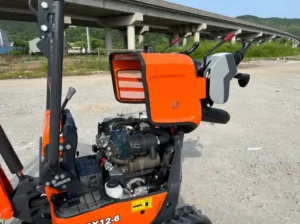
The CX12-6 is powered by a Kubota D722 engine, a water-cooled diesel engine known for stable output and fuel-conscious performance. For small-scale construction, this matters because buyers are rarely looking for raw size alone. They want a machine that starts reliably, runs smoothly, and does not turn fuel into smoke and regret.
With efficient combustion, Stage V compliance, and controlled operating noise, this engine setup supports regular work in residential areas, enclosed sites, and noise-sensitive environments. That makes the machine a practical choice for builders, landscapers, and contractors who need performance without excessive running costs.
Where a 1.2 Ton Mini Excavator Works Best
Landscaping and Garden Construction
Landscaping often involves trenching, grading, stump area preparation, soil movement, and work around finished outdoor features. A mini excavator for landscaping needs to be compact, easy to transport, and gentle enough for tighter ground conditions. The CX12-6 fits that role well, especially when working in gardens, courtyards, and narrow residential zones.
Interior Renovation and Basement Work
Indoor demolition and basement excavation need a machine with precise control and compact access dimensions. The CX12-6 is suitable for confined work where a larger excavator would struggle to enter or operate safely. Pilot controls help improve smoothness, which matters when the machine is working near pipes, walls, or finished surfaces.
Utility Trenching and Pipe Installation
For shallow service lines, drainage channels, and cable trenches, a compact excavator for small construction can be far more efficient than manual labour. The CX12-6 offers enough digging force for routine trenching while keeping transport and operating costs under control.
Farm, Orchard, and Greenhouse Work
Small excavators are also useful outside urban projects. In orchards, farms, and greenhouse sites, operators often need to move through narrow rows or uneven ground. A lightweight machine with rubber tracks and compact dimensions can handle digging and site preparation without making the field look like it lost a fight.
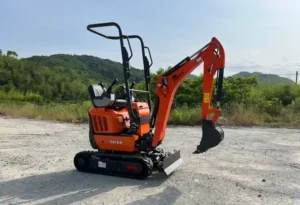
Operator Comfort Matters More Than Many Buyers Expect
On paper, buyers often focus on engine brand, bucket force, and price. On site, operator comfort can affect productivity just as much. If controls feel awkward or the machine causes fatigue too quickly, output drops. That is not just uncomfortable. It is expensive.
The CX12-6 uses hydraulic pilot control levers with wrist rests to improve handling precision and reduce strain during long shifts. Smooth travel speeds, responsive swing movement, and a well-arranged control layout all help the operator work with better rhythm. A machine that feels easier to control usually gets better real-world results.
Easy Maintenance Helps Reduce Downtime
Mini excavators earn money when they work, not when they sit with the cover open while someone searches for a spanner and patience. That is why maintenance access matters. The CX12-6 features a fully opening engine cover, making routine inspection and service easier.
Protected hydraulic pipe routing inside the boom helps reduce external damage. The split hose design for the bulldozer cylinder also makes replacement faster on site. These details may not look glamorous in a brochure, but they can save time, reduce downtime, and support lower lifetime operating cost.
Attachment Versatility Expands Job Value
A good small excavator should not be trapped doing only one task. The CX12-6 includes an auxiliary hydraulic circuit that helps support different attachments and applications. That means one machine can handle trenching one day, site preparation the next, and light demolition after lunch.
If you want to expand machine versatility, you can pair the excavator with suitable tools from the ACE Machinery attachment range. The right attachment setup can help contractors cover more job types without increasing fleet size.
How to Know If the CX12-6 Is the Right Fit
This machine is a strong fit if your projects involve narrow access, light-to-medium digging work, regular transport between smaller sites, or frequent operation near buildings and obstacles. It is also a good option if you value fuel efficiency, easier maintenance, and attachment flexibility over oversized lifting capacity.
If your projects regularly require deep excavation, heavy lifting, or large-scale earthmoving, then a bigger machine may be more suitable. But for many residential, landscaping, utility, and municipal tasks, a 1.2 ton mini excavator offers the balance that matters most: access, control, efficiency, and practical cost.
Conclusion
The CX12-6 is not trying to be the biggest excavator on site. That is exactly why it works. For contractors who need a reliable mini excavator for tight spaces, this model combines compact size, zero tail swing safety, Kubota engine reliability, pilot-control precision, and simple maintenance in one practical package.
If your work includes landscaping, trenching, indoor renovation, municipal repairs, or narrow-access construction, the CX12-6 is a machine worth serious consideration. Small machine, smart choice, less drama.
FAQ
What is a 1.2 ton mini excavator best used for?
A 1.2 ton mini excavator is best for landscaping, trenching, indoor renovation, utility installation, and other narrow-access jobs where a larger excavator would be difficult to transport or operate.
Why is zero tail swing important on a mini excavator?
Zero tail swing helps keep the machine rear within the track width during rotation. This improves safety and makes operation easier near walls, fences, and other obstacles.
Is the CX12-6 suitable for landscaping work?
Yes. The CX12-6 is well suited for landscaping thanks to its compact size, rubber tracks, precise controls, and compatibility with attachments for site preparation and trenching.
Does a compact excavator save fuel compared with a larger machine?
For smaller projects, a compact excavator usually uses less fuel and lowers overall operating cost because the machine size better matches the workload.
How do I choose the right mini excavator for small-scale construction?
Focus on access width, operating weight, digging force, tail swing design, engine reliability, maintenance access, and attachment compatibility. The right machine should match your real site conditions rather than simply offering the biggest specification sheet.