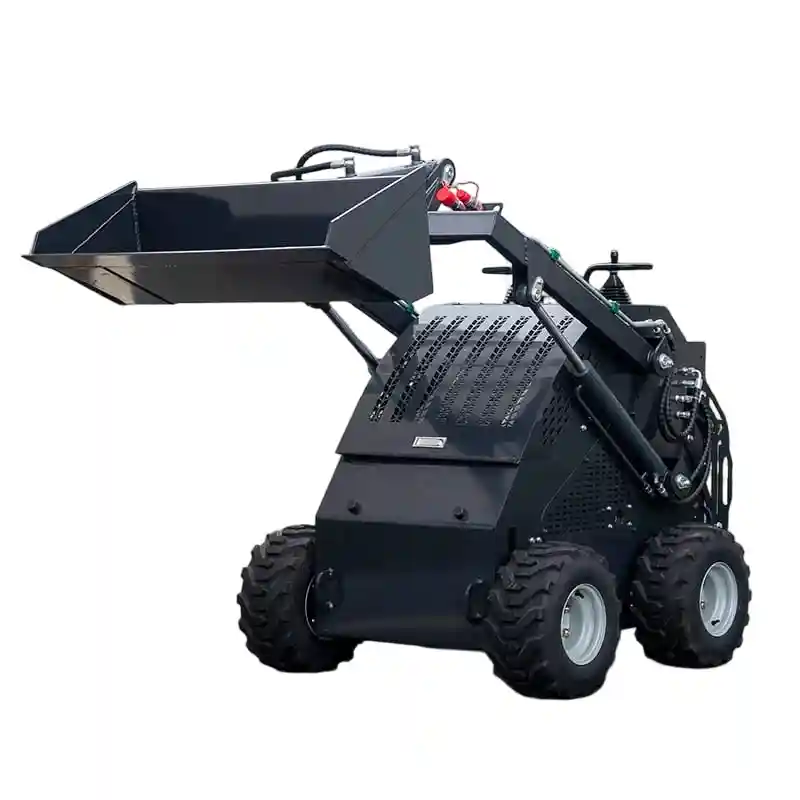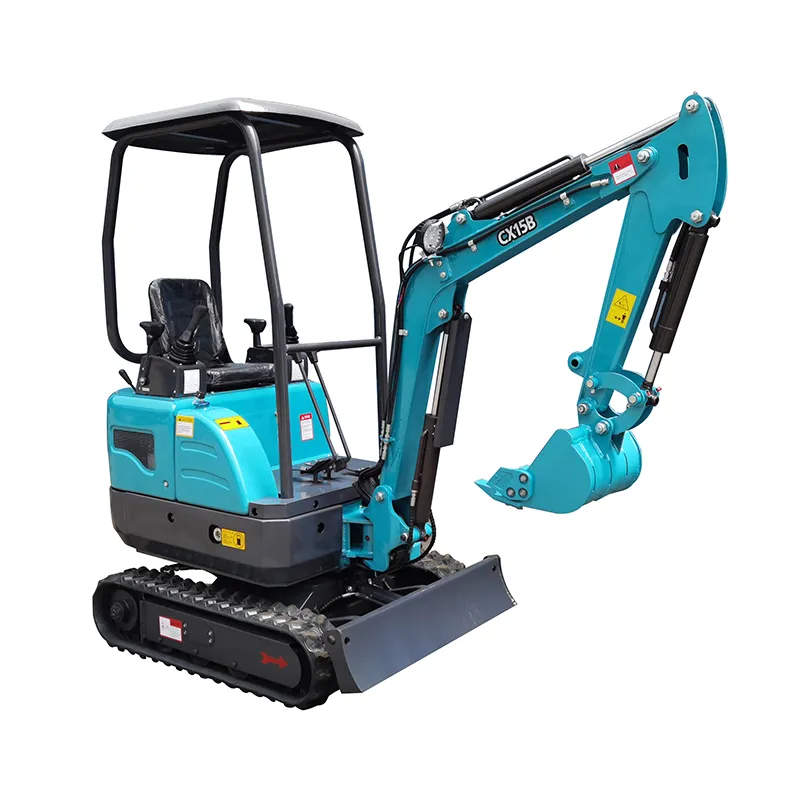

A fixed equipment budget can create a surprisingly difficult choice: buy a new Chinese mini excavator with almost zero hours, or spend similar money on a used Kubota mini excavator that has already done a few years of work.
Both choices can make sense. Both can also become expensive mistakes. A new machine removes most previous-use risk, but the buyer must verify the manufacturer, components, warranty and parts support. A used Kubota brings a mature product ecosystem and established brand recognition, but its remaining value depends heavily on maintenance history, hydraulic condition and undercarriage wear.
So the smarter question is not simply new vs used mini excavator. It is: Which machine leaves you with the risks you can inspect, price and control?
Why Buyers Compare a New Chinese Mini Excavator With a Used Kubota
The comparison starts with price. In the U.S., Kubota currently lists the K008-5 from $28,450 MSRP, the U10-5 from $31,045, and the KX018-4 from $39,520, before applicable taxes, dealer charges and optional equipment. Those are new-machine reference prices, not used values, but they help explain why buyers with a lower fixed budget often compare a new imported mini excavator with a pre-owned Kubota rather than a brand-new Kubota. Source: Kubota USA.
| Buying factor | New Chinese mini excavator | Used Kubota |
|---|---|---|
| Previous use | Little or none | Must be investigated |
| Purchase price | Often lower than a new major-brand machine | Depends on age, hours and condition |
| Warranty | Supplier-specific | Original warranty may have expired |
| Parts | Depends on manufacturer and market | Mature model and dealer ecosystem |
| Wear | Normally minimal at purchase | Hydraulic and undercarriage wear possible |
| Resale | Depends on local brand recognition | More established used market |
| Main risk | Supplier and support quality | Hidden wear and repair exposure |
Chinese mini excavators are also no longer a tiny export niche. Off-Highway Research says Chinese mini excavator exports increased 16% to 35,500 units in 2025, while indigenous manufacturers accounted for 91% of the Chinese domestic market. Those figures do not prove that every Chinese excavator is good, but they do show that buyers are evaluating machines from a large and highly competitive manufacturing sector. Source: Off-Highway Research. Buyers who want to understand why new Chinese machines can start at lower prices can also read our guide to the real cost behind Chinese mini excavator prices.
How Many Hours Is Too Many on a Used Kubota Mini Excavator?
There is no magic hour-meter number where a mini excavator suddenly becomes old.
A useful reference is Kubota’s own warranty structure. Its 2026 U.S. warranty guide gives K, KX, U and R Series machines 24 months or 2,000 hours of basic standard limited coverage, whichever comes first. Rubber tracks are covered for 12 months or 1,000 hours. Source: Kubota 2026 U.S. Warranty Guide.
That does not mean a Kubota is designed to last only 2,000 hours. Warranty duration and machine lifespan are completely different things. It simply tells a buyer that a used machine showing 3,000, 4,000 or 5,000 hours may already be well beyond its original standard warranty, so condition becomes more important than paperwork.
Start by checking whether the service history makes sense with the displayed hours. Then inspect the engine from cold, because a machine that has already been warmed up can be surprisingly polite about problems it showed twenty minutes earlier.
Once operating temperature is reached, test boom, arm, bucket, swing and travel both individually and together. Slow combined movement, excessive hydraulic drift, abnormal pump noise or uneven travel can reveal much more than an hour meter.
Hydraulics and Undercarriage Can Change the Economics Quickly
With a new Chinese mini excavator, the important question is specification. Confirm the exact engine, hydraulic pump, main valve, travel motors, auxiliary flow, pressure and attachment configuration. Two machines described as “1.5-ton mini excavators” can use very different components.
With a used Kubota, those original specifications are already known. The question becomes how much useful life remains in them.
The undercarriage deserves particular attention. Caterpillar says undercarriage typically represents about 50% of a tracked machine’s owning and operating costs. That figure is not a repair estimate for your specific excavator, but it explains why tracks, sprockets, rollers and idlers should be treated as financial components rather than dirty objects underneath the machine. Source: Caterpillar.
Inspect track condition and tension, sprocket tooth wear, rollers and idlers. Then check pins and bushings for excessive movement and look at cylinder rods for scoring or leakage.
Fresh paint is pleasant. A healthy final drive is usually more useful on Monday morning.
Parts and Dealer Support Are Where the Two Choices Separate
A new Chinese machine begins without accumulated wear, but that advantage depends on whether the supplier can support it. Before buying, ask for a parts manual and then test the supplier with actual component questions. Can they identify a seal kit from a cylinder number? Can they supply a joystick valve, ignition switch, travel motor or hydraulic hose specification? Are filters cross-referenced to locally available parts? How is an overseas warranty claim handled?
Kubota has an obvious structural advantage here: market maturity. Kubota states, citing 2024 Off-Highway Research data, that the Kubota Group has been the world’s No. 1-selling compact excavator brand for 20 years. That does not tell you whether a particular used excavator has been maintained properly, but it helps explain why Kubota model information, dealer knowledge, parts references and used machines are widely established in many markets. Source: Kubota USA / Off-Highway Research.
This is also why a good used Kubota should not be compared with a poor Chinese supplier, and a professionally supported new Chinese machine should not be compared with an abused rental Kubota. Compare machines, not stereotypes. If you are assessing a new supplier, use a structured checklist for evaluating a Chinese mini excavator manufacturer, including factory capability, compliance, spare parts and after-sales support.
Purchase Price Is Only One Part of Total Ownership Cost
The cheapest invoice does not always produce the cheapest working hour. For practical comparison, buyers can use a simple framework: purchase price + repairs + parts + downtime − resale value = approximate ownership cost. Then divide that number by the productive hours you expect from the machine.
A property owner using an excavator several weekends per month may reasonably prioritize purchase price and simple maintenance. A contractor operating every day has a different problem: one week of downtime can matter more than several thousand dollars saved at purchase. A rental company may place even greater value on easy parts identification, predictable maintenance and resale because several operators will use the same machine.
So the “smarter buy” changes with the job. Buyers who want to see a specific 1-ton-class comparison can also review our CX12-6 vs Kubota U10-5 comparison.
Who Should Buy Which Machine?
| Buyer | Usually worth prioritizing |
|---|---|
| Homeowner / property owner | Low entry cost, simple maintenance, attachment versatility |
| Farmer | Repairability, common components, parts availability |
| Small contractor | Uptime, hydraulic performance, supplier response |
| Rental fleet | Serviceability, parts network, resale |
| Equipment dealer | Repeatable configuration, warranty process, factory support |
A new Chinese mini excavator can be a sensible choice when the components are clearly specified, the manufacturer can provide reliable parts and technical support, and the buyer values starting with almost no accumulated wear. Reviewing the supplier’s manufacturing and inspection process can help verify what happens before the machine leaves the factory.
A used Kubota can be the smarter option when service records are available, hydraulic and undercarriage condition are good, and the value of local dealer support and an established secondary market justifies buying a machine with existing hours.
Neither decision should begin with the logo. It should begin with the machine’s expected work.
FAQ: New Chinese Mini Excavator vs Used Kubota
Is a new Chinese mini excavator better than a used Kubota?
Not automatically. A new Chinese machine reduces previous-use risk, while a used Kubota offers a mature equipment and parts ecosystem. The better machine depends on specification, mechanical condition, supplier support, expected usage and downtime risk.
Is 5,000 hours too much for a used Kubota mini excavator?
Not necessarily. There is no universal hour limit. At several thousand hours, buyers should place more weight on service records, hydraulic performance, engine condition, undercarriage wear, pin and bushing play and previous application than on the meter alone.
What should I inspect before buying a used mini excavator?
Start the machine cold, check smoke and abnormal noise, inspect leaks and hydraulic cylinders, test all functions under load, check track and undercarriage wear, inspect pins and bushings, verify the serial number and review service records. Recheck the machine after the hydraulics are warm.
The Smarter Buy Is the Risk You Can Control
A new Chinese mini excavator gives you the advantage of new components and potentially lower entry cost. A used Kubota gives you the advantage of a mature product ecosystem, established parts support and a recognized secondary market.
But neither advantage cancels risk.
If buying new, verify the manufacturer, engine, hydraulics, warranty and parts pipeline. If buying used, verify the hours, service history, hydraulics, undercarriage and actual condition.
Do not buy the Chinese machine simply because it is new. Do not buy the Kubota simply because the orange paint still looks convincing.
Buy the machine whose remaining risks you understand—and whose cost per productive hour makes sense for the work you actually do.
If you are comparing compact excavators for contracting, rental, dealership or property work, explore ACE Machinery’s mini excavator range or contact the ACE team to discuss machine configuration, attachments, OEM requirements and export support.