
Why Is My Skid Steer Hard Starting? A Practical Fault Tree for Diesel Machines
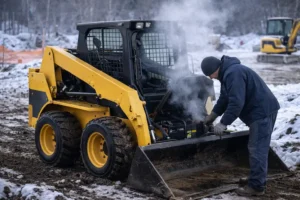
If your machine is suffering from diesel skid steer hard starting, the real problem is usually not as random as it seems. In most cases, the engine is either cranking too slowly, not getting the right amount of fuel, failing to ignite that fuel properly, or struggling because of internal wear. The reason this fault is so frustrating is that many different problems can create the same starting symptom. A skid steer may crank for a long time on a cold morning, refuse to fire after sitting overnight, or start with white smoke and rough running. On the surface, these look similar, but the root causes can be very different.
That is why a fault tree is more useful than guessing. Instead of replacing parts one by one, it helps you follow the symptom in a logical order. Once you do that, the machine usually gives you enough clues to narrow the fault down quickly.
What hard starting really means on a diesel skid steer
When people search for why is my skid steer hard starting, they often expect one simple answer. In reality, hard starting is not one fault. It is a symptom. The key is to look at how the machine behaves during cranking and what changes with temperature, fuel condition, and resting time.
For example, if the engine turns over slowly, the first place to look is the electrical side. If it cranks well but does not even try to fire, the problem often points towards fuel supply. If it cranks and produces white smoke on start-up, that usually means fuel is getting into the cylinders, but combustion is weak. That often happens when the engine is cold, glow plugs are not doing their job, or compression is no longer strong enough.
In other words, hard starting becomes much easier to diagnose when you stop asking, “What part is bad?” and start asking, “What pattern is this machine showing me?”
A practical fault tree for diesel machines
Step 1: Check cranking speed first
If the starter sounds weak or slow, do not begin with injectors or fuel pumps. Start with the basics. A diesel engine needs enough cranking speed to build heat through compression. If it cannot spin fast enough, even a healthy engine may struggle to start.
This is why battery condition matters so much. A battery can still show power for lights and controls, yet fail under starter load. Dirty battery terminals, loose cable connections, poor ground contact, or worn cables can also reduce starting speed. On cold days, heavy engine oil can make the problem worse because the engine becomes harder to turn.
So if your skid steer hard starting when cold also sounds slow while cranking, the most sensible starting point is the battery, cables, starter draw, and engine oil grade. Many owners jump straight to the fuel system, but a weak cranking system can make every other component look guilty.

Step 2: If it cranks normally but will not fire, look at fuel delivery
If the engine turns over at normal speed but does not start, the next question is simple: is the engine getting clean fuel in the correct way?
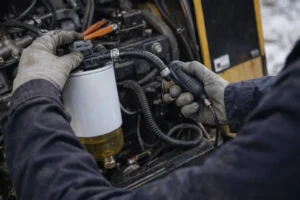
This is where blocked fuel filters, water contamination, poor diesel quality, air leaks, and priming loss become important. A common problem on older and newer diesel machines alike is air in fuel lines. Even a small leak on the suction side can let air enter the system without showing an obvious fuel leak outside. When that happens, the engine may crank for a long time before enough fuel pressure builds to start.
This is also why a machine that starts badly after a filter replacement should not be ignored. If the system was not bled properly, trapped air can remain in the line and cause a long crank or no-start situation. In the same way, if a machine has been run very low on diesel, it may take time to restore normal fuel flow.
So when a skid steer cranks but won’t start, and cranking speed sounds normal, fuel delivery should move high on the list. Before thinking about expensive parts, inspect the filters, separator, hose connections, primer system, and the overall condition of the fuel.
Step 3: If you see white smoke, think weak combustion
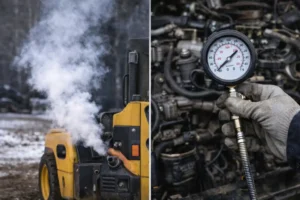
White smoke during cranking is one of the most useful signs in diesel diagnosis. It usually means fuel is reaching the cylinders, but the fuel is not burning fully. That changes the direction of the diagnosis.
At this point, glow plug problems become important, especially in cold weather. If one or more glow plugs fail, the air inside the cylinders may not get warm enough for clean combustion. The machine may crank for longer than normal, start roughly, or produce white smoke before it clears up.
Low cylinder temperature is not the only cause, though. Poor fuel atomisation, weak compression, or incorrect timing can create similar symptoms. Still, if your machine is hard to start mainly in cold conditions and improves once it warms up, the preheating system deserves careful attention first.
This is why white smoke should not be treated as just “cold weather behaviour.” In many cases, it is the machine’s way of telling you that combustion quality is weak at the moment of starting.
Step 4: If it starts badly after sitting overnight, suspect fuel drainback
Some hard starting problems only appear after the machine has been parked for several hours. Then, once it starts, it runs normally for the rest of the day. This pattern often points towards fuel drainback or loss of prime.
In simple terms, fuel slowly moves back through the system while the machine sits, or air enters the low-pressure side and replaces it. By morning, the engine has to refill part of the system before it can start properly. That is why machines with this fault often improve after repeated key cycles, manual priming, or extended cranking.
If your skid steer starts badly after resting overnight but behaves much better once it has run, check the filter housing, seals, hose clamps, fuel lines, and any component that is supposed to keep fuel from draining back. This pattern is different from a general no-start problem, so it deserves its own place in the fault tree.
Why cold weather makes hard starting worse
Cold weather does not always create the fault, but it almost always makes a weak system easier to notice. A battery produces less effective power in low temperatures. Engine oil becomes thicker. Diesel flows less easily. Cylinder walls stay colder, which makes ignition harder. All of these things work against the machine at the same time.
That is why a skid steer that seems “almost fine” in mild weather may suddenly become difficult to start in winter. A slightly weak battery, one failing glow plug, minor fuel contamination, or a small air leak may not stop the machine in autumn, but together they can turn into a daily diesel skid steer hard starting problem once temperatures drop.
This is also why winter faults should be read carefully. Cold weather is often the trigger, but not always the true root cause. In many cases, it is simply the moment when several small weaknesses finally show themselves.
When the fault is simple, and when it is more serious
The good news is that many hard starting complaints still come from service-related issues. Weak batteries, dirty terminals, blocked fuel filters, poor-quality diesel, water in the separator, glow plug faults, and air leaks are all common and fixable. These should always be checked before moving deeper into the engine.
However, if the machine has strong cranking speed, a healthy preheat system, clean fuel supply, and no signs of priming loss, then the problem may be more serious. At that stage, injector condition, fuel pressure, and low compression become more likely. A worn diesel engine can still run once started, but it may struggle badly during the first few seconds of cranking because it cannot generate enough heat for ignition.
That is the point where proper testing matters more than guessing. Compression checks, injector assessment, and fuel pressure testing give far better answers than replacing more parts at random.
Final thought
If you are asking, why is my skid steer hard starting, the fastest way to find the answer is to follow the symptom in order. Start with cranking speed. Then look at fuel delivery. After that, pay attention to smoke, temperature, and whether the machine behaves differently after sitting. Once you use that sequence, the fault becomes much easier to understand.
A practical fault tree does not just save time. It also helps you avoid replacing good parts while the real problem stays hidden. For diesel machines, that simple change in thinking is often the difference between chasing the fault and actually fixing it.