
Choosing between a tracked and wheeled mini dumper looks simple until the jobsite starts giving opinions. Dry concrete says one thing. Wet clay says another. A narrow garden path, of course, says something rude and refuses to cooperate. For contractors, landscapers, farm users, dealers and rental companies, the right choice is not about which mini dumper looks stronger in a photo. It is about which machine moves material faster, safer and with fewer repairs on the ground you actually work on.
Quick answer: choose a tracked mini dumper when the site has mud, slopes, soft soil, loose gravel or narrow uneven access. Choose a wheeled mini dumper when the ground is firm, paved or mostly level, and you need faster travel, easier maintenance and lower running cost. For buyers comparing compact hauling machines, this overview of power barrows and mini dumpers gives useful background before choosing a drive type.
Tracked vs Wheeled Mini Dumper: The Real Difference
The main difference is how the machine touches the ground. A tracked mini dumper spreads its weight across a longer contact area. That reduces ground pressure and helps the machine keep traction on soft or uneven surfaces. In simple terms, tracks behave like snowshoes for machinery. They do not make the machine magic, but they stop it from sinking as quickly when the ground is unfriendly.
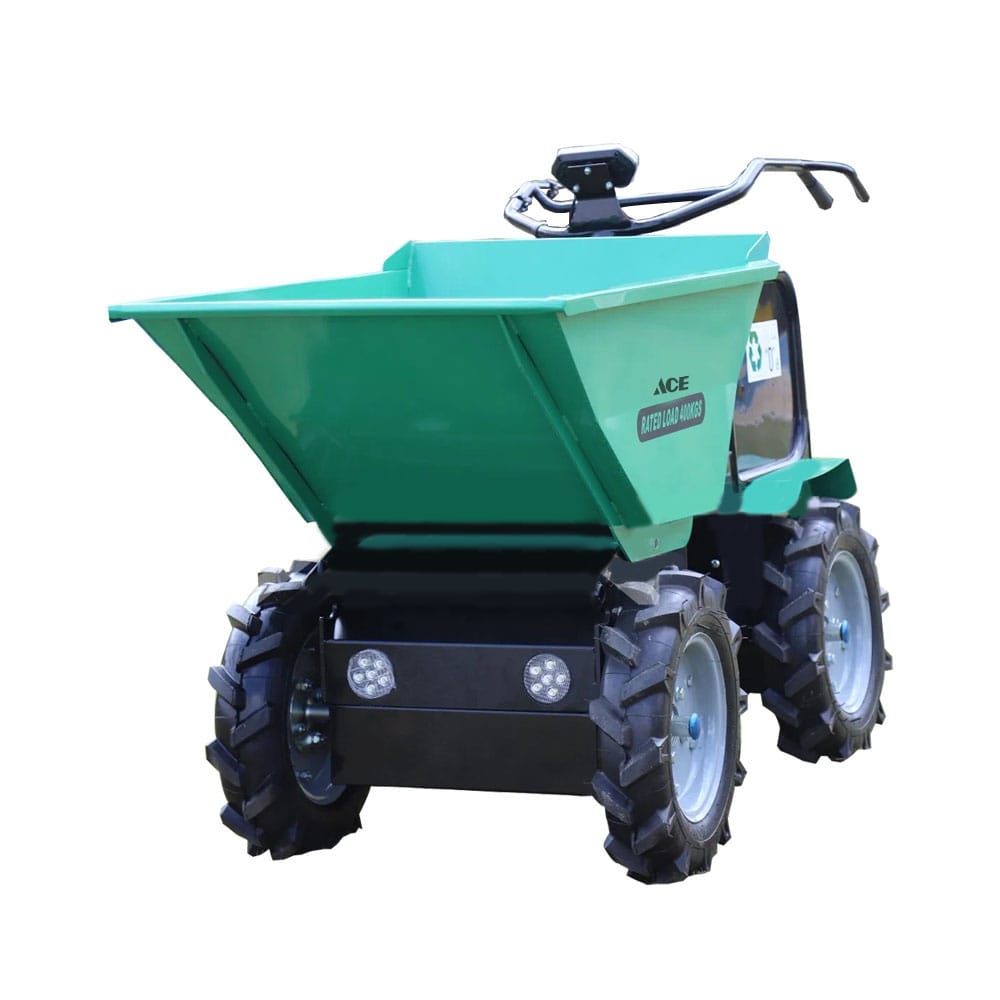
A wheeled mini dumper has less contact area, but it usually rolls faster and turns with less friction on hard surfaces. Wheels are easier to inspect, easier to replace and usually cheaper to maintain. If your site is a paved yard, warehouse entrance, concrete road, compacted gravel path or firm garden track, a wheeled dumper can move materials efficiently without dragging tracks across the surface like an angry rubber eraser.
When a Tracked Mini Dumper Is the Better Choice
A tracked mini dumper is usually the safer and more productive choice when traction is the main problem. Wet landscaping sites, muddy farm paths, forest trails, slopes, demolition areas and loose soil can make wheeled machines slip, sink or lose control. Tracks give better grip and stability because the machine has a wider footprint on the ground. This is especially helpful when carrying soil, stone, bricks, concrete waste or wet material that shifts during travel.
Tracked machines also work well in narrow and uneven access areas. When a jobsite has steps, ruts, broken ground or soft shoulders, the machine can keep moving with less wheel spin. For users who need a practical tracked model for gardens, farms and rougher paths, the Z400Z tracked mini dumper is a relevant example of how crawler drive helps compact material handling.
When a Wheeled Mini Dumper Makes More Sense
A wheeled mini dumper is often better when the ground is firm and the work cycle requires frequent travel. On concrete, asphalt, compacted gravel and indoor or semi-indoor areas, wheels usually feel lighter, quicker and easier to steer. They also create less friction during turning, which can reduce wear and make the machine more pleasant for operators who spend the whole day moving loads. Nobody wants a machine that fights back before lunch.
Wheeled machines are also attractive for rental companies and buyers who care about simple maintenance. Tires, hubs and brake parts are usually easier to inspect than a full undercarriage system. If the application is mainly moving sand, mulch, tools, bricks, warehouse materials or light construction waste on stable ground, a wheeled or electric dumper can be very efficient. For compact jobsites where quiet operation and clean handling matter, the 500kg electric dumper EDCX-500 is worth considering.
Comparison Table for Fast Selection
| Jobsite factor | Tracked mini dumper | Wheeled mini dumper |
|---|---|---|
| Soft or muddy ground | Better traction and lower sinking risk | May slip or dig into the soil |
| Concrete or paved surface | Works, but track wear can be higher | Usually faster and smoother |
| Slopes and uneven paths | More stable when operated correctly | Needs firmer ground and careful control |
| Maintenance | Undercarriage needs more attention | Simpler and often cheaper |
| Rental fleet use | Good for rough jobsites | Good for simple, firm-ground jobs |
Load, Stability and Safety Matter More Than Looks
Many buyers first compare rated load capacity, but load capacity alone does not tell the full story. A dumper carrying 500 kg on level concrete behaves very differently from the same dumper carrying wet soil across a slope. Material type also matters. Dry sand flows. Bricks stack. Wet clay sticks like it signed a contract. The operator must consider load height, slope angle, turning space and ground support before assuming the machine can carry its rated load everywhere.
For slopes, always keep the load low and avoid sudden turns. For wet ground, reduce speed and avoid overloading. For narrow access, check total machine width, turning room and tipping method before purchase. These small checks help prevent big problems, especially for rental fleets where one machine may be used by many operators with different skill levels.
How to Choose the Right Mini Dumper
Start with the ground. If the site is soft, muddy, uneven or sloped, choose tracks first and then compare capacity, engine power and tipping type. If the site is firm, flat and travel distance is longer, a wheeled mini dumper may save time and maintenance cost. Next, match the dumper to the material. Heavy wet soil, stone and demolition waste need better traction and stability. Mulch, tools, bags and light building materials usually allow more flexibility.
Finally, think about your business model. Contractors may choose the machine that fits their most common site. Dealers and rental companies may need both types, because customers rarely bring perfect ground conditions with them. For a wider view of compact hauling options, this guide to mini dump trucks for sale can help buyers compare capacity, power and jobsite use before sending an inquiry.
FAQ
Is a tracked mini dumper better than a wheeled mini dumper?
It is better on mud, slopes, loose soil and uneven ground. On firm or paved surfaces, a wheeled mini dumper may be faster, simpler and cheaper to maintain.
Which mini dumper is better for landscaping?
For soft gardens, wet lawns and narrow uneven paths, tracked models are usually better. For paved yards, compacted paths and light material movement, wheeled models can work very well.
Do tracks need more maintenance than wheels?
Usually yes. Tracks, rollers and undercarriage parts need regular inspection and cleaning. Wheels are simpler, but they still need tire and brake checks.
Need help choosing between tracked and wheeled mini dumpers? Contact ACE Machinery with your ground condition, material type, load requirement and working distance, and our team can recommend a practical compact dumper configuration for your market.