
Introduction: Why This Decision Often Goes Wrong on Site
On mixed or unfamiliar job sites, equipment selection errors usually appear months later rather than on day one. One of the most common examples is choosing a wheeled skid steer loader for ground conditions that gradually destroy traction, stability, and undercarriage components.
The question of when to choose a tracked skid steer loader is rarely about preference or budget alone. It is a technical decision involving ground bearing pressure, load transfer, hydraulic efficiency, and long-term maintenance exposure. This article approaches the topic from an engineering and operational perspective, focusing on decision logic rather than brand positioning.
What Defines a Tracked Skid Steer Loader in Practical Terms
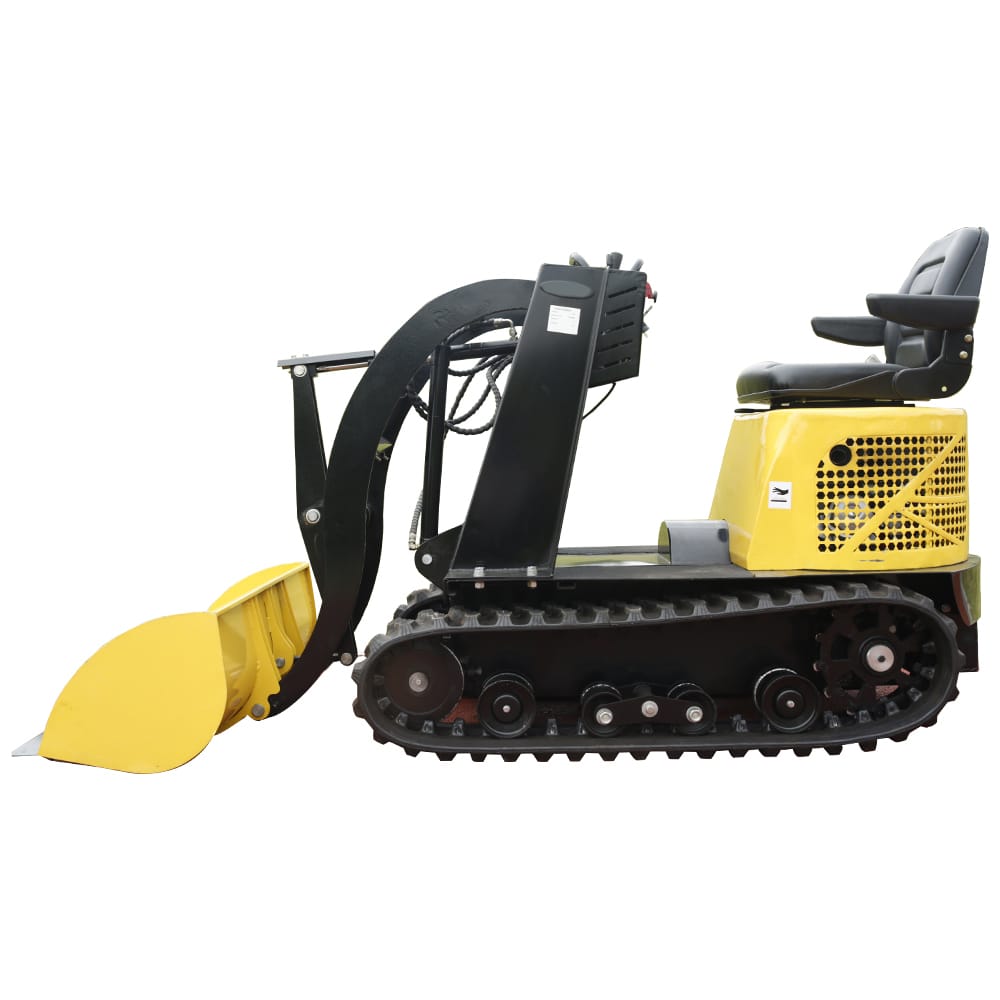
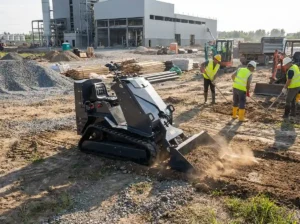
A tracked skid steer loader replaces tyres with a rubber track and undercarriage system, distributing machine weight over a larger surface area. In practice, this alters three key operating characteristics:
Ground contact area and pressure distribution
Traction behaviour under variable soil conditions
Dynamic stability during load movement and attachment use
From an engineering standpoint, tracked skid steer loaders are not simply “better on soft ground.” Their behaviour affects cycle times, attachment efficiency, and component wear patterns across the entire machine.
Ground Conditions That Favour Tracked Skid Steer Loaders
Low Bearing Capacity Surfaces
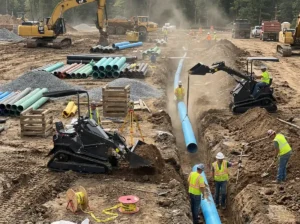
Tracked skid steer loaders are most effective on surfaces where ground bearing capacity fluctuates or drops below the threshold tolerated by wheeled machines. Examples include:
Saturated clay or loam
Recently backfilled trenches
Landscaping subgrades prior to compaction
By spreading operating weight, tracks reduce rut formation and loss of traction. This is not only about mobility but also about maintaining predictable steering response under load.
Surface Sensitivity and Damage Control
In landscaping or site preparation work, surface disturbance can create rework costs. Tracked skid steer loaders exert lower point pressure, reducing surface scarring during turns and stationary attachment use.
However, this benefit depends on operator technique. Aggressive counter-rotation can still damage turf or soft finishes, even with tracks.
Stability Considerations on Uneven Terrain
Lateral Stability on Slopes
Tracked skid steer loaders demonstrate improved lateral stability on slopes due to a wider effective stance and increased friction coefficient. This becomes significant when:
Operating across gradients rather than up or down
Using attachments that elevate the centre of gravity
From a safety perspective, this reduces sudden weight transfer events that precede tip conditions.
Longitudinal Load Behaviour
When carrying loads over uneven ground, tracked machines maintain more consistent contact across the undercarriage. This stabilises pitch movements, particularly during deceleration or obstacle crossing.
Engineers evaluating site safety should consider this behaviour when specifying machines for slope-adjacent operations.
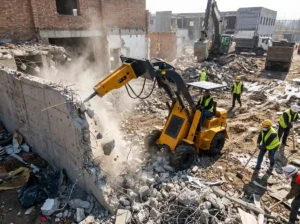
Operating Weight and Load Distribution Logic
Why Operating Weight Alone Is Misleading
Many specifications list operating weight without explaining distribution. Tracked skid steer loaders typically weigh more than comparable wheeled models, yet exert less ground pressure.
The key metric is load per contact area, not gross machine mass. This distinction matters when assessing site access limitations or temporary work surfaces.
Load Transfer During Attachment Use
Attachments such as trenchers, cold planers, or forestry mulchers introduce asymmetric loads. Tracked skid steer loaders absorb these forces more evenly, reducing oscillation and hydraulic inefficiencies caused by traction loss.
Hydraulic Performance Under Real Job Conditions
Consistent Hydraulic Flow Under Load
Loss of traction directly affects hydraulic efficiency. When wheels slip, engine output is diverted into heat rather than hydraulic work. Tracked skid steer loaders maintain traction, allowing auxiliary hydraulics to operate closer to rated flow under demanding attachments.
This becomes critical for:
High-flow attachments
Continuous-load operations
Precision-controlled tools
Heat Management and Duty Cycles
Stable traction reduces unnecessary throttle spikes and pressure surges. Over long duty cycles, this lowers hydraulic oil temperature and slows degradation of seals and hoses.
Maintenance and Wear Trade-Offs Engineers Must Consider
Undercarriage Wear Patterns
Tracked skid steer loaders introduce undercarriage components absent in wheeled machines, including rollers, idlers, and track tension systems. Wear rates depend heavily on:
Surface abrasiveness
Operator steering habits
Track tension management
Ignoring these factors leads to premature undercarriage costs that offset productivity gains.
Tyres vs Tracks in Long-Term Cost Models
While tracks cost more upfront, wheeled skid steer loaders often incur higher tyre replacement costs on abrasive or debris-heavy sites. Engineers should evaluate lifecycle cost rather than acquisition price.
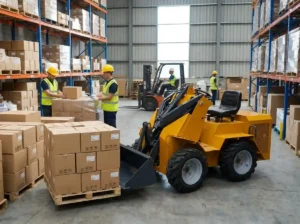
Typical Scenarios Where Tracked Skid Steer Loaders Are the Rational Choice
Soft or inconsistent soil conditions across the worksite
Slope-adjacent operations requiring predictable stability
High-flow attachment use with sustained duty cycles
Landscaping and surface-sensitive construction phases
Sites where recovery from bogging is impractical
Conversely, hard, finished surfaces with long travel distances often favour wheeled machines.
Common Misjudgements That Lead to Poor Outcomes
Assuming tracks eliminate all ground damage
Overlooking undercarriage inspection intervals
Selecting tracked machines solely for seasonal conditions
Ignoring transport weight limitations
Each of these errors appears repeatedly in post-project equipment audits.
Conclusion: Choosing Tracks as a Control Strategy, Not a Preference
Selecting a tracked skid steer loader is fundamentally a control decision. It controls how weight interacts with ground, how hydraulic power is converted into work, and how predictable machine behaviour remains under variable conditions.
When ground conditions, stability requirements, and attachment demands align, tracked machines offer measurable operational advantages. When they do not, complexity and cost increase without proportional benefit. Engineers and operators who treat this choice as a system-level decision achieve more consistent site outcomes and lower long-term risk.
FAQ: Technical Questions Engineers Commonly Ask
Q1: Are tracked skid steer loaders safer on slopes?
They provide improved lateral stability, but safe operation still depends on slope angle, attachment height, and operator technique.
Q2: Do tracks always reduce ground damage?
They reduce point pressure, but aggressive turning or poor surface conditions can still cause damage.
Q3: Are tracked skid steer loaders suitable for hard surfaces?
They can operate on hard ground, but accelerated track wear and reduced travel efficiency should be expected.
Q4: How does track tension affect performance?
Incorrect tension increases wear and reduces traction efficiency, directly affecting stability and hydraulic performance.