
Yanmar Diesel Engine vs Kubota: A Practical Mini Excavator Engine Comparison
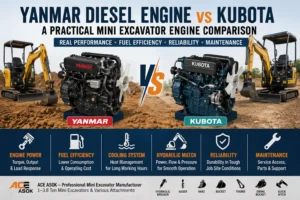
At first, it sounds like a simple brand comparison. One name is Yanmar. The other is Kubota. Both are well-known diesel engine options in compact construction machinery. Both can work well in small excavators.
However, for real job sites, the better answer is not only written on the engine label.
A mini excavator is a complete working system. The engine drives the hydraulic pump. The hydraulic pump supports the boom, arm, bucket, travel motor, swing motor and auxiliary attachments.
If the engine and hydraulic system do not match well, even a famous engine may feel weak in hard soil. If the hydraulic system is well designed, a compact engine can still deliver strong and smooth performance.
That is why this mini excavator engine comparison focuses on real engineering logic.
Instead of saying “Yanmar is better” or “Kubota is better”, we will explain how engine choice affects digging force, fuel consumption, cooling, stability, maintenance and attachment use.
This article is written for contractors, engineers, equipment owners and buyers who want practical knowledge before choosing a mini excavator.
Why Engine Choice Matters in a Mini Excavator
A mini excavator usually works where larger machines cannot fit. It may dig trenches in gardens, clean drainage channels on farms, remove small stumps, break concrete in narrow areas or work beside buildings.
In these jobs, the machine must be compact, stable and easy to control. Power is important, but smooth power is even more important.
ACE ASOK focuses on compact excavators with operating weights from 1 ton to 3.8 tons.
This machine range is widely used for landscaping, trenching, municipal work, farm maintenance and tight access construction.
You can view the full excavator range on the
ACE ASOK mini excavators page.
In this size range, the engine must do more than start the machine. It must hold stable rpm under load, support the hydraulic pump, keep fuel use reasonable and work with the cooling system for long hours.
A good engine should make the machine feel steady, not nervous. The operator should feel that the boom moves smoothly, the bucket curls with confidence and the travel motor does not become lazy when the ground gets soft.
Kubota vs Yanmar Diesel Engine: What Should Engineers Really Compare?
When comparing Kubota vs Yanmar diesel engine options, many people first look at horsepower. That is understandable, but horsepower alone does not decide excavator performance.
A mini excavator does not dig with horsepower directly. It digs through hydraulic pressure, hydraulic flow, cylinder force, bucket geometry and machine stability.
The engine is only the first part of the power chain. It sends power to the hydraulic pump. The pump creates oil flow and pressure. The control valve directs that oil to the boom, arm, bucket, swing motor and travel motor.
If one part of this chain is poorly matched, the whole machine may feel slow or weak.
| Engineering Point | Why It Matters |
|---|---|
| Engine output | Supports hydraulic pump demand during digging and travel. |
| Low-speed torque | Helps the machine hold power when digging hard soil. |
| Hydraulic flow | Affects boom speed, arm speed and attachment performance. |
| Hydraulic pressure | Affects digging force and breaker performance. |
| Cooling capacity | Prevents overheating during long working hours. |
| Operating weight | Improves stability during digging, lifting and attachment work. |
| Maintenance access | Reduces service time and keeps the machine working longer. |
This is the practical way to understand Yanmar diesel engine vs Kubota in mini excavators.
The engine brand is important, but it must be judged together with the whole machine. A good engine working with poor hydraulics is like a strong worker using a bent shovel. The effort is there, but the result is not impressive.
Engine Power: Do Not Only Look at Horsepower
Horsepower looks clear on a specification sheet, but a job site is not a specification sheet.
In real work, a mini excavator may lift the boom, pull the arm, curl the bucket and swing at the same time. These combined movements ask the engine and hydraulic pump to work together.
If the engine speed drops too much, the machine becomes slow. If the hydraulic pump cannot use the power well, the engine may sound fine while the bucket still feels weak.
Kubota engines are often used in compact diesel excavators because they are familiar, compact and suitable for small machine layouts.
For example, the TC18 1.5 ton Kubota diesel mini excavator is designed for tight working areas, trenching, landscaping, concrete breaking and municipal work.
Yanmar engine configurations are also used in ACE compact excavator products.
On the excavator product page, the
KT22 Yanmar mini excavator is listed as a 2.1 ton EPA CE machine.
This type of machine is better suited to users who need more stability and stronger working capacity than a very small 1 ton class machine.
The key lesson is simple. For light landscaping, smooth control may matter more than maximum power. For clay digging, trenching and attachment work, torque stability and hydraulic flow become more important.
A mini excavator is not a racing car. It does not need to win a speed contest. It needs to dig steadily, save fuel and keep working without complaining.
Fuel Consumption: The Engine Saves Fuel, but the System Decides the Result
Many users search for Yanmar vs Kubota fuel consumption because fuel cost is easy to feel in daily work.
A mini excavator may be small, but it can work many hours each day. After weeks or months, even a small difference in fuel use becomes real money.
However, fuel consumption is not decided by engine brand alone. It also depends on soil type, bucket size, working load, hydraulic efficiency, engine speed and operator habits.
A careful operator using the correct bucket can save fuel. A careless operator using full throttle for every small movement can turn diesel into smoke and regret.
The hydraulic system has a direct effect on fuel use. If the pump wastes power, the engine must work harder. If the hydraulic oil overheats, efficiency drops. If the bucket is too large for the machine, the engine may work under unnecessary load.
This is why a fuel efficient diesel engine for small excavator should always be judged together with the hydraulic system.
For soft soil trenching, the machine needs steady power and smooth movement. For concrete breaking, the hydraulic breaker needs stable auxiliary flow. For farm ditch cleaning, the machine may work at a moderate load for long periods.
In each case, the engine and hydraulic system behave differently. Good fuel economy comes from good balance, not from a brand name alone.
Hydraulic System Matching: The Hidden Core of Mini Excavator Performance
The mini excavator engine and hydraulic system should always be discussed together. This is where many simple comparison articles become too shallow.
In real operation, hydraulic matching decides whether engine power becomes useful digging force or wasted heat.
A well-matched hydraulic system makes the machine feel confident. The boom rises without delay. The arm pulls smoothly. The bucket curls cleanly. The swing system rotates without shaking.
The travel motor moves the machine across soil without feeling weak. When all these actions feel natural, the operator may not think about the engine at all. That is usually a good sign.
ACE ASOK also provides many excavator attachments, including quick hitches, mud buckets, rakes, augers, hydraulic breakers, hydraulic thumbs and wood grabs.
These can be found on the
mini excavator attachments page.
Each attachment creates a different hydraulic demand, so the engine and hydraulic system must be selected with the working tool in mind.
A bucket needs digging force and cylinder control. A hydraulic breaker needs stable auxiliary oil flow and good cooling. An auger needs controlled torque. A wood grab needs smooth opening and closing.
A swing bucket needs flexible hydraulic movement for trench finishing and slope work. The
swing bucket excavator attachment is a good example of how hydraulic control improves flexibility in narrow or complex spaces.
So, when comparing Yanmar vs Kubota engine for mini excavator use, do not stop at engine power.
Check how the engine works with the pump, valve, auxiliary hydraulics and cooling system. The bucket is where the money is made, but the hydraulic system decides how well that bucket works.
Cooling and Long Working Hours: A Detail Engineers Should Not Ignore
Cooling is not the most exciting topic, but it is one of the most important. A mini excavator often works in dust, heat, narrow sites and poor airflow conditions.
The engine creates heat. The hydraulic system creates heat. If the machine cannot remove that heat, performance will drop.
This matters for both Yanmar and Kubota engine configurations. A good engine still needs clean airflow, a suitable radiator, proper oil cooling and enough space for heat to escape.
If the radiator is blocked by dust or grass, the engine may overheat. If hydraulic oil gets too hot, hoses, seals and pumps may wear faster.
Overheating often appears as weak response after long working hours. The machine may feel normal in the morning but slow in the afternoon.
Operators may blame the engine, but engineers should also check the radiator, hydraulic oil temperature, fan, filters and working load.
ACE ASOK highlights imported engines and motors as part of its quality control approach, together with after-sales support and complete machine warranty information on the
About ACE ASOK page.
For readers, the engineering lesson is clear: a good engine needs a good cooling environment to stay good.
Operating Weight and Stability: Power Must Stay Balanced
Engine power is useful, but operating weight keeps the machine stable. This point is easy to forget.
A stronger engine does not automatically make a small excavator safer or more productive. If the machine is too light for the task, it may lose stability during digging, lifting or attachment work.
Operating weight affects ground pressure, lifting confidence, digging stability and travel performance. A 1 ton machine is excellent for narrow access, indoor renovation, small gardens and light utility work.
A 1.5 ton to 2.1 ton machine usually offers more digging confidence and better attachment compatibility. Larger compact models can provide more stability, but they also need more transport space.
This is why the best diesel engine for mini excavator depends on machine size.
A small excavator needs an engine that supports smooth and efficient work without making the machine oversized. A larger compact excavator may need stronger torque and better cooling because it faces heavier loads.
For example, users comparing a 1.5 ton Kubota diesel machine such as the
TC18 compact tracked Kubota mini excavator
with a larger Yanmar-powered option such as the
KT22 2.1 ton Yanmar mini excavator
should think about the job first. Tight access, transport limits, digging depth, soil type and attachment use all matter.
Maintenance: Good Engines Still Need Good Habits
Many users compare Yanmar engine maintenance cost vs Kubota engine maintenance cost, but daily maintenance rules are similar for both.
Clean diesel, correct oil, regular filter changes, clean radiators and daily inspections matter more than many people think.
The air filter is especially important because mini excavators often work in dust, soil and broken concrete. If the air filter is blocked, the engine may lose power and burn more fuel.
If dust enters the engine, wear can increase quickly. The fuel filter is also important because dirty diesel can cause poor starting, weak combustion and unstable running.
Hydraulic maintenance is also connected with engine performance. Dirty hydraulic oil increases wear. Leaking hoses reduce efficiency. Overheated oil damages seals.
When hydraulic efficiency drops, the engine must work harder to do the same job. That increases fuel use and reduces machine comfort.
A simple daily routine can prevent many problems. Check oil, coolant and filters. Look for leaks. Listen for strange sounds. Clean the radiator when the site is dusty.
These steps may sound boring, but boring checks often save expensive repairs. Machines rarely fail without warning. They usually give small hints first. A wise operator listens before the machine starts shouting.
Emission Standards: Important for Export and Long-Term Use
Emission standards are also part of the Kubota vs Yanmar diesel engine discussion. For regulated markets, engine certification can affect import, resale value and job site acceptance.
This is especially important for buyers in Europe, North America and other markets with stricter machinery rules.
ACE ASOK shows certification information on its
certification and quality control page, including references related to EPA Tier 4 and engine configurations.
The key point is not to treat emission labels as decoration. They affect where the machine can be sold and used.
When comparing Yanmar and Kubota engine configurations, engineers should check the exact engine model, emission version and target market.
A machine may work perfectly from a mechanical view, but it still needs the correct certification for the market. In export machinery, small labels can decide big things.
Which Engine Fits Different Mini Excavator Jobs?
The best engine choice depends on the job. A mini excavator used in a garden does not face the same load as one used with a hydraulic breaker.
A farm machine does not work like a rental machine. The engine should match the real work, not just the catalogue.
For Trenching Work
Trenching needs repeated digging cycles. The engine must support stable hydraulic movement while the bucket cuts soil and the boom lifts material.
For soft soil, smooth control and fuel efficiency are useful. For hard soil, stronger torque, good hydraulic pressure and machine stability become more important.
For Landscaping Work
Landscaping needs precision. Operators may work near lawns, walls, trees, paving stones and finished surfaces.
A rough machine can create new problems faster than it solves old ones. For this application, smooth engine response, stable hydraulics and compact body design are very important.
For Farm and Orchard Work
Farm work is mixed and unpredictable. A mini excavator may clean ditches in the morning, dig fence posts after lunch and remove tree roots before sunset.
The engine should start easily, use fuel efficiently and remain simple to maintain. The machine should also have enough stability for uneven ground.
For Rental Machines
Rental machines need durability. They meet many operators, and not all operators are gentle. Some treat the machine carefully. Others treat it like a shovel with an engine.
For rental use, the engine should be reliable, service points should be easy to reach and maintenance should be simple.
For Attachment Work
Attachments need special attention. A hydraulic breaker needs steady flow and cooling. An auger needs controlled torque. A grapple needs smooth response.
A rake or bucket needs stable digging force. The
hydraulic breaker, auger, bucket and mini excavator attachments
all place different demands on the machine. Engine choice matters, but auxiliary hydraulics and cooling matter just as much.
Final Answer: Yanmar or Kubota?
So, which is better in the Yanmar diesel engine vs Kubota comparison?
The practical answer is simple: both can be excellent when matched with the right mini excavator.
Yanmar can be a strong choice when smooth operation, steady output and compact equipment performance are important.
Kubota can be a strong choice when compact diesel engine layout, service familiarity and broad market recognition are important.
However, the final decision should not be based only on the engine name.
A smart comparison should include engine response, hydraulic matching, cooling design, operating weight, travel performance, attachment demand, maintenance access and emission requirements.
These details decide how the machine performs after it reaches the job site.
For a mini excavator, the engine is important, but it is not a hero working alone.
The hydraulic pump, travel motor, swing motor, boom, arm, bucket, tracks and counterweight all join the same team.
When the team is balanced, the machine works smoothly. When the team is not balanced, even a famous engine cannot save the day.
In the end, the best diesel engine for mini excavator is the one that helps the whole machine dig better, move smoother, burn less fuel, stay cooler and last longer.
Soil does not care about brand stories. Soil only respects power, balance and a sharp bucket.
FAQ
Which engine is better for a mini excavator, Yanmar or Kubota?
Both Yanmar and Kubota can be good choices for mini excavators. The better choice depends on machine size, hydraulic system, working load, cooling design, maintenance access and local service support.
Is engine power the most important factor?
No. Engine power is important, but it must match the hydraulic pump, control valve, travel motor and working device. A balanced system usually performs better than a machine with high engine power but poor hydraulic matching.
Which engine saves more fuel?
Both Yanmar and Kubota engines can offer good fuel efficiency in compact excavators. Real fuel consumption depends on hydraulic efficiency, soil condition, bucket size, operator habits, maintenance and working load.
Why does hydraulic matching matter so much?
Hydraulic matching decides how engine power becomes digging force, travel power and swing movement. If the hydraulic system is not matched well, the machine may feel slow or weak even with a good engine.
Which engine is better for hydraulic breaker work?
For hydraulic breaker work, engine brand is only one part of the answer. Auxiliary hydraulic flow, working pressure, oil cooling and machine weight are also very important.
What should engineers check when comparing mini excavator engines?
Engineers should check power output, torque stability, hydraulic flow, hydraulic pressure, cooling design, operating weight, service access, emission compliance and attachment requirements.