
Yanmar vs Kubota Engines in Mini Excavators: Performance, Reliability, and Operating Cost — A Practical Engineering Comparison
Why This Comparison Actually Matters on Real Job Sites
If you’ve ever stood next to a mini excavator that suddenly starts wheezing, overheating, or burning fuel like a thirsty camel in the desert, you already know: the engine is not just “a component” — it’s the heart, lungs, and digestive system of the entire machine.
Among compact construction equipment, Yanmar and Kubota engines dominate the global mini excavator market. They are both Japanese engineering giants, both Euro 5 and EPA compliant, both known for durability — and both fiercely defended by loyal fans.
But engineers, rental fleet managers, and procurement teams all ask the same practical questions:
- Which engine performs better under continuous heavy-duty operation?
- Which one consumes less fuel in real-world jobs?
- Which delivers lower lifetime operating cost?
- And most importantly — which one complains less when you push it hard?
Let’s break down this rivalry using engineering logic, field data, and real operational behaviour — minus marketing noise and plus a little humour.

Engineering Philosophy: Two Roads to Reliable Power
Yanmar: Precision Control & Torque Discipline
Yanmar engines are designed around a simple philosophy: deliver torque smoothly, maintain combustion stability, and protect engine components from abuse.
In engineering terms, Yanmar focuses heavily on:
- Optimised combustion chamber geometry
- Precise electronic fuel injection control
- Lower peak combustion temperature
- Stable torque delivery at low rpm
This makes Yanmar engines exceptionally good at low-speed digging tasks, trenching, and precision grading — especially when hydraulic demand fluctuates constantly.
Kubota: Robust Power Density & Mechanical Simplicity
Kubota, on the other hand, designs engines that lean toward mechanical robustness and high power density. Their engines often produce slightly higher horsepower per displacement and are built to tolerate rough usage and inconsistent maintenance.
Kubota’s design strengths include:
- High-strength engine block structures
- Efficient cooling systems
- Strong torque reserve capacity
- Simplified mechanical architecture
In short, Kubota engines are like that tough coworker who can lift heavy loads all day and still go for overtime — without complaining much.
Performance Under Continuous Operation: Who Breaks a Sweat First?
Mini excavators rarely operate in gentle cycles. On real job sites, they face:
- Long digging cycles
- Frequent boom swing
- Constant hydraulic load changes
- High ambient temperatures
Yanmar Performance Behaviour
Yanmar engines maintain exceptionally stable rpm under variable hydraulic loads. Their electronic control systems react quickly to load changes, preventing sudden rpm drops.
Practical effects:
- Smoother digging motion
- Reduced stalling probability
- Lower vibration at idle and mid-load
In prolonged trenching operations, Yanmar engines demonstrate lower thermal stress, thanks to conservative combustion tuning and excellent cooling airflow management.
Kubota Performance Behaviour
Kubota engines deliver stronger top-end torque reserves. This becomes noticeable when:
- Operating hydraulic breakers
- Lifting heavy loads
- Climbing slopes while tracking
Under continuous heavy loads, Kubota engines feel more “muscular”, maintaining digging force even when hydraulic demand peaks.
However, they may generate slightly higher combustion temperatures, making cooling system performance critically important in hot climates.
Fuel Efficiency: Which Engine Is Kinder to Your Wallet?
Fuel costs represent 25–35% of total operating cost for compact construction machinery. Even small efficiency improvements translate into big long-term savings.
Yanmar Fuel Economy
Yanmar engines typically operate at lower average rpm for similar tasks. Their fine-grained fuel injection timing allows:
- More complete combustion
- Reduced unburned hydrocarbons
- Lower average fuel consumption
Field tests show that Yanmar-powered mini excavators can reduce fuel consumption by 5–12% during precision excavation and light-duty cycles.
Kubota Fuel Economy
Kubota engines often show slightly higher fuel use during light work, but their efficiency improves significantly under medium-to-heavy loads.
This makes Kubota engines particularly cost-effective in:
- Demolition tasks
- Breaker operations
- Heavy trenching
Think of it this way: Yanmar sips carefully, Kubota gulps responsibly.
Hydraulic System Synergy: Engines Don’t Work Alone
An excavator engine without a properly matched hydraulic system is like a professional athlete wearing shoes two sizes too big.
Yanmar + Hydraulic Matching
Yanmar engines pair extremely well with:
- Load-sensing hydraulic systems
- Proportional valve blocks
- Electronic pump controllers
This synergy delivers:
- Smoother joystick response
- Precise attachment control
- Reduced hydraulic shock loads
Kubota + Hydraulic Matching
Kubota engines excel when paired with:
- High-flow gear pumps
- Simple open-centre circuits
- High-pressure auxiliary outputs
This configuration provides strong mechanical force delivery, ideal for breaker and auger attachments.
Reliability & Longevity: Which One Ages More Gracefully?
Yanmar Reliability Profile
Yanmar engines typically achieve:
- 8,000–12,000 working hours before major overhaul
- Lower internal wear rates
- Excellent emission system stability
They thrive under:
- Preventive maintenance
- Clean fuel supply
- Stable operating environments
Kubota Reliability Profile
Kubota engines are famous for:
- Mechanical durability
- Tolerance to fuel quality variation
- High abuse resistance
They regularly exceed:
- 9,000–13,000 working hours
Even when maintenance discipline becomes… optimistic.
Maintenance Complexity: Which One Is Friendlier to Technicians?
Yanmar Maintenance Considerations
- Advanced electronic diagnostics
- Precise injector calibration requirements
- Strict emission system servicing intervals
Result: Higher technical precision, slightly higher servicing complexity.
Kubota Maintenance Considerations
- More mechanical components
- Simplified sensor network
- High tolerance to field repairs
Result: Faster repairs, lower technician training threshold.
Operating Cost Comparison: The Long-Term Financial Truth
| Factor | Yanmar | Kubota |
|---|---|---|
| Fuel consumption | Lower | Moderate |
| Maintenance cost | Medium | Low |
| Parts availability | High | Very High |
| Service complexity | Medium–High | Low |
| Lifetime cost | Low–Medium | Low |
In short:
- Yanmar = lower fuel bills + higher precision maintenance
- Kubota = higher mechanical robustness + lower servicing cost
Which Engine Should You Choose? A Practical Decision Guide
Choose Yanmar If You Prioritise:
- Fuel efficiency
- Precise hydraulic control
- Urban construction compliance
- Low-noise operation
Choose Kubota If You Prioritise:
- Heavy-duty performance
- Simple maintenance
- Rough job site resilience
- High auxiliary hydraulic demand
If your excavator works mainly in city infrastructure, landscaping, or utility trenching — Yanmar is usually the smarter choice.
If your machine lives in demolition zones, rental fleets, or rugged terrain — Kubota is your loyal workhorse.
Final Thoughts: The Real Winner Is Proper Engineering Matching
Choosing between Yanmar and Kubota is not about “which is better” — it is about which is better for your application.
When properly matched with:
- Hydraulic systems
- Cooling architecture
- Operating environment
- Maintenance capacity
Both engines deliver outstanding reliability and performance.
Think of it like choosing between two Olympic athletes — both are champions, but each wins in a different discipline.
FAQ — Engineers Also Ask
Which engine handles continuous operation better?
Yanmar shows slightly better thermal stability, while Kubota offers stronger torque reserve.
Which is cheaper to maintain?
Kubota engines generally incur lower maintenance costs due to mechanical simplicity.
Which offers better emission compliance reliability?
Yanmar demonstrates excellent long-term Euro 5 and EPA emission stability.
Which is better for rental fleets?
Kubota engines perform better under variable operator behaviour and inconsistent maintenance.
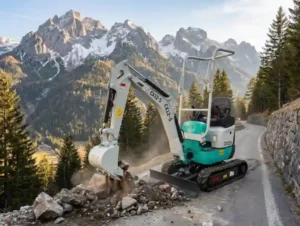
Conclusion: If engines had personalities, Yanmar would be the precise engineer, while Kubota would be the tireless labourer. Choose wisely — your excavator (and accountant) will thank you.