
An electric mini dumper is built for one very practical job: moving heavy material across compact sites without exhausting the crew. On landscaping jobs, renovation sites, farms, gardens, warehouses and municipal maintenance projects, moving soil, gravel, bricks, waste or tools can quietly eat up the working day. A manual wheelbarrow may look simple, but after the fiftieth loaded trip, nobody is calling it charming anymore.
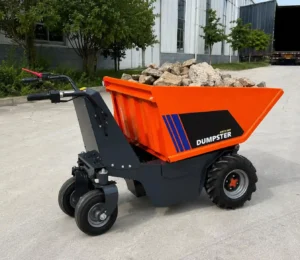
For contractors, dealers and rental companies, an electric mini dumper should be judged by real site conditions, not just by a nice product photo. The correct machine depends on load capacity, battery runtime, ground condition, access width, unloading method and daily trip frequency. When these points match the job, a battery powered wheelbarrow can reduce labor, improve site flow and make material handling much easier to control. Before choosing the drive type, it is useful to compare how tracked and wheeled mini dumpers perform on different ground conditions.
Why Electric Mini Dumpers Are Useful on Compact Jobsites
Many small jobsites are not small in workload. A garden path, basement renovation, greenhouse, farm lane or narrow construction site may still require moving hundreds of kilograms of material each day. Larger dumpers may not enter the site, and manual handling may be too slow. This is where an electric power barrow becomes useful. It gives the operator powered travel, controlled movement and a compact footprint for areas where bigger machines would only create more problems.
Electric power also makes sense when noise, exhaust and operator comfort matter. In residential areas, indoor renovation projects, warehouses and public maintenance work, quieter operation can be a real advantage. The machine still needs careful use, but it avoids the smoke, vibration and noise that often make small-site work unpleasant. In simple words, it helps the crew move material without turning the site into a noisy little battlefield.
Start With Load Capacity, Not Bucket Size
Load capacity should always come before bucket size. A large bucket looks productive, but material density can quickly change the story. Dry leaves, mulch, wet soil, sand, gravel and broken concrete do not weigh the same. If the dumper is overloaded again and again, the motor, battery, frame and tracks or wheels will all complain eventually. Machines are usually polite at first, but repairs are not.
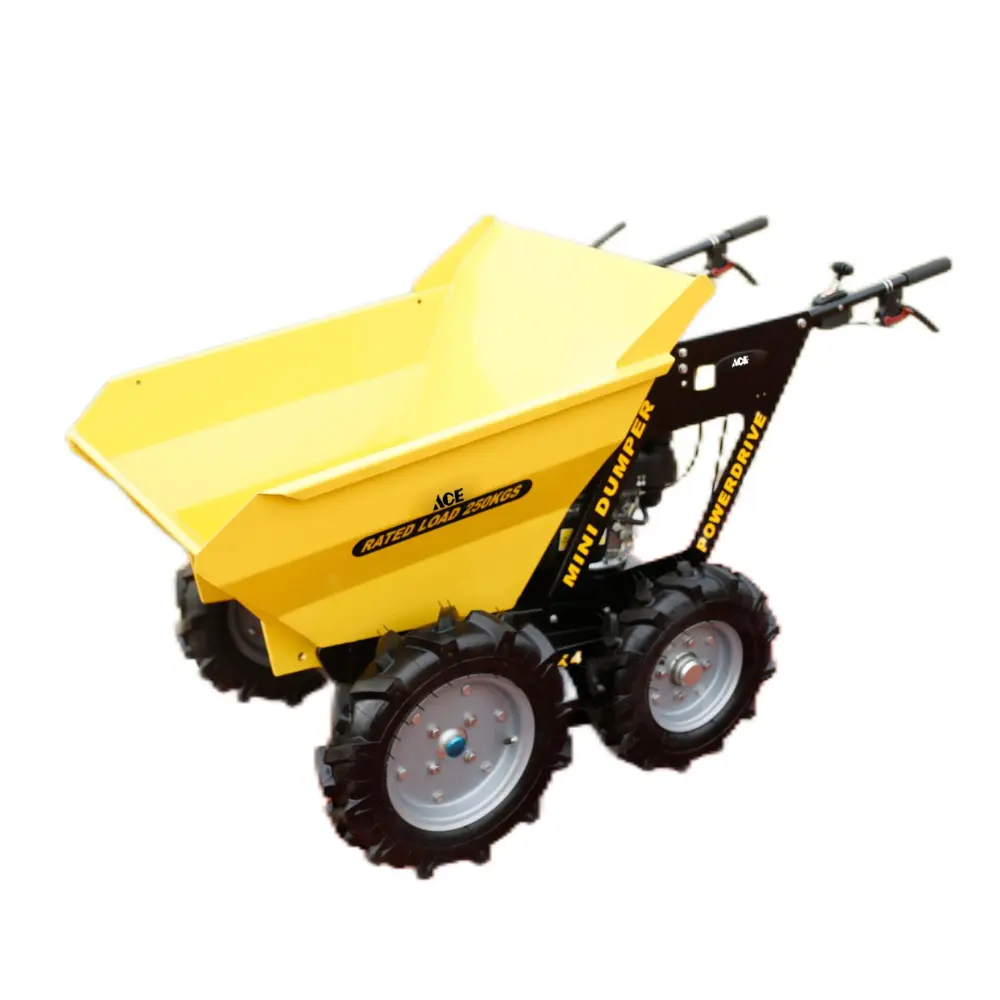
For light garden work, greenhouse handling and indoor renovation cleanup, a 300kg class mini dumper for landscaping may be enough when the route is narrow and the work is done in repeated short trips. For heavier material handling, a 500kg class model may be more suitable if the ground can support it and the access route is wide enough. Buyers working with heavier site loads can use the 500kg EDCX-500 electric dumper example to understand how a larger compact dumper is positioned.
Battery Runtime Depends on the Real Work Cycle
Battery runtime is one of the first questions buyers ask, but the answer depends on the job. A machine moving light loads across flat concrete will use power differently from one climbing a slope with wet soil. Frequent turning, reversing, dumping and restarting also increase energy use. For this reason, battery runtime should be considered together with travel distance, slope, material weight and number of trips per hour.
Dealers should explain runtime in a way customers understand. A landscaping team may use the dumper throughout the day in short work cycles. A renovation crew may use it heavily during debris removal and then charge it while other work continues. A farm user may need several steady trips between storage, greenhouse and field. These are different use patterns, even if the product name is the same. Matching the battery to the work cycle prevents disappointment and helps customers trust the recommendation.
Tracked or Wheeled Electric Mini Dumper?
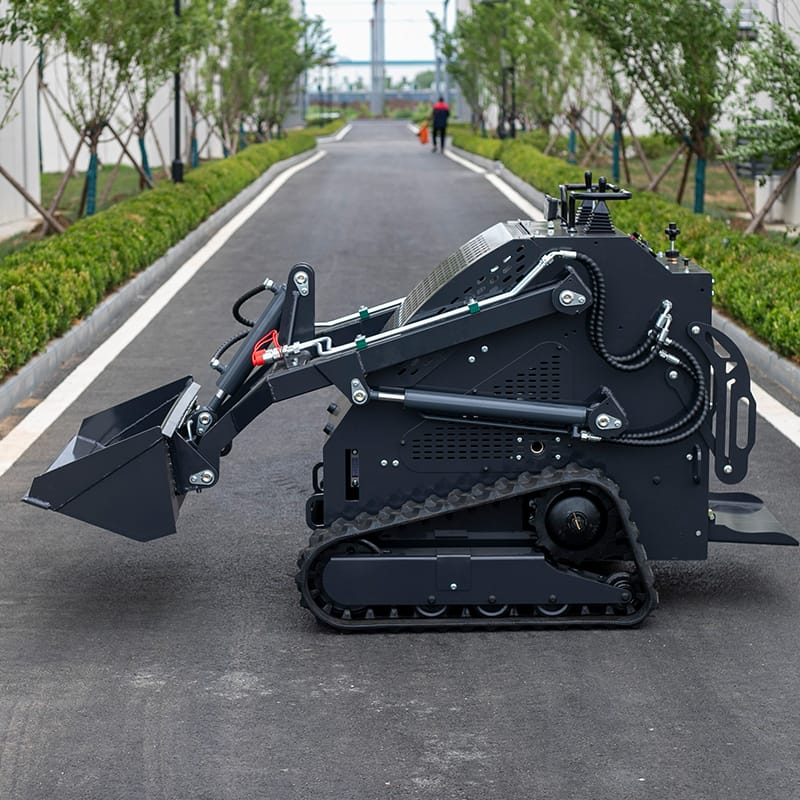
The choice between tracked and wheeled designs should be based on the ground. A tracked electric mini dumper usually performs better on soft soil, grass, mud, loose gravel and uneven garden paths because the tracks spread the weight over a wider contact area. This improves traction and reduces sinking. For landscaping, farms, orchards and muddy construction access, tracks often make the machine feel more stable and predictable.
A wheeled electric wheelbarrow for construction may be better on smooth concrete, paved yards, warehouse floors and firm paths. Wheels can be efficient, simple and easy to turn on hard surfaces. The best decision comes from walking the real route before buying. Check the narrowest access point, the tightest turn, the steepest slope and the unloading area. The site will tell you the truth if you look at it carefully.
Unloading Method Affects Speed and Operator Fatigue
Unloading is where many buyers underestimate the difference between models. Manual tipping is simple and cost-effective for lighter material, but dense loads can make repeated tipping tiring. Hydraulic or powered dumping is more efficient when the operator unloads heavy material many times per day. For contractors, this can save time and reduce fatigue, especially during demolition cleanup, soil moving or construction waste handling.
Safety also matters during unloading. The operator should avoid dumping heavy loads on steep or unstable ground. The machine should be positioned with clear visibility and enough space around it. A compact electric mini dumper is easier to control than a large dumper, but gravity still has a strong personality. It should always be respected.
How Dealers Should Explain Electric Mini Dumpers to Buyers
For overseas dealers and rental companies, electric mini dumpers can serve many customer groups. Landscapers move soil, stone and mulch. Renovation teams move waste and tools. Farms and greenhouses move fertilizer, harvest containers and supplies. Municipal teams use compact dumpers for parks, sidewalks and narrow access maintenance. For very small material-handling jobs, dealers may also compare the dumper with a lighter BY250S power barrow setup so buyers can choose the right capacity level.
The strongest sales message should not be only “electric”. A better message is: compact access, lower noise, less manual labor, simple operation and practical material handling. Customers want to know whether the machine will save time and reduce crew fatigue. If the answer is explained with load, runtime, terrain and unloading method, the buyer can make a confident decision instead of guessing.
FAQ
What is an electric mini dumper used for?
It is used to move soil, sand, gravel, bricks, compost, tools and construction waste on compact jobsites, landscaping projects, farms, gardens, warehouses and renovation sites.
How do I choose between a 300kg and 500kg electric mini dumper?
Choose by material weight, route width, ground condition and trip frequency. A 300kg model suits narrow and lighter work, while a 500kg model is better for heavier material if the site has enough space and ground support.
Is a tracked electric mini dumper better than a wheeled model?
A tracked model is usually better on soft, muddy or uneven ground. A wheeled model can be more efficient on firm, smooth and paved surfaces.
Final Thought
The right electric mini dumper is not always the biggest one. It is the one that matches the material, route, ground and working rhythm. When buyers understand load capacity, battery runtime, terrain and unloading method together, the machine becomes more than a powered wheelbarrow. It becomes a small but very useful productivity tool.
Need help choosing a mini dumper for your market? Share your working material, load requirement and ground conditions with the ACE Machinery team, and we can help recommend a suitable electric or tracked dumper option.