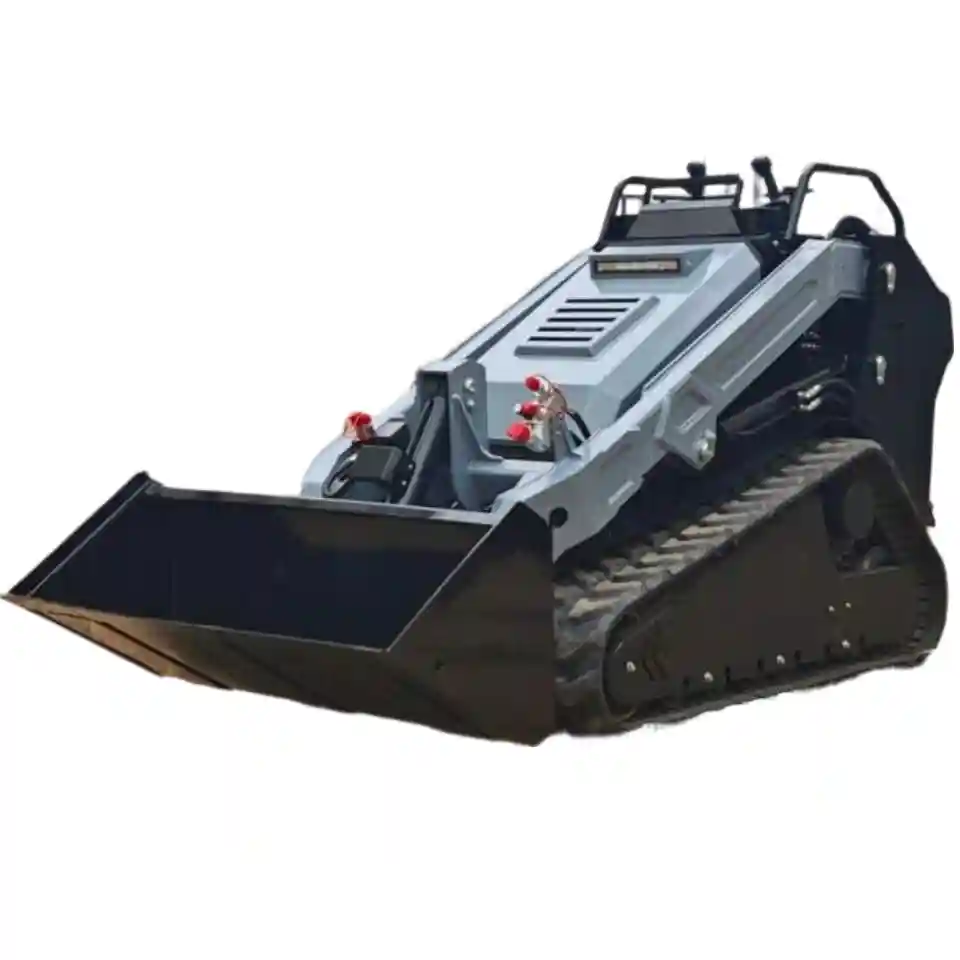

Choosing a remote control lawn mower is not the same as choosing an ordinary lawn mower with a different controller. Once the operator is no longer walking behind the machine, the buying decision becomes more technical: slope angle, ground condition, vegetation height, cutting system, machine width, power source and service access all start to matter.
For farms, orchards, roadsides, solar farms, embankments and rough vegetation areas, the safest choice is usually not the biggest mower or the cheapest mower. It is the machine that matches the real jobsite. A tracked slope mower may be excellent on steep, wet ground, while a wheeled grass cutter can be simpler and more efficient on flat, firm areas. A compact electric flail mower may be better for orchard rows than a wide multi-function model that cannot pass between trees.
This guide explains how to choose a remote control lawn mower from an engineering and buyer’s point of view, so you can request the right model instead of collecting confusing quotations.
Quick Answer: Match the Mower to the Jobsite First
Before comparing brands or prices, describe the worksite. A remote control slope mower should be selected around the ground it must travel on and the vegetation it must cut.
| Jobsite condition | Better mower direction | Why it matters |
|---|---|---|
| Steep slopes or embankments | Tracked remote control slope mower | Tracks improve traction and stability on uneven ground |
| Orchards and narrow rows | Compact tracked or electric flail mower | Smaller width improves access between trees |
| Flat grass areas | Wheeled grass cutter | Simpler structure and efficient movement on firm ground |
| Rough grass, weeds or mixed vegetation | Remote control flail mower | Flail cutting handles tougher vegetation better |
| Long farm work with multi-use needs | Multi-function tracked mower | One carrier can support mowing and other field tasks |
If the site has slopes, wet soil, loose ground or tall weeds, start the selection from traction and cutting system. If the site is flat, open and regularly maintained, a simpler wheeled grass cutter may be enough.
1. Start With Slope Angle and Ground Conditions
Slope is the first filter because it changes both safety and machine performance. A mower that works well on flat ground can lose traction, slide sideways or become difficult to control on a wet bank. Remote control helps because the operator can stand away from the cutting deck, but the machine still needs the right chassis and weight balance.
A 2026 JIRCAS paper on remote-controlled mowers for steep slopes explains why slope mowing is difficult: steep-ground mowing is labor-intensive, unstable work posture can cause accidents, and remote operation allows workers to control the mower without climbing the slope themselves. The same paper discusses crawler drive, cutting unit type, slope angle and work efficiency as key design factors for remote-controlled mowers. Source: JIRCAS, Development of Remote-Controlled High-Efficiency Mower for Steep Slopes.
For buyers, the practical lesson is simple: do not judge slope capability only by a catalog number. Wet grass, loose soil, holes, stones, side slopes and operator visibility can all reduce real-world performance. When asking for a quotation, send photos or videos of the steepest area, not only the average field.
2. Tracked vs Wheeled Remote Control Lawn Mowers
A tracked remote control lawn mower spreads machine weight over a larger ground contact area. This usually gives better traction on slopes, soft soil, muddy edges and rough farm ground. The trade-off is that sharp turns can disturb delicate turf, especially when the operator spins the machine in place.
A wheeled grass cutter is usually more suitable for flatter, firmer areas where the machine does not need maximum traction. It can be a practical choice for open grass areas, paths and maintained land where the ground is not too steep or wet.
| Factor | Tracked remote control mower | Wheeled grass cutter |
|---|---|---|
| Steep slopes | Better choice | Limited |
| Wet or soft soil | Better traction | Higher slipping risk |
| Rough ground | More stable | Can bounce or lose grip |
| Smooth flat areas | Works, but may be over-specified | Efficient and simple |
| Delicate lawns | Avoid sharp turns | Often gentler on firm turf |
| Buyer profile | Farms, orchards, contractors, roadside crews | Regular grass cutting on flatter sites |
Choose tracks when the mower must stay stable. Choose wheels when the work is simpler and the ground is predictable.
3. Match the Cutting System to the Vegetation
The cutting system matters as much as the drive system. Fine grass, tall weeds, orchard undergrowth and rough brush do not behave the same under a blade.
A flail mower uses many small blades or hammers mounted around a rotating drum. This design is commonly used for heavier grass, rough vegetation and uneven surfaces, where a normal lawn mower may struggle. For remote control mowing, flail systems are useful when the site includes weeds, mixed growth, orchard floors or roadside vegetation.
A standard grass cutting system can be enough for simpler grass control, especially on flatter land where the goal is regular maintenance rather than rough vegetation recovery.
| Vegetation type | Better cutting direction |
|---|---|
| Short maintained grass | Grass cutter or light mower |
| Tall grass and weeds | Flail mower |
| Orchard floor vegetation | Compact tracked flail mower |
| Roadside or embankment growth | Tracked flail mower |
| Light brush or neglected areas | Stronger flail or hammer-knife style system |
The JIRCAS study also notes that cutting-unit layout affects whether weeds are pressed down before cutting. That is a useful reminder for buyers: the mower deck position and blade type can change the finished result, not just the engine power.
4. Compare Power Source: Electric, Gasoline or Multi-Function Systems
Remote control mowers may use electric power, gasoline engines or mixed systems depending on the design. There is no universal best choice.
Electric remote control mowers are useful where lower noise, simpler operation and compact access are important. They can fit orchards, gardens, managed green areas and locations where fuel handling is inconvenient. The trade-off is battery planning: working time, charging method and replacement cost must be checked before purchase.
Gasoline-powered machines are often preferred for longer work, thicker vegetation and higher power demand. They need more fuel and maintenance attention, but they can be better for contractors or farm users who work across larger areas.
Multi-function tracked mowers are useful when mowing is only one task. If the same machine must support grass cutting, weeding, trenching, rotary tilling or backfilling, then the attachment system and drive strength become part of the buying decision.
5. Do Not Buy Only the Widest Cutting Width
A wide cutting width looks attractive because it suggests faster work. That is true only when the site is open enough for the machine to use that width efficiently.
For example, the GT-LD1200 remote control tracked lawn mower supports a 1000/1200 mm grass-cutting width, a 45-degree climbing ability and a remote control distance of up to 200 m. That makes it a strong option for farms, orchards, slopes and multi-function field work.
But in narrow orchard rows or tighter access areas, a compact model may be easier to use. The CD-600L electric remote control flail mower has a 600 mm working width, 48 V battery system, 40-degree climbing capacity and 285 kg machine weight. For buyers who care about narrow access, low-noise operation and electric mowing, that smaller width can be a strength.
For flatter, simpler cutting, the 3TGQ-8.6C wheeled grass cutter uses an 800 mm working width, gasoline power and manganese steel blades. It should be considered when the job does not require a tracked slope mower.
6. Remote Control Range Is Useful, but Visibility Is More Important
Many buyers ask first about remote control distance. Range matters, but safe visibility matters more. A 200 m range is not very helpful if the operator cannot clearly see the machine, the slope edge, hidden stones or people nearby.
When working on slopes, the operator should stand in a stable position with a clear view of the mower. Avoid standing directly below the machine on a slope. If the mower slides, gravity will not politely ask where your boots are.
For commercial buyers, ask about emergency stop behavior, signal loss protection, controller water resistance and service access. These details are easy to ignore before purchase and very annoying after delivery.
7. Which ACE Model Fits Which Work?
| Model | Best fit | Key selection points |
|---|---|---|
| GT-LD1200 Remote Control Tracked Lawn Mower | Farms, orchards, slopes, multi-function work | 1000/1200 mm cutting width, 45-degree climbing ability, 200 m remote range, optional attachments |
| CD-600L Electric Remote Control Flail Mower | Electric flail mowing, narrow access, low-noise areas | 600 mm working width, 48 V battery, 40-degree climbing capacity, 285 kg weight |
| 3TGQ-8.6C Classic 800 Wheeled Grass Cutter | Flatter grass areas and general grass cutting | 800 mm working width, gasoline engine, manganese steel blades |
For the full category, see remote control lawn mowers for sale.
8. Buyer Checklist Before Requesting a Quote
Send these details before asking for price. You will get a better recommendation and avoid the classic “cheap machine, wrong machine” problem.
| Information to provide | Why it matters |
|---|---|
| Steepest slope angle | Determines tracked vs wheeled and stability requirement |
| Ground condition | Wet, soft, rocky or uneven ground changes traction |
| Vegetation type and height | Determines flail vs grass cutter |
| Working width limit | Gates, rows and trails may limit machine size |
| Daily working hours | Affects battery, fuel and durability requirements |
| Preferred power source | Electric, gasoline or multi-function system |
| Transport method | Trailer, van or farm vehicle access matters |
| Required attachments | Mowing only or multi-task field maintenance |
FAQ
Are tracked remote control mowers better for steep slopes?
In most steep, wet or uneven conditions, tracked remote control mowers are the better direction because they provide more ground contact and traction. However, the actual choice still depends on slope angle, soil condition, vegetation and operator visibility.
Is a flail mower better than a rotary mower for rough grass?
For rough grass, weeds and mixed vegetation, a flail mower is usually more suitable. Rotary-style cutting can work well for cleaner grass, but flail cutting is generally preferred when the site is heavier, rougher or less frequently maintained.
What cutting width should I choose for orchards?
Do not choose width from the catalog alone. Measure row spacing, tree clearance, turning space and transport access. A 600 mm mower may work better in narrow orchard rows, while a 1000/1200 mm mower may be more efficient in open farm areas.
Can electric remote control mowers handle slopes?
Yes, if the chassis, motor system and weight balance are designed for slope work. For example, the CD-600L is an electric tracked flail mower with a listed 40-degree climbing capacity. Buyers should still check real ground conditions before selection.
What is the most important information for a supplier?
Send slope angle, site photos, vegetation height, working width limits and expected daily working hours. A good recommendation depends more on the jobsite than on a product name.
Conclusion: Choose by Terrain, Not by Product Name
A remote control lawn mower should be selected from the ground up. Start with slope angle, soil condition and vegetation. Then decide whether you need tracks or wheels, flail cutting or simple grass cutting, electric power or gasoline power, compact width or wide cutting capacity.
If your work includes farms, orchards, slopes, roadsides or rough vegetation, ACE Machinery can help match the mower to the real working conditions. Explore the full remote control lawn mower range or contact ACE Machinery with your slope angle, site photos and mowing requirements.