
Pneumatic vs Foam-Filled vs Solid Skid Steer Tires: Which Should You Choose?
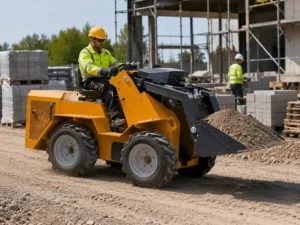
Quick answer: Pneumatic skid steer tires usually provide the softest ride and the lowest initial cost, but they require pressure checks and can be punctured. Foam-filled tires use a pneumatic casing filled with cured polyurethane, reducing air-loss flats while retaining some cushioning. Solid skid steer tires contain no pressurised air and are well suited to demolition, recycling and other puncture-heavy sites. The correct choice depends on the ground surface, puncture frequency, daily working hours and total tire cost per productive hour.
A skid steer does not steer politely. It turns by dragging its tires across the ground, often while carrying a load. That movement creates heat, tread wear and side forces, so tire construction is only part of the decision. Tread pattern, machine weight, operator habits and downtime also deserve a seat at the meeting.
What Are the Main Skid Steer Tire Types?
Pneumatic skid steer tires use compressed air to support the machine. Their flexible casing absorbs shocks and follows uneven ground, which normally gives the operator a smoother ride. They are most useful where sharp debris is limited and flotation matters more than flat prevention. Bobcat reports that its Super-Float pneumatic tires have an 85% larger footprint than conventional tires, helping spread machine weight over soft or wet ground. This figure applies to that specific Super-Float design rather than every pneumatic tire. Source: Bobcat tire guide.
Foam-filled skid steer tires begin as pneumatic tires, but their air cavity is filled with polyurethane material. This removes normal air-loss flats and retains some of the cushioning provided by the original casing. Bobcat describes foam-filled tires as a compromise between pneumatic and solid rubber designs: they offer greater puncture resistance while keeping part of the pneumatic tire’s cushioning effect. Source: Bobcat loader buyer’s guide.
Solid skid steer tires are built without an air cavity, so they cannot lose pressure after a puncture. They are commonly selected for scrap yards, demolition sites and waste-handling work. However, “solid” does not mean indestructible. The tread can still wear, crack or lose chunks, and the heavier assembly must be approved for the machine.
Pneumatic vs Foam-Filled vs Solid Tire Comparison
| Comparison factor | Pneumatic | Foam-filled | Solid |
|---|---|---|---|
| Ride comfort | Usually the softest | Moderate cushioning | Firm, although aperture designs can improve deflection |
| Air-loss flats | Possible | Eliminated | Eliminated |
| Pressure maintenance | Required | Normally unnecessary | Not required |
| Initial cost | Usually lowest | Medium to high | Usually highest |
| Assembly weight | Generally lowest | Higher after filling | Often highest |
| Typical application | Landscaping and cleaner mixed terrain | Construction with moderate puncture risk | Demolition, recycling and severe debris |
| Main limitation | Punctures and pressure loss | Added weight and difficult removal | Firm ride and higher purchase cost |
This table is a selection guide, not a universal performance ranking. Tire size, tread depth, rubber compound and operating surface can change the result considerably. A deep off-road solid tire and a smooth scrap-yard solid tire may contain similar amounts of rubber, yet behave very differently in mud.
Which Skid Steer Tire Type Fits Each Jobsite?
Soft Ground and Landscaping
Pneumatic tires are normally the better starting point when the machine works on lawns, loose soil or wet ground and punctures are uncommon. A wider footprint can reduce sinking and surface damage, although tire pressure and turning style still matter. An 85% larger footprint will not turn a skid steer into a hovercraft, but it may stop the machine from digging four small ponds every time it crosses the site.
Concrete and General Construction
Foam-filled tires make sense when a machine still needs some cushioning but regularly encounters nails, timber fragments and broken concrete. Their value increases when puncture repairs and lost production cost more than the higher purchase and filling expense. This is why fleets should record flat frequency and downtime instead of relying on the operator’s memory, which usually considers the most recent puncture the worst puncture in human history.
Demolition, Scrap and Recycling
Solid skid steer tires become easier to justify where sharp metal and severe debris are part of normal operations. At the Invema recycling plant in Honduras, Camso reported that SKS 793S solid tires averaged seven months on Bobcat S650 and Cat 246D skid steers. The pneumatic tires previously used averaged 1.5 months, while foam-filled tires averaged two months. In that specific site, the solid-tire service period was about 4.7 times the pneumatic result and 3.5 times the foam-filled result. This was a single recycling-site case, not an industry-wide average. Source: Camso Invema field case.
| Invema skid steer tire option | Reported average service period | Relative to pneumatic |
|---|---|---|
| Pneumatic | 1.5 months | 1.0× |
| Foam-filled pneumatic | 2 months | About 1.3× |
| Camso SKS 793S solid | 7 months | About 4.7× |
How Tire Weight and Design Affect the Loader
Foam-filled and solid tire assemblies are normally heavier than comparable air-filled options, but the exact difference depends on size and design. Caterpillar lists one 12×16.5 solid tire-and-rim assembly at 290 lb. Four equivalent assemblies would weigh about 1,160 lb, although this is a specific Cat component and should not be treated as the weight of every 12×16.5 solid tire. Before conversion, check approved tire options, transport weight and available service equipment. Source: Cat 643-4867 specifications.
Solid tires also vary in ride quality. Camso’s vertical-deflection testing found that the aperture-style SKS 792S produced 35% to 39% more deflection than the conventional solid-tire baseline across three tested sizes. Greater deflection can help absorb shocks, although this manufacturer test does not prove that the tire will feel as soft as every pneumatic design. Source: Camso SKS 792S test data.
| Camso SKS 792S size | Solid-tire baseline | Measured deflection |
|---|---|---|
| 31×10-20 | 100% | 135% |
| 33×12-20 | 100% | 139% |
| 36×14-20 | 100% | 138% |
Tread Pattern Matters as Much as Tire Construction
Choose tire construction according to puncture risk, then choose the tread according to the surface. Deep, self-cleaning lugs suit loose soil and mud, while close-block or smoother tread patterns generally suit hard, abrasive surfaces. A flat-proof tire with the wrong tread can still spin, scrub or wear quickly. Rubber may be tough, but it cannot negotiate with the ground.
Operator behaviour also affects wear. In the Invema field case, engineers linked fast turning with premature or conical wear and recommended preventive tire rotation when the difference between the left and right sides exceeded 8 mm. This was a site-specific maintenance recommendation rather than a universal OEM rule, but it shows why fleets should measure wear instead of waiting for one side to become visibly bald. Source: Camso engineering recommendations.
How to Compare Skid Steer Tire Cost per Hour
The lowest purchase price does not always produce the lowest operating cost. A practical fleet calculation is:
Tire cost per productive hour = purchase price + installation + repairs + downtime cost ÷ productive operating hours
Pneumatic tires may remain the least expensive option where punctures are rare. Foam filling may offer better value on mixed construction sites, while solid or airless designs may reduce downtime in severe-duty work. Michelin states that its X TWEEL SSL Hard Surface airless tire has tread designed to last two to three times longer than a pneumatic tire at equal tread depth. Because TWEEL uses flexible spokes and an integrated wheel-and-tire assembly, this claim applies to that product and should not be transferred to every solid tire. Source: Michelin X TWEEL specifications.
Skid Steer Tire FAQ
Are foam-filled tires the same as solid tires?
No. Foam-filled tires use a pneumatic casing filled with polyurethane, while solid tires are manufactured without a pressurised air cavity. Both prevent normal air-loss flats, but their structure, weight and service methods differ.
Which skid steer tires provide the smoothest ride?
Pneumatic tires generally provide the greatest shock absorption. Foam-filled tires retain some casing flexibility, while aperture-style solid tires can improve deflection compared with rigid solid designs.
Can solid skid steer tires go flat?
They cannot lose air because they contain none. They can still wear, crack or lose rubber chunks, so “flat-proof” does not mean “damage-proof”.
Are airless tires the same as solid tires?
Not always. Products such as Michelin TWEEL use flexible spokes and an integrated airless radial structure rather than a conventional block of solid rubber.
Final Buying Rule
When comparing pneumatic vs foam-filled vs solid skid steer tires, use three steps: choose the construction according to puncture risk and ride requirements, choose the tread according to the surface, and compare the total cost over productive operating hours.
Pneumatic tires suit cleaner sites and soft ground, foam-filled tires suit mixed work where flats cause regular disruption, and solid tires suit severe debris and high-hour operation. Buyers working between hard and soft surfaces should also compare whether a tracked or wheeled skid steer is the better starting platform.
Before ordering, provide the loader model, tire size, operating surface, daily hours, typical load and puncture history. Those details will produce a better recommendation than simply asking which tire lasts longest.