
Remote Control Slope Mower Safety Checklist for Steep Terrain
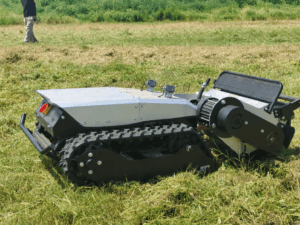
Buying a remote control slope mower is not just about finding the machine with the biggest slope number. That number looks nice in a brochure, but the real jobsite usually has wet grass, loose soil, hidden stones, narrow turning space and one corner that always seems designed to embarrass equipment. A safer choice starts with the ground, not the catalog.
This guide gives contractors, farms, orchard owners and roadside maintenance teams a practical checklist for choosing a remote control slope mower. It explains how to evaluate slope angle, traction, cutting system, visibility and working risk before choosing between a tracked slope mower, a remote control flail mower or a wheeled grass cutter.
Quick Answer: What Should You Check First?
| Check Item | Why It Matters | Best Decision |
|---|---|---|
| Slope angle | Steeper slopes increase sliding, soil damage and rollover risk. | Use a tracked remote control mower for steep or unstable ground. |
| Ground condition | Wet grass, mud and loose soil reduce grip. | Do not judge only by maximum climbing angle. |
| Vegetation type | Grass, weeds, brush and orchard residue need different cutters. | Use flail cutting for rough vegetation and debris-prone jobs. |
| Operator visibility | The operator must see the mower, slope edge and obstacles clearly. | Remote range only helps when line of sight is safe. |
| Access and turning space | Narrow paths and slope edges affect entry, turning and recovery. | Check machine width, turning area and transport route. |
Measure the Real Slope Before Comparing Machines
Many buyers start by asking whether a mower can handle a 45-degree slope. That is a fair question, but it is not the first question. The first question is: what is the real slope on your jobsite? A clean test slope and a roadside bank covered with weeds are two very different worlds.
Slope can be measured in degrees, percent grade or ratio. For example, Caltrans notes that a 2:1 slope is about 27 degrees, which is already a serious mowing condition. Its remote-controlled mower research also found that these machines can improve worker safety in roadside vegetation work, but on slopes of 2:1 or steeper, soil disturbance can happen if the operator drives too aggressively.
That is the part many brochures do not explain. A mower may climb well in a test, but real performance depends on soil, moisture, track contact, turning direction and operator control. Before requesting a quote, measure the steepest section, the average working angle and whether the mower needs to turn across the slope.
Traction Matters More Than Bragging Rights
For steep terrain, traction is the quiet hero. A tracked remote control slope mower spreads weight over a larger contact area, which helps it grip soft or uneven ground. A wheeled grass cutter can work very well on flatter farms and orchards, but it is not the right tool for steep banks, wet slopes or rough roadside vegetation.
The U.S. Consumer Product Safety Commission warns that wet grass and hidden debris can create mowing hazards. Although that guidance is written for walk-behind mowers, the basic lesson still applies: wet grass, stones, branches and old metal are not friendly to any cutting machine. They are the kind of surprises that turn a normal job into a long afternoon.
| Jobsite Condition | Better Machine Type | Recommended ACE Page |
|---|---|---|
| Steep roadside bank or uneven slope | Tracked remote control slope mower | GT-LD1200 Remote Control Tracked Lawn Mower |
| Orchard, rough grass, weeds and mixed vegetation | Remote control flail mower | CD-600L Electric Remote Control Flail Mower |
| Flat farm grass and regular maintenance | Wheeled grass cutter | 3TGQ-8.6C Classic 800 Wheeled Grass Cutter |
Choose the Cutting System by What the Mower Will Hit
A slope mower is not only a climbing machine. It is also a cutting machine, and the blade system must match the material on the ground. If the jobsite has tall weeds, orchard residue, small brush or unknown debris, a flail mower is often easier to control because the cutting action is more contained.
Rotary cutting can be efficient on cleaner grass, but rough vegetation is less polite. It may hide branches, stones or metal pieces. For that kind of work, buyers usually care less about “maximum power” and more about stable cutting, predictable discharge and lower risk from debris. For a deeper comparison, read Flail Mower vs Rotary Mower.
Remote Control Does Not Mean No Supervision
Remote control keeps the operator away from the machine, which is a major advantage on slopes. But it does not turn mowing into a video game. The operator still needs a clear view of the mower, the slope edge, nearby people, obstacles and escape path.
Some ACE remote control mowing models are designed with up to 200 m remote control distance. That range is useful, but it should not be treated as permission to operate blindly from far away. On a difficult slope, a shorter distance with better visibility is usually the smarter choice. The mower should always be close enough for the operator to understand what the machine is doing before it does something expensive.
| Safety Point | What to Confirm |
|---|---|
| Remote response | The machine responds smoothly without delay in the real working area. |
| Emergency stop | The operator knows how to stop the mower immediately. |
| Line of sight | The mower, slope edge and obstacles remain visible during operation. |
| Safe work zone | No workers, animals or vehicles enter the mowing area. |
| Turning space | The mower can turn without sliding toward a ditch, wall or road. |
Send Better Jobsite Details Before Asking for a Quote
A good machine recommendation depends on good information. If you only ask, “What is the price?” the supplier has to guess. If you explain the slope, vegetation, working width, soil and access conditions, the recommendation becomes much more accurate.
| Information to Provide | Example |
|---|---|
| Slope angle | Average 20 degrees, maximum about 35 degrees |
| Ground type | Dry soil, wet orchard grass, roadside gravel or loose bank |
| Vegetation | Short grass, tall weeds, brush or mixed growth |
| Working width | 600 mm, 800 mm, 1000 mm or 1200 mm |
| Access width | Gate, orchard row, trailer ramp or narrow path |
| Application | Farm, orchard, roadside, solar farm or municipal slope |
Which ACE Mower Fits Each Job?
GT-LD1200 for Larger Tracked Slope Mowing
The GT-LD1200 Remote Control Tracked Lawn Mower is better suited for larger slope mowing jobs where crawler traction, wider cutting width and remote operation are important. It is a strong option for farms, roadsides, fields and vegetation management where wheeled machines may struggle with grip.
CD-600L for Rough Grass, Orchards and Narrow Access
The CD-600L Electric Remote Control Flail Mower is useful when buyers need a compact tracked mower for orchards, slopes, rough grass and mixed vegetation. Its flail cutting design makes it practical for jobs where weeds, branches and uneven growth are common.
3TGQ-8.6C for Flatter Grass Cutting Jobs
The 3TGQ-8.6C Classic 800 Wheeled Grass Cutter is better for flat fields, farms, orchards and regular grass maintenance. It should not be positioned as the main choice for steep slope mowing, but it can be a practical option when the ground is stable and access is simple.
Common Buying Mistakes
The first mistake is buying by slope angle alone. A high climbing number sounds impressive, but it does not tell the whole story. Ground condition, turning space and traction often matter more than the headline number.
The second mistake is choosing one cutting system for every job. Clean grass, orchard weeds and roadside brush are different materials. A mower that works beautifully in short grass may not be happy in thick weeds with hidden branches. Machines have feelings too, in a very expensive mechanical way.
The third mistake is forgetting transport and access. If the mower cannot pass through the gate, fit between orchard rows or load safely onto the trailer, the problem is not the mower’s power. It is the planning.
Final Checklist Before Requesting a Quote
- Measure the steepest slope instead of guessing from photos.
- Check whether the ground is dry, wet, muddy, loose or rutted.
- Identify the vegetation type: grass, weeds, brush or mixed growth.
- Choose tracked mowing for steep or unstable terrain.
- Choose flail cutting when debris and rough vegetation are common.
- Confirm working width, access width and transport method.
- Keep operator visibility and emergency stop procedures clear.
- Ask the supplier to match the machine to the real jobsite, not just a brochure number.
If you are comparing remote control slope mowers for farms, orchards, roadsides or vegetation management, start from the full category page here: Remote Control Lawn Mowers. For model matching and quotation support, contact ACE Machinery through the contact page.