
Choosing between a backhoe loader and an excavator can feel a bit like choosing between a Swiss army knife and a professional digging tool. Both can dig. Both can move soil. Both look strong enough to make a shovel feel unemployed. But they are not built for the same type of work.A backhoe loader is a multi-purpose machine. It has a front loader bucket for moving materials and a rear digging arm for excavation. An excavator, on the other hand, is mainly designed for digging, lifting, trenching, demolition and precise earthmoving work. The right choice depends on your job size, ground condition, digging depth, mobility needs, operating weight and budget.
This guide explains the real differences between a backhoe loader vs excavator, so contractors, rental companies, landscapers and equipment buyers can choose the right machine without guessing.
Quick Answer: Which Machine Should You Choose?
Choose a backhoe loader if your project needs one machine for digging, loading, backfilling and moving materials across several areas. It is useful for farms, road repair, municipal work, landscaping and small to medium construction sites.
Choose an excavator if your job needs stronger digging force, deeper trenching, better stability on rough ground, 360-degree rotation or more precise excavation. It is usually better for foundation work, utility trenching, demolition, slope work and heavy earthmoving.
| Factor | Backhoe Loader | Excavator |
|---|---|---|
| Main Strength | Digging + loading in one machine | Powerful and precise digging |
| Rotation | Rear arm usually has limited swing range | Upper body rotates 360 degrees |
| Mobility | Wheeled design, good for road travel | Tracked models need transport between sites |
| Stability | Good on firm and level ground | Excellent on rough or soft ground with tracks |
| Best For | Mixed small and medium jobs | Deep digging, trenching and heavy work |
| Typical Buyer | Municipal teams, farms, general contractors | Contractors, utility teams, landscapers, rental fleets |
What Is a Backhoe Loader?
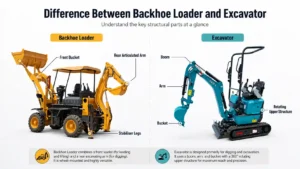
A backhoe loader is a wheeled construction machine with two working ends. The front side has a loader bucket, which can lift soil, sand, gravel, debris or other loose materials. The rear side has a digging arm, often called the backhoe arm, which is used for trenching, small foundations, drainage work and utility installation.
This two-in-one layout is the biggest advantage of a backhoe loader. It can dig a trench, move the soil, backfill the area and then travel to another part of the site. For jobs where the machine needs to move often, this is very useful.
A backhoe loader is often seen in road maintenance, farm construction, small building projects, landscaping, pipe repair and city utility work. It is not always the most powerful digging machine, but it is very flexible. Think of it as the worker who can dig, carry, clean and still drive to the next job without asking for a trailer.
ACE backhoe loaders are designed for projects that need both digging and loading functions. You can view more options on the ACE Backhoe Loader page.
What Is an Excavator?
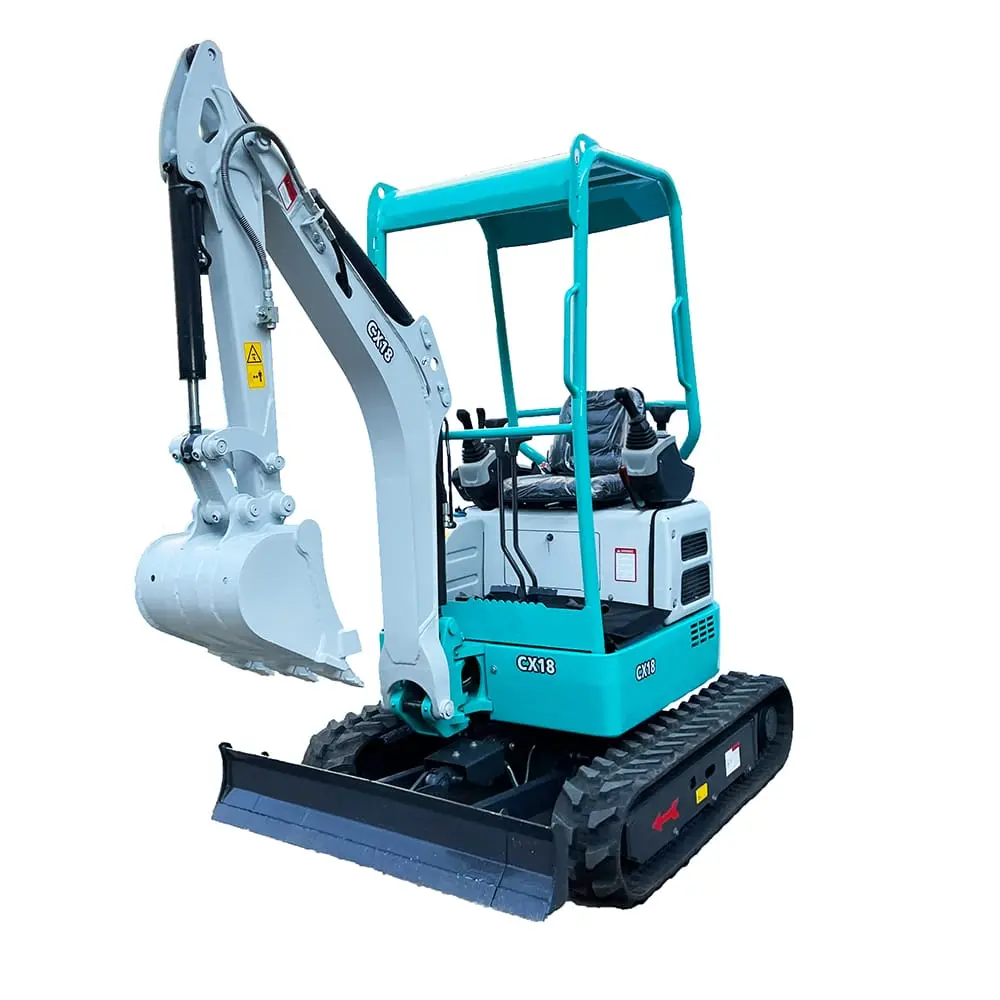
An excavator is a purpose-built digging machine. It usually has a boom, arm, bucket, cab and undercarriage. The upper structure can rotate 360 degrees, so the operator can dig, swing and dump material without moving the whole machine again and again.
Excavators can be wheeled or tracked. For most construction and landscaping jobs, tracked excavators are preferred because they offer better traction and stability on mud, loose soil, slopes and rough ground. Mini excavators are especially useful in tight access areas, such as residential gardens, narrow roads, orchards, small building sites and indoor demolition projects.
Compared with a backhoe loader, an excavator usually offers better digging depth, stronger breakout force and smoother operation for trenching or foundation work. With the right attachments, it can also handle drilling, breaking, grading, lifting and material sorting.
ACE Machinery specialises in compact and mini excavators from 1 to 3.8 tonnes, suitable for landscaping, trenching, farm work, small construction and utility projects. You can learn more from the ACE Mini Excavator product range.
Key Difference 1: Design and Working Structure
The first major difference is the machine layout. A backhoe loader is built around a tractor-style chassis. It has wheels, a front bucket and a rear digging arm. Its design focuses on doing several jobs with one machine.
An excavator is built around the digging system. The boom, arm and bucket sit on a rotating upper body. This gives the operator more freedom when digging around the machine. The excavator does not need to reposition as often, which saves time during trenching, loading and foundation work.
In simple words, a backhoe loader is a multi-tasking machine. An excavator is a digging specialist. Both are useful, but they solve different problems.
Key Difference 2: Rotation Range and Job Efficiency
Rotation is one of the most important differences between a backhoe loader and an excavator. A backhoe loader has a rear digging arm with a limited swing range. This is enough for many small and medium jobs, but the operator may need to reposition the machine more often.
An excavator can rotate 360 degrees. This means the operator can dig in front, swing to the side, load a truck and return to the trench without moving the tracks. On a busy job site, this can improve cycle time and reduce operator fatigue.
For long trenching work, deep foundation digging or repetitive loading, an excavator often works faster. The less the machine moves, the smoother the job becomes. Your operator will also thank you. Quietly, maybe, but still.
Key Difference 3: Digging Depth and Digging Power
If digging depth is your main concern, an excavator usually has the advantage. Excavators are designed for deeper and more stable digging. Their hydraulic system, boom structure and undercarriage are built to support stronger excavation forces.
A backhoe loader can handle many trenching and utility jobs, especially when the depth is moderate. But if the work involves deep drainage trenches, basement excavation, heavy soil, rocky ground or long daily digging hours, an excavator is usually the better choice.
For mini excavator buyers, bucket size, hydraulic flow and operating weight should be checked together. A small machine with the wrong bucket may look cute, but it will dig like it had a long lunch break. For trenching guidance, read our related article: Best Mini Excavator for Trenching Work.
Key Difference 4: Operating Weight and Stability
Operating weight affects digging force, balance and safety. A heavier machine usually gives better stability, especially when digging hard soil or lifting materials. But too much weight can damage soft ground, finished surfaces or small residential sites.
Backhoe loaders are usually stable on firm and open ground. They can use stabiliser legs during digging to improve balance. However, their wheeled design may not perform as well as tracks on muddy, loose or sloped ground.
Tracked excavators spread weight across a larger ground contact area. This improves traction and stability. For uneven terrain, trenching near slopes, wet soil or narrow sites, a tracked excavator or mini excavator is often safer and easier to control.
Key Difference 5: Mobility and Transport
Mobility is where the backhoe loader fights back strongly. Because it is wheeled, it can move between nearby work areas more easily. For city maintenance teams, road repair crews and farm users, this can save transport time and cost.
An excavator, especially a tracked excavator, is not designed for road travel. It usually needs a trailer or truck for transport. This adds cost, but the trade-off is better stability, digging performance and ground traction.
So, ask one simple question: does the machine need to travel often, or will it work mostly in one area? If it needs to travel between several small jobs, a backhoe loader may be practical. If it needs to dig hard and stay productive in one site, an excavator may be better.
Key Difference 6: Attachments and Versatility
Both machines can use attachments, but they use them in different ways. A backhoe loader is versatile because it already combines a front loader and rear digging arm. It can work with buckets, breakers, forks, augers, rippers and other tools depending on the model.
An excavator is also very flexible, especially with the right hydraulic attachments. Mini excavators can use hydraulic breakers, augers, grading buckets, trenching buckets, rakes, thumbs, quick hitches and rippers. This makes them suitable for landscaping, demolition, drilling, trenching and slope shaping.
If your work needs frequent attachment changes, a quick hitch can save a lot of time. ACE offers a wide range of excavator accessories, including buckets, augers, breakers, rakes, thumbs and quick couplers. You can view them here: Mini Excavator Attachments.
When Should You Choose a Backhoe Loader?
A backhoe loader is a good choice when your job needs flexibility more than maximum digging power. It works well for projects that include digging, loading, backfilling and light material handling on the same site.
Choose a backhoe loader for:
- Road repair and municipal maintenance
- Farm construction and drainage work
- Small foundation excavation
- Utility repair and pipe work
- Loading sand, gravel, soil and debris
- Projects that require frequent movement between nearby areas
For buyers with mixed tasks and limited equipment budgets, a backhoe loader can be a smart all-round solution.
When Should You Choose an Excavator?
An excavator is the better choice when digging performance, stability and precision matter most. It is especially useful when the project involves deeper trenches, heavy soil, uneven ground or continuous digging work.
Choose an excavator for:
- Deep trenching and utility installation
- Foundation excavation
- Demolition and breaking work
- Landscaping in tight spaces
- Working on soft, muddy or uneven ground
- Jobs requiring 360-degree rotation
- Precise grading and slope work
For small construction teams, rental companies and landscaping contractors, a mini excavator can offer a strong balance between power, transport convenience and operating cost.
Mini Excavator vs Backhoe Loader: Which Is Better for Tight Spaces?
For tight access construction sites, a mini excavator is often the better choice. It has a compact body, tracked undercarriage and precise hydraulic control. Some models also offer zero tail swing or reduced tail swing, which helps near walls, fences and buildings.
A backhoe loader can be useful in open areas, but it needs more room to manoeuvre. Its front loader and rear digging arm make the machine longer. In narrow residential sites or small urban projects, that extra size can become a problem.
If the worksite has narrow entrances, soft ground, garden areas or indoor spaces, a mini excavator is usually easier to manage. If the site is open and needs both loading and digging, a backhoe loader can be more efficient.
Cost Comparison: Purchase Price Is Not the Whole Story
Many buyers only compare purchase price. That is a mistake. A cheaper machine can become expensive if it uses more fuel, works slowly, breaks down often or needs another machine to support it.
When comparing a backhoe loader vs excavator, consider total cost of ownership. This includes fuel use, maintenance, transport, attachment cost, operator efficiency, spare parts and resale value.
A backhoe loader may reduce the need for a separate loader on mixed jobs. An excavator may finish digging faster and reduce labour time. The better machine is not always the cheaper one. It is the one that earns more value on your actual job site.
Final Decision Guide
| Your Job Condition | Better Choice | Reason |
|---|---|---|
| Mixed digging and loading tasks | Backhoe Loader | One machine can handle several jobs |
| Deep trenching | Excavator | Better digging depth and reach |
| Frequent road movement | Backhoe Loader | Wheeled design improves mobility |
| Soft or uneven terrain | Tracked Excavator | Tracks improve traction and stability |
| Tight residential site | Mini Excavator | Compact size and precise control |
| Heavy demolition | Excavator | Stronger hydraulic performance |
| Farm and municipal work | Backhoe Loader | Flexible for daily mixed tasks |
Conclusion: Match the Machine to the Work, Not the Other Way Around
The main difference between a backhoe loader and an excavator is not simply size. It is how each machine creates value on the job site. A backhoe loader is useful when you need digging, loading and mobility in one machine. An excavator is better when you need digging depth, stability, hydraulic power and 360-degree working efficiency.
If your work is varied, spread out and medium duty, a backhoe loader may be the right machine. If your work is digging-focused, space-limited or technically demanding, a mini excavator or tracked excavator will usually perform better.
ACE Machinery provides mini excavators, backhoe loaders and excavator attachments for contractors, dealers and rental companies. If you are choosing equipment for trenching, landscaping, farming, road work or construction projects, our team can help match the right machine to your working conditions.
Need help choosing the right machine? Contact ACE Machinery and share your working depth, soil type, job site space, attachment needs and target budget. We will help you find a practical solution before your machine even touches the ground.
FAQ
Is a backhoe loader the same as an excavator?
No. A backhoe loader combines a front loader and rear digging arm on a wheeled chassis. An excavator is mainly designed for digging, lifting and earthmoving, with a rotating upper structure and stronger excavation performance.
Which is better for trenching, a backhoe loader or excavator?
For shallow or medium trenching with loading work, a backhoe loader can be suitable. For deeper, longer or more precise trenching, an excavator or mini excavator is usually the better choice.
Why does an excavator rotate 360 degrees?
The excavator upper body sits on a rotating platform. This allows the operator to dig, swing and dump material in any direction without moving the undercarriage each time.
Is a mini excavator better than a backhoe loader for tight spaces?
Yes, in many cases. A mini excavator is more compact and easier to control in narrow job sites, gardens, residential areas and indoor demolition work.
Which machine is more cost-effective?
It depends on the work. A backhoe loader may save money on mixed jobs because it can dig and load. An excavator may save money on digging-heavy jobs because it works faster and offers better stability.