
How Does a Backhoe Loader Work? Parts, Hydraulics & Operation Explained
If you’ve ever watched a backhoe loader tear into a stretch of road and thought, “I get the general idea, but I have no clue what’s actually going on under the hood,” you’re in good company. Most people know it digs and scoops — but the engineering logic that lets one machine do the work of two is genuinely worth understanding. Whether you’re an operator, a site engineer, or simply someone who finds construction equipment unreasonably fascinating, this guide breaks the whole thing down in plain language, with enough technical depth to actually be useful.
What Is a Backhoe Loader, and Why Does It Look Like That?
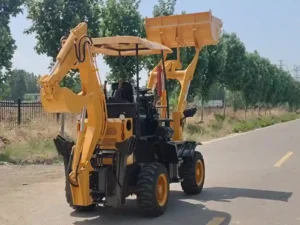
A backhoe loader is essentially two machines bolted onto a shared tractor frame: a front loading bucket and a rear digging arm. The reason it’s designed this way isn’t accidental — it’s the result of a very practical engineering decision. Instead of sending a wheel loader to move dirt and calling in a separate excavator to dig the trench, one machine with a single engine, one hydraulic power unit, and one operator can handle the entire job from start to finish.
The tractor body itself is built with a low center of gravity and wide axles, which matters more than it sounds. When you’ve got a heavy arm swinging out to the side while a loaded bucket is raised in the front, the machine is carrying asymmetric loads in multiple directions simultaneously. Getting the balance wrong means the machine tips. Getting it right means a smooth, productive workday.
Backhoe Loader Parts: What Each Component Actually Does
The Front Loader Assembly
The front loader is the big bucket you see at the nose of the machine. Two parallel lift arms connect it to the tractor frame, and a set of double-acting hydraulic cylinders raises and lowers the whole assembly. A separate tilt cylinder controls the bucket angle, and here’s the clever part: the linkage geometry is designed to keep the bucket roughly level throughout its entire lift arc. That means if you scoop up a load of gravel at ground level, the bucket won’t dump it on the way up — it stays put until you tell it otherwise.
The force this assembly can generate — called breakout force — typically sits between 12,000 and 20,000 lbf on standard machines. That’s enough to push through compacted soil or peel up old asphalt, which is why the front loader isn’t just for carrying material; it’s also a surprisingly capable ground-engagement tool.
The Rear Backhoe Arm and Bucket
The rear arm is where the real digging happens, and its working mechanism is more intuitive than most people expect. Think of your own arm: upper arm, forearm, hand. The backhoe replicates exactly that structure with a boom (upper arm), a dipper stick (forearm), and a bucket (hand). Three hydraulic cylinders control these three segments independently, which is why an experienced operator can make the whole arm move in smooth, coordinated arcs — each cylinder doing its part at exactly the right moment.
The bucket at the end generates what engineers call tearout force — the rotational cutting force that breaks soil and loads the bucket. On a mid-class machine, that’s roughly 8,000 to 14,000 lbf. For context, that’s enough to cut through moderately compacted clay or break up granular subbase without a second thought.
Stabilizer Legs: The Underrated Heroes
Before the rear arm can do any serious digging, the stabilizer legs have to come down. These outrigger pads push into the ground behind the rear axle and lift the tires clear of the surface, turning a mobile wheeled vehicle into a rigid, anchored platform. This is critical because digging creates forces in three directions at once — downward as the bucket penetrates, rearward as the dipper pulls back, and sideways as the boom swings. If the machine were still sitting on its suspension when all of that is happening, it would rock and bounce like a shopping trolley on cobblestones. Stabilizers eliminate all of that.
How the Hydraulic System Powers the Whole Machine
The hydraulic system is the part that most people skip over, which is a shame — because once you understand it, the whole machine makes much more sense. Here’s the short version: an engine-driven pump pressurizes hydraulic fluid to between 3,000 and 4,500 psi, and that pressurized fluid is routed to individual cylinders through a set of directional control valves. When the fluid enters a cylinder, it pushes a piston, and that linear piston movement becomes the motion you see in the arm, bucket, or loader.
The reason this works so well is Pascal’s Law — pressure applied to a sealed fluid transmits equally in all directions. A modest pump can build enormous force at the cylinder end, simply because pressure acting on a large piston area multiplies into a huge output force. A cylinder with a 4-inch bore at 3,500 psi produces nearly 44,000 lbf of thrust. No mechanical linkage that size and weight could come close.
Modern machines often use load-sensing hydraulic circuits, where the pump automatically adjusts its output to match exactly what the active cylinders need. This reduces fuel consumption during partial-load work by up to 20% compared to older fixed-displacement systems — a detail that matters a lot when the machine is running eight hours a day, five days a week. One more thing worth knowing: flow priority circuits always guarantee that steering gets hydraulic supply before anything else. Even if you’re running the boom, dipper, and loader simultaneously, you will never lose steering — that’s a safety design decision baked into the system architecture.
Backhoe Loader vs Excavator: Which One Do You Actually Need?
This is the question that comes up on practically every mixed-use job site, and the answer almost always comes down to three things: how often the machine needs to move, how many different tasks it needs to handle, and how deep you need to dig. We cover this comparison in full detail in a dedicated guide — Backhoe Loader vs Excavator: Key Differences and How to Choose the Right Machine — but here’s the essential version.
Backhoe loaders run on rubber tires and are road-legal, meaning they can drive themselves from one location to another without a lowbed trailer. On projects that span multiple sites or require frequent repositioning, that mobility alone saves significant time and haulage cost. The dual-function design also means one operator can open a trench with the rear arm and backfill it with the front loader without any machine changeover — a workflow that would require coordinating two machines and two operators otherwise.
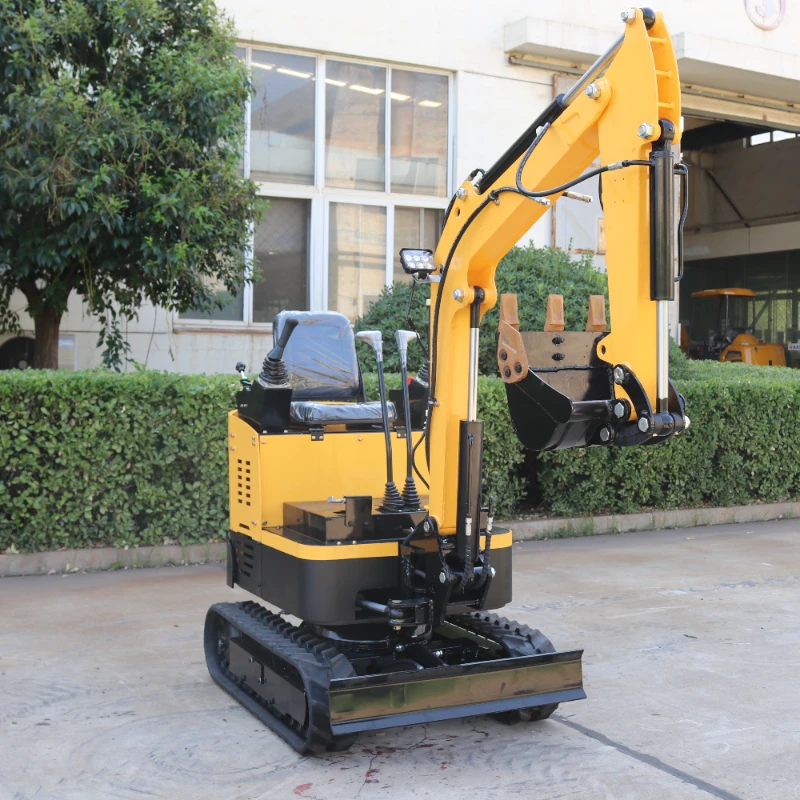
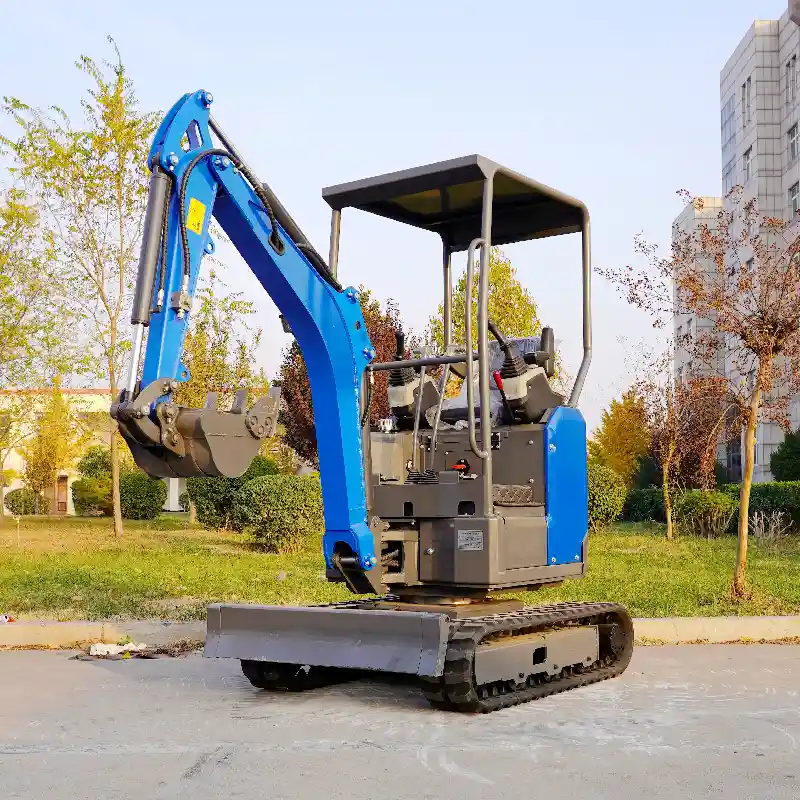
Excavators, on the other hand, offer 360-degree slewing, greater dig depth (often 20+ feet), and considerably higher digging force — because their tracked undercarriage and dedicated counterweight allow higher system pressures and larger cylinder bores without the tipping constraints of a road-mobile frame. If your job requires staying in one place for days, digging deep, or moving very large volumes of material, the excavator’s higher productivity per hour will justify its higher cost. If your job requires versatility, road mobility, and the ability to both dig and load in the same cycle, the backhoe loader wins.
What Backhoe Loaders Are Actually Used For
The range of applications for a backhoe loader all share the same underlying logic: you need to break ground and handle the material without calling in a second machine. Municipal crews use them to open water and sewer trenches with the rear arm while stockpiling spoil with the front bucket — and then backfill the same trench when the pipe is laid, all in one continuous operation. On agricultural sites, the same machine grades drainage channels, digs post holes, and moves feed or materials with the front bucket throughout the working day. In residential construction, where site access is tight and large equipment simply won’t fit, the backhoe loader’s compact footprint and road-legal mobility make it the default machine for foundation prep and utility rough-in.
The reason it appears on so many different types of job sites is straightforward: it is genuinely good at a wide range of tasks, and it can get itself there without needing a support vehicle.
FAQ — Questions Engineers and Operators Ask Most
How does the operator switch between the loader and the backhoe? The cab seat rotates 180 degrees so the operator faces the rear controls for backhoe operation. On modern machines, electronic sensors detect the seat position and automatically remap the joystick functions — so the controls always match whichever end of the machine the operator is facing, without any manual circuit switching required.
What is the typical digging depth of a backhoe loader? Standard full-size models reach between 14 and 17 feet (4.3–5.2 m) with a standard dipper. Extended-reach dipper configurations can push this to 19–21 feet (5.8–6.4 m), though usable digging force decreases significantly at maximum reach because of the extended lever arm geometry.
How does a backhoe loader differ from an excavator in digging force? Excavators typically generate 25–40% more bucket tearout force than a comparably powered backhoe loader. The reason is structural: a tracked undercarriage with a dedicated counterweight allows higher system pressures and larger cylinder bores, without the tipping constraints imposed by a rubber-tired, road-mobile machine that needs to stay balanced on public roads.
What causes slow or weak hydraulic performance on a backhoe loader? The most common culprits are low hydraulic fluid level, a worn pump that bypasses internally, contaminated fluid causing valve spool stiction, or a clogged return filter that builds excessive backpressure. The correct starting point for diagnosis is always measuring actual system relief pressure against the manufacturer’s specification — everything else follows from that reading.