
Excavator Rake vs Grapple: Which Attachment Is Better for Your Job?
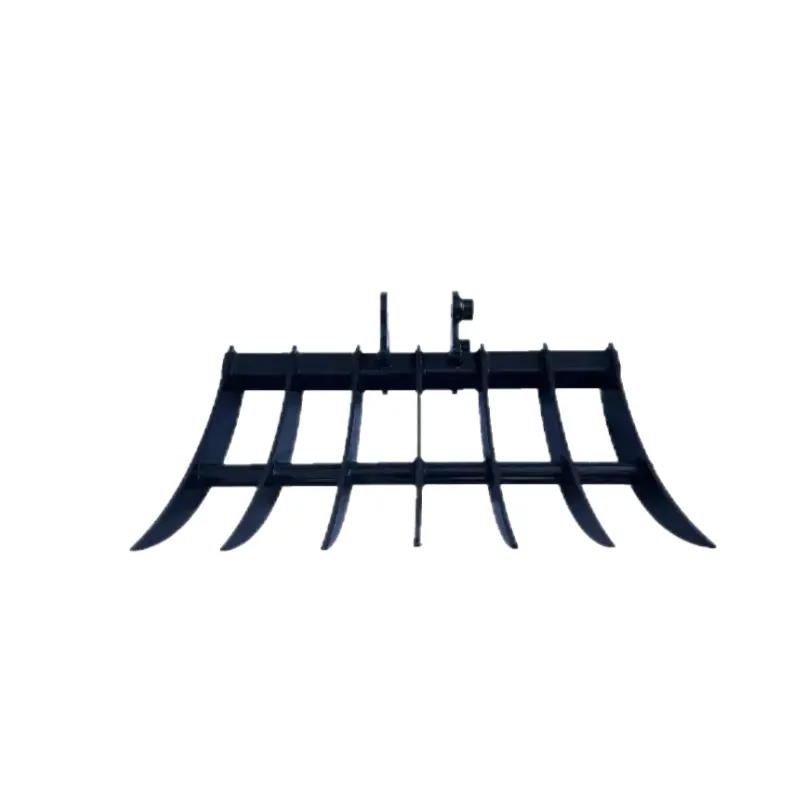
Anyone who has cleared a site knows that gathering debris and getting rid of it are two different jobs. An excavator rake can pull branches, roots and rocks into a pile. But when that pile needs to go into a truck, the job gets a little more interesting. You need something that can hold the material.
An excavator rake is mainly used to gather loose debris and separate it from soil, while a grapple is designed to grip, lift and move material. If you need both functions, a rake with a compatible thumb or a purpose-built grapple rake may be worth considering. What matters most is what you are handling, how often you lift it and what your excavator can safely manage.
Excavator Rake vs Grapple: What’s the Real Difference?
At first glance, these attachments look similar. Both have steel teeth, handle awkward material and help with cleanup. The difference appears when work begins: a fixed rake pulls loose debris together and lets some soil fall through its tines, while a grapple holds material as the excavator lifts or moves it.
| What to Compare | Excavator Rake | Excavator Grapple |
|---|---|---|
| Main purpose | Gathering and separating debris | Gripping, lifting and moving |
| Loose brush | Collecting into piles | Picking up and loading |
| Soil separation | Open tines let soil pass through | Depends on jaw design |
| Logs and timber | Limited without a thumb | Designed for controlled gripping |
| Auxiliary hydraulics | Usually unnecessary for a fixed rake | Needed for hydraulic gripping functions |
| Main buying concern | Tine design, width, mounting | Attachment weight, lifting capacity, hydraulics |
There is some overlap. A grapple rake combines rake-like teeth with a clamping mechanism. Manufacturers use different names, so check the attachment’s actual design rather than relying on its title.
When Does an Excavator Rake Make More Sense?
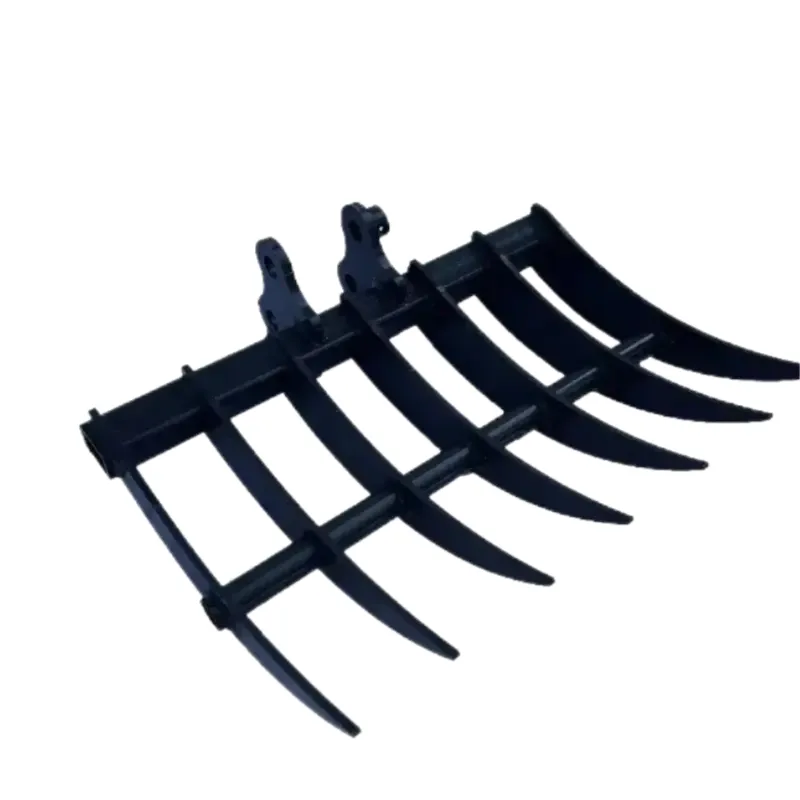
Picture a landscaping site after trees have been trimmed. Branches, loose roots and stones are scattered across the ground. The first job is to gather larger debris without taking half the soil along for the ride. That is where an excavator rake works well.
Its open tines collect larger objects while allowing some smaller soil particles to pass between them. Results vary with tine spacing, material size and ground conditions. A fixed rake is mechanically straightforward and usually needs no extra hydraulic gripping circuit. However, it cannot securely clamp a branch for transport without a suitable thumb or other gripping arrangement.
See the ACE excavator rake attachment for a product starting point. For width, tine spacing and machine selection, consult the excavator rake size guide.
When Is a Grapple the Better Tool?
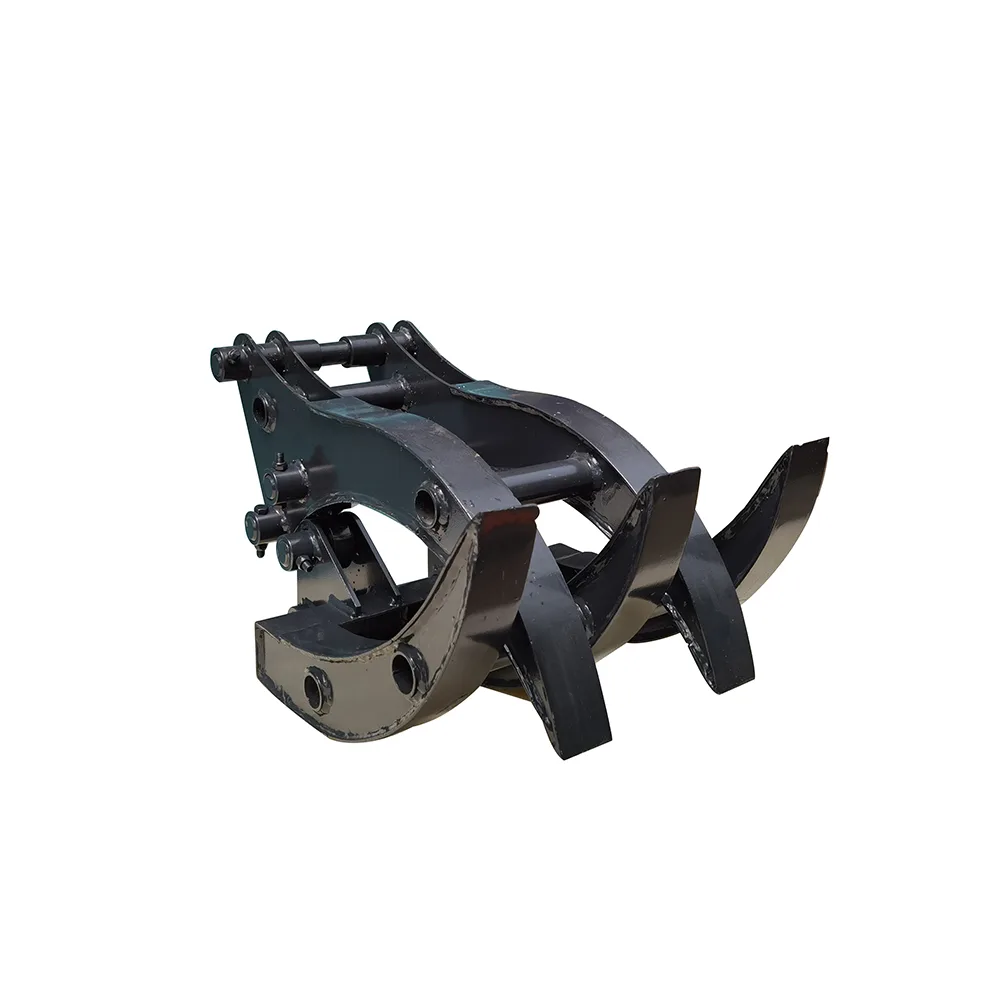
Now imagine the same branches need to go into a waiting truck. Gathering them is no longer enough: the operator must hold the load while lifting and placing it. A grapple is built for that kind of work. Its jaws can secure timber, branches and irregular loads, and some designs help with sorting or stacking.
That control brings trade-offs. The grapple has its own weight, and a hydraulic model needs compatible oil flow, working pressure, controls and hose connections. Rotating models may require additional hydraulic functions. This matters on compact excavators: a grapple might fit the mounting bracket yet leave too little safe lifting capacity for the log itself. Available lifting capacity also changes with boom position and load radius.
ACE lists a mini excavator wood grapple for timber-handling applications. Ask for the current model-specific specifications, including attachment weight and hydraulic requirements, before ordering.
What About a Rake With a Hydraulic Thumb?
A grapple is not the only way to add gripping ability. A compatible excavator thumb can work against a bucket or suitable rake to hold material between two surfaces. If a contractor mainly gathers debris but occasionally needs to lift branches or stones, that may be a useful middle ground.
But a thumb is not simply another piece of steel to bolt on. Its closing path, mounting points and working geometry must match the attachment. The hydraulic controls and machine limits must also be suitable. A poor match can damage the equipment or create an unsafe lifting situation.
For frequent gripping and sorting, a dedicated grapple may be more convenient. For occasional handling, a properly matched thumb arrangement could be sufficient. Choose based on how the equipment will work, not how impressive it looks in a catalogue.
How to Choose the Right Attachment for a Mini Excavator
Start With Real Lifting Capacity
One common buying mistake is selecting an attachment by excavator tonnage alone. Two machines in the same weight class can have different lifting charts and boom arrangements. A heavier attachment leaves less lifting capacity for the material, especially when the boom reaches outward or works to the side.
Check the manufacturer’s lifting information for the planned working position. Include the weight of the attachment, coupler and load, and follow the machine’s safe operating limits.
Check Mounting and Hydraulic Details
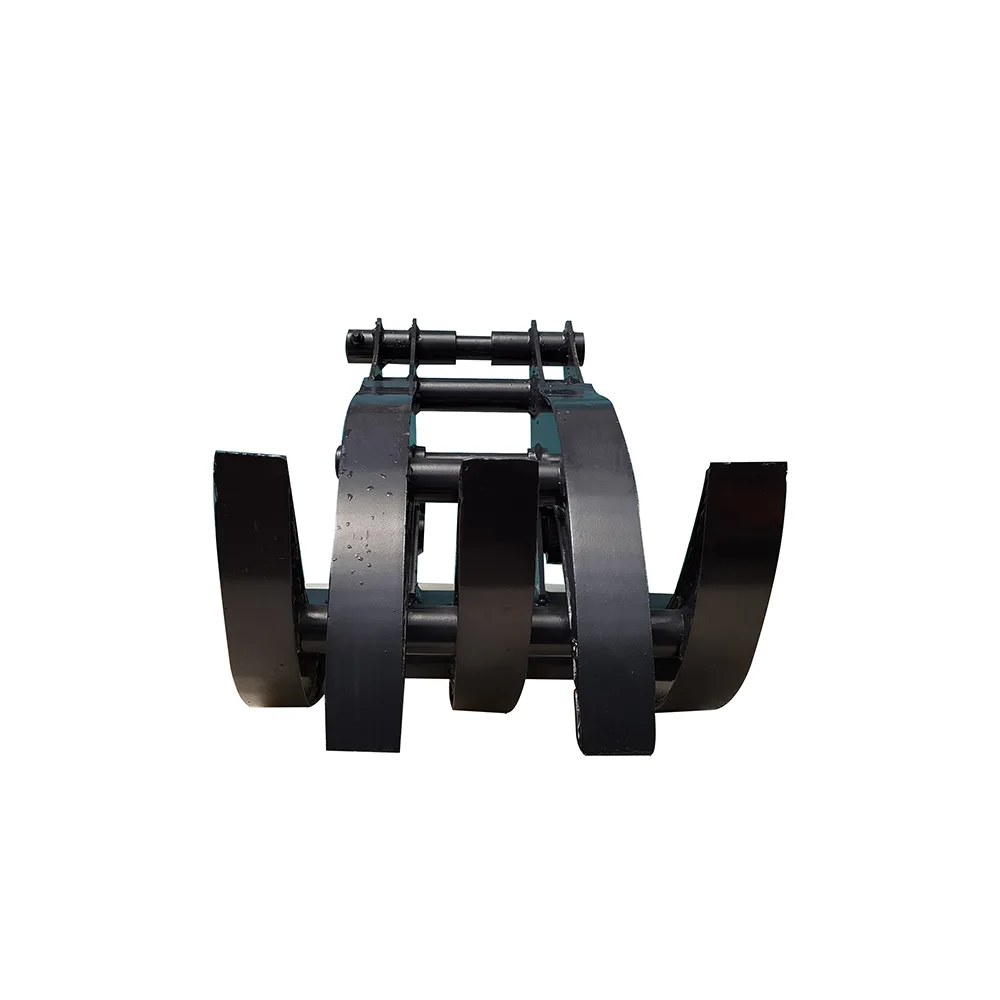
Confirm pin diameter, pin-center distance, mounting width and quick-coupler type. For hydraulic grapples or thumbs, check auxiliary flow, pressure, connections, control functions and return requirements. Two attachments may look identical in a photograph and still mount very differently.
Our mini excavator attachment compatibility guide explains the measurements worth checking before purchase.
Which Attachment Should You Buy?
Start with the task that occupies most of the working day. A tool that is slightly less versatile but does its main job reliably can be a better purchase than a complicated attachment that rarely uses all its features.
| Your Main Job | Starting Option | Check Before Buying |
|---|---|---|
| Collect loose branches and roots | Excavator rake | Tine spacing, width |
| Separate stones from loose soil | Excavator rake | Material size, ground conditions |
| Pick up and load logs | Grapple | Lifting capacity, jaw design |
| Gather and occasionally lift debris | Rake with compatible thumb | Closing geometry, machine limits |
| Grip and sort material frequently | Dedicated grapple | Hydraulics, weight, mounting |
| Break deeply embedded roots | Ripper or digging tool first | Soil, machine capacity |
Jobsites rarely follow a perfect checklist. A landscaping contractor may spend one day collecting branches and the next loading timber. Sometimes two purpose-matched attachments make more sense than forcing one tool to do everything.
Frequently Asked Questions
Is a grapple better than a rake for clearing brush?
Not always. A rake works well for collecting loose brush and separating debris from soil. A grapple is more useful when material must be gripped, lifted and loaded. Some jobs benefit from both functions.
Can an excavator rake pick up logs?
A fixed rake cannot independently clamp a log. A compatible thumb may add gripping ability, but the complete arrangement must be checked for mounting, stability and safe lifting capacity.
Does an excavator grapple need auxiliary hydraulics?
Hydraulic grapples need compatible hydraulic connections and controls. Mechanical grapple designs work differently, so confirm the exact attachment type and its requirements.
What size grapple fits a mini excavator?
There is no universal size for a given excavator weight class. Verify attachment weight, machine lifting capacity, pin dimensions, coupler type and hydraulic requirements.
Final Thoughts: Let the Job Decide
A rake is a sensible choice for gathering and separating loose debris. A grapple is more useful for holding and moving material regularly. A compatible thumb may offer a practical middle ground. The best attachment is the one that works safely with the machine and gets the job done without unnecessary complications.
Choosing attachments for a project, landscaping fleet or dealership? Contact ACE Machinery with your excavator model, mounting dimensions, hydraulic specifications, working material and required quantity. Our team can review available rake and grapple configurations and discuss suitable options.