
Moving soil, gravel or construction waste is only half the job. Sooner or later, the material has to come out of the dumper. And depending on how often you unload, that final step can make a bigger difference than you might expect.
Imagine two mini dumpers carrying the same load of soil. One uses a manual tipping system, while the other uses a hydraulic cylinder to lift the skip. Both can transport the material, but the unloading process is quite different.
So, is hydraulic tipping always better? Not necessarily. A simple manual system may be perfectly suitable for smaller jobs, while a hydraulic system can make repeated unloading more convenient. The right choice depends on your workload, material, unloading position and budget.
In this guide, we will compare manual vs hydraulic tipping mini dumpers and explain what buyers should check before choosing a machine.
How Does Manual Tipping Work on a Mini Dumper?
A manual tipping mini dumper uses a mechanical arrangement to tilt the skip and discharge its load. Depending on the design, the system may include a pivot point, locking mechanism, handle and additional components to assist the tipping movement.
The operator releases the locking mechanism and operates the skip according to the manufacturer’s instructions. Once the material has been discharged, the skip is returned to its working position and secured again.
The main advantage is its relatively simple construction. With fewer hydraulic components involved in the tipping mechanism, there are generally fewer hoses, cylinders and hydraulic connections to inspect.
However, manual tipping still requires physical effort. How much effort is needed depends on the skip design, load distribution, material and any assistance built into the mechanism.
For landscaping, gardening and smaller construction jobs where unloading is not extremely frequent, a manual tipping system can be a practical choice. There is little reason to pay for a more complicated system if the simpler one already does the job.
How Does Hydraulic Tipping Work on a Mini Dumper?
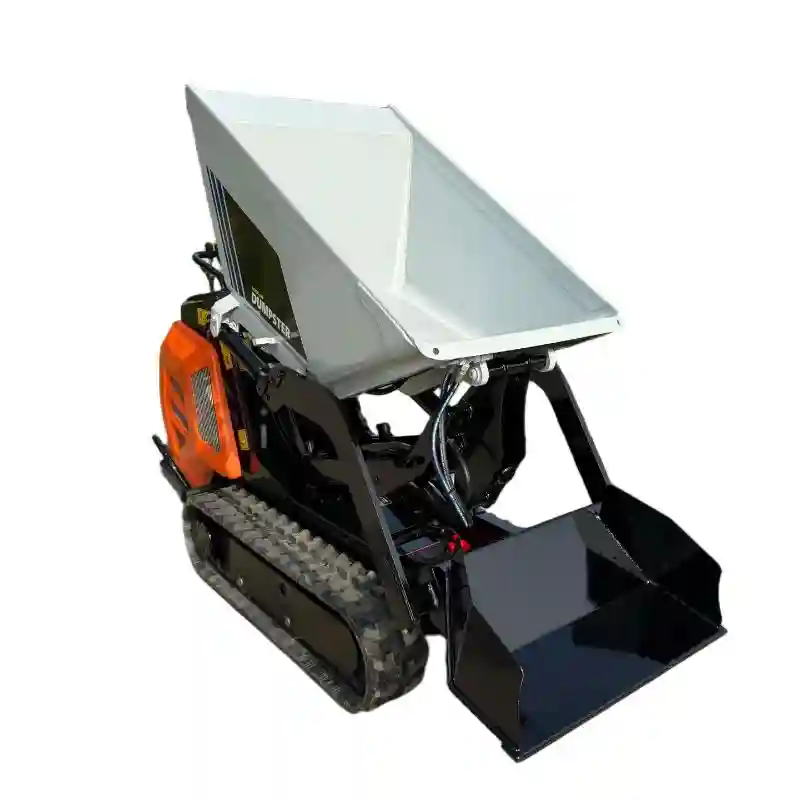
A hydraulic tipping mini dumper uses hydraulic power to raise and tilt the skip. Instead of relying mainly on the operator’s physical effort, the system uses a hydraulic cylinder to move the loaded skip.
A typical hydraulic tipping arrangement includes several important components:
- Hydraulic pump: Supplies pressurised hydraulic oil.
- Hydraulic cylinder: Converts hydraulic pressure into mechanical movement to raise the skip.
- Control valve: Controls the direction and movement of the hydraulic system.
- Hydraulic hoses: Carry oil between the hydraulic components.
When the operator activates the tipping control, hydraulic oil flows into the cylinder, causing it to extend and lift the skip. When the operator returns the control, the skip lowers according to the machine’s hydraulic design.
This arrangement is especially useful when the dumper needs to unload repeatedly throughout the working day. It can reduce the physical effort involved in tipping and make the unloading process easier to control.
However, hydraulic tipping also adds components that need attention. Hoses, seals, cylinders and connections should be inspected according to the manufacturer’s maintenance instructions.
A hydraulic system is not automatically better for every buyer. It is simply another tool, and the best tool depends on the job.
Manual vs Hydraulic Tipping: What Are the Main Differences?
Both systems are designed to unload material, but they differ in operating method, mechanical complexity and maintenance requirements.
| Comparison | Manual Tipping | Hydraulic Tipping |
|---|---|---|
| Operating method | Mechanically operated by the user | Powered by a hydraulic system |
| Operator effort | Depends on load and skip design | Reduces direct physical tipping effort |
| System structure | Generally simpler | Includes pump, cylinder, valves and hoses |
| Maintenance focus | Pivot points, locks and moving parts | Cylinders, hoses, valves and hydraulic connections |
| Repeated unloading | Depends on operator effort and design | Often more convenient for repeated cycles |
| Purchase decision | Suitable when simplicity is important | Suitable when powered tipping is needed |
One important point: the tipping system does not determine the dumper’s rated payload by itself.
A hydraulic cylinder may help raise a loaded skip, but it does not mean the machine can carry more than its rated capacity. Payload, skip volume, machine stability and tipping limits must all be checked separately.
Think of it this way: a stronger lifting mechanism does not turn a small dumper into a bigger one. The entire machine still has its limits.
Which Tipping System Is Better for Your Jobsite?
The best choice becomes clearer when you look at the actual work instead of comparing specifications on paper.
Landscaping and Garden Work
Landscaping jobs often involve moving soil, compost, mulch and green waste around gardens, parks and residential properties.
For occasional unloading at ground level, a manual tipping mini dumper may be sufficient. Its simpler structure can be attractive when the machine is used for relatively small workloads.
However, if operators need to unload material repeatedly during a long working day, hydraulic tipping may offer a more convenient working experience.
Construction Materials and Heavy Loads
Construction sites often involve gravel, sand, soil and broken materials. These materials can be much heavier than they look, particularly when the skip is full.
Before choosing a tipping system, check the machine’s rated payload and the material’s weight. A skip that looks half empty may already be carrying a substantial load.
Hydraulic tipping can make unloading easier, but buyers must confirm that the machine is designed to handle the intended load and operating conditions.
Never assume that a hydraulic skip can safely tip an overloaded machine. The manufacturer’s rated limits still apply.
Frequent Unloading Throughout the Day
This is where hydraulic tipping may become more attractive.
If a machine repeatedly transports and unloads material throughout a shift, reducing the physical effort required for each unloading cycle can make daily operation more convenient.
On the other hand, a machine used only occasionally may not need this additional system. There is no benefit in paying for features that your actual working conditions rarely require.
| Jobsite Requirement | What Buyers Should Consider |
|---|---|
| Occasional unloading | Simplicity and operating effort |
| Frequent unloading | Hydraulic control and working convenience |
| Dense materials | Rated payload and tipping limits |
| Narrow unloading area | Machine dimensions and discharge direction |
| Raised container or skip | Actual discharge height and high-tip configuration |
Front Tip, Swivel Tip and High Tip: Are They the Same as Hydraulic Tipping?
Not quite. This is a common point of confusion when comparing mini dumpers.
Manual and hydraulic tipping describe how the skip is moved. Front tip, swivel tip and high tip describe the direction or height at which material is discharged.
They are different design features.
Front Tip: The skip discharges material towards the front of the machine. It is a straightforward arrangement for many general material-handling jobs.
Swivel Tip: The skip can rotate or discharge material in a different direction, depending on the design. This can be useful when working in restricted spaces where repositioning the entire machine is inconvenient.
High Tip: The skip is designed to discharge material at a greater height, making it useful when loading into higher-sided containers or other equipment.
A hydraulic tipping system does not automatically mean the machine has high-tip capability. If you need to unload into a truck or raised container, ask the supplier for the actual discharge height and confirm that the machine is designed for that application.
This is one of those details that is much cheaper to check before ordering than after the machine arrives.
What Should Buyers Confirm Before Ordering a Mini Dumper?
Before requesting a quotation, it helps to prepare a few basic details. They allow the supplier to recommend a configuration that matches the actual job rather than simply offering the biggest-looking machine.
| Technical Information | What to Confirm |
|---|---|
| Tipping mechanism | Manual, assisted manual or hydraulic |
| Rated payload | Maximum permitted load |
| Skip capacity | Volume in litres or cubic metres |
| Tipping angle | Actual specification for the model |
| Discharge height | Whether it reaches the unloading destination |
| Hydraulic components | Pump, cylinder and control configuration |
| Machine stability | Approved loading and tipping conditions |
| Product documentation | Specifications and operating instructions |
Also explain what material you intend to carry. Loose soil, wet sand, gravel and construction waste behave differently during unloading.
If you need a machine for repeated unloading, mention the expected working frequency. If you need to discharge into a higher container, provide its height and dimensions.
Our mini dumper buying guide provides additional information about payload, terrain and power selection.
You can also explore our wheeled dumper construction guide to understand how wheel configuration and unloading arrangements affect machine selection.
Frequently Asked Questions
Is hydraulic tipping better than manual tipping?
Hydraulic tipping can reduce the physical effort involved in repeated unloading, while manual tipping generally offers a simpler mechanical arrangement. The better choice depends on unloading frequency, material, machine design and budget.
Does manual tipping mean the mini dumper is manually powered?
No. Manual tipping describes the way the skip is unloaded. The dumper itself may still use a petrol or diesel engine, or an electric drive system.
Can a hydraulic tipping mini dumper unload into a high container?
Not necessarily. Standard hydraulic tipping does not automatically provide high-tip capability. Buyers should confirm the machine’s actual discharge height and whether a dedicated high-tip configuration is available.
Which tipping system requires more maintenance?
Manual systems generally have fewer hydraulic components, while hydraulic systems require attention to cylinders, hoses, valves and connections. Both types still need regular inspection of their moving parts and locking arrangements.
What information should I provide when requesting a mini dumper quotation?
Provide your required payload, material type, unloading frequency, desired tipping method, discharge height, working environment and destination country. These details help the supplier review the suitable machine configuration.
Choose the Right Mini Dumper with ACE Machinery
Choosing a mini dumper is not just about engine power or how much material fits inside the skip. The unloading system matters too, especially when the machine is expected to work throughout the day.
ACE Machinery supplies compact equipment and mini dumpers for different material-handling applications. Whether you need a straightforward power barrow or a hydraulic tipping crawler dumper, the important thing is to match the configuration to your actual working conditions.
Visit our mini dumper product range to explore available models, or contact ACE Machinery with your payload, material and unloading requirements.
Our team can help review the available configurations and provide product information for your application.
Note: Product specifications, tipping arrangements, payload limits and discharge heights vary by model. Always confirm the final configuration and operating instructions with the manufacturer before ordering.