
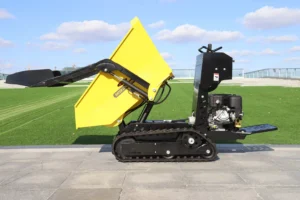
Choosing a mini dumper looks simple until the real job site starts asking difficult questions. The access path is narrower than expected, the ground becomes soft after rain, the load feels heavier than it looked on paper, and someone suddenly remembers there is no charging point nearby. This mini dumper buying guide helps buyers think clearly before purchase: what load capacity is needed, what terrain the machine must handle, which power type fits the job, and whether a tracked, wheeled, electric, petrol or diesel model makes better sense for daily work.
Many buyers first look at payload, price and appearance. Those points matter, but they do not decide whether the machine will work well every day. A good mini dumper, also called a power barrow in many markets, should pass through the site route, carry real materials safely and keep productivity steady across repeated trips. In simple terms, you are not buying the biggest number in the brochure; you are buying a compact machine that makes material handling easier, steadier and less stressful.
How to Choose a Mini Dumper for Your Job Site
The first question is not “how much can this machine carry?” but “where will it travel every day?” Gate width, turning space, slope, ground strength, unloading height and travelling distance are often more important than one single payload figure. If the route is too narrow, even a powerful machine becomes useless at the entrance. If the soil is too soft, a large payload can turn into a very expensive garden ornament stuck in the mud.
Material type also matters. Soil, gravel, sand, bricks, mulch, concrete waste and animal feed all behave differently in the skip. A mini dumper that handles light garden waste easily may feel very different when loaded with wet clay or stone. A better selection method is to match mini dumper payload with material weight, match tracks or wheels with ground condition, match power type with the working environment, and match the tipping method with the actual unloading point.
Many purchasing mistakes begin with the idea that “more capacity is always better”. On real sites, an oversized machine may not fit through a gate, may mark delicate ground or may be harder for less experienced operators to control. Sometimes a smaller machine with better balance, correct tyres or suitable tracks completes more work because it keeps moving. Material handling is not about one heroic full load. It is about steady, repeated trips with fewer stops.
Mini Dumper Load Capacity: What Size Mini Dumper Do I Need?
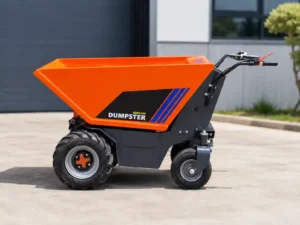
Mini dumper load capacity should be chosen according to real working conditions, not ideal conditions. If you are asking what size mini dumper do I need, the answer usually depends on material weight, transport route and daily working frequency. A 250kg model suits garden work, light landscaping, greenhouses and narrow access areas where manoeuvrability matters more than maximum payload.
A 400kg to 500kg mini dumper is often the practical middle choice for landscapers, farms, rental fleets and small construction teams. This size can move soil, gravel, sand, bricks and green waste while still remaining compact enough for many restricted sites. For dealers and rental companies, the 500kg class is often attractive because it is easy to explain, useful in many applications and not too large for common compact jobs.
For heavier commercial work, a 1 tonne mini dumper may be more suitable, especially for aggregates, demolition waste, building materials or longer hauling routes. However, larger capacity also brings higher demands on braking, stability, ground pressure and slope safety. If a customer asks how much weight can a mini dumper carry, the correct answer is to check the rated payload first, then reduce expectations for slopes, wet ground, dense materials and uneven routes. A full load on flat concrete and a full load in wet mud are not the same thing, and mud has never cared about specification sheets.
Terrain: Tracked vs Wheeled Mini Dumper
Terrain is the main factor in the tracked vs wheeled mini dumper decision. A tracked mini dumper spreads machine weight across a larger contact area, which usually gives better grip and lower ground pressure on mud, wet grass, soft soil, farms, orchards and slopes. If the site often has slippery ground, uneven paths or loose soil, tracks usually give the operator more confidence. For the question is a tracked or wheeled mini dumper better for mud, the tracked model is normally the safer answer because traction matters more than speed.
A wheeled mini dumper is usually better on hard, flat and predictable ground such as concrete yards, warehouses, paved gardens, firm gravel roads and urban work sites. Wheeled models often travel faster, turn easily and cost less to maintain. Their weakness appears on soft ground, where they can sink, spin or leave marks. For a deeper comparison, ACE Machinery also has a guide on tracked vs wheeled mini dumpers.
So the real question is not which design is better in every case, but which design suits your ground. Tracks suit wet, soft, uneven and sloped conditions. Wheels suit firm, clean and high-frequency transport routes. The most practical test is simple: look at the job site after rain. If it still supports clean travel, wheels may work well. If it looks like chocolate cake, tracks will probably make the operator much happier.
Power Type: Electric vs Petrol Mini Dumper
Power type should follow the working environment. An electric mini dumper is a strong choice for indoor work, warehouses, greenhouses, residential areas, urban projects and low-noise sites. It produces no exhaust at the point of use, runs more quietly and usually needs simpler daily maintenance. If the question is gas vs electric mini dumper for indoor use, electric normally wins because air quality and noise control matter more indoors than long outdoor endurance.
A petrol mini dumper is better for outdoor work over longer periods, especially on farms, landscaping sites, building sites and areas without reliable charging access. Petrol machines are easy to refuel and practical for repeated movement of soil, gravel, bricks and site waste. Diesel can suit heavier commercial use where torque, longer working hours and fuel availability are important. If buyers ask how do I choose between diesel and electric mini dumper, start with three checks: daily working time, ventilation and charging access. Electric suits clean and controlled spaces; petrol or diesel suits longer, tougher outdoor use.
For buyers comparing electric options, our article on electric mini dumper battery runtime and load capacity explains how runtime, payload and site fit affect real performance. For a real product example in the 500kg electric class, the EDCX-500 electric dumper from ACE Tools is also worth checking when comparing battery-powered machines for construction and landscaping work.
If you are still comparing machine types, read our tracked dumper vs wheeled dumper guide before choosing by load capacity alone. Terrain, ground pressure and travel distance often matter as much as rated payload.
Landscaping, Farm and Construction Applications
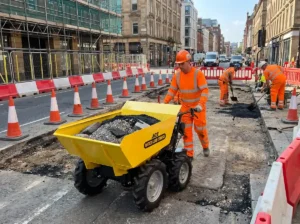
Landscaping, farm and construction applications require different choices. Landscaping work needs narrow access, ground protection and flexible tipping. The machine may need to pass through garden gates, move across lawns and paved paths, and carry soil, turf, mulch, gravel and green waste. A compact tracked power barrow is useful on wet grass or uneven gardens, while a wheeled model may be faster on firm paths.
Farm users often care more about traction, stability and simple daily service than travel speed. Orchards, greenhouses, livestock areas and muddy paths often involve feed, compost, wood, harvested materials and soil. In these conditions, a tracked mini dumper is usually easier to keep stable. Construction buyers focus more on payload, tipping height, route width and transport efficiency. The best mini dumper for construction is not always the largest model; it is the one that can travel safely, tip quickly and keep working without constant maintenance. For small sites, a 500kg mini dumper is often enough. For heavier materials and more open access, a 1 tonne model may be the better investment.
Ride-On vs Walk-Behind Mini Dumper
The ride-on vs walk-behind mini dumper choice depends on travel distance, site space and operator fatigue. A walk-behind model is compact and practical for narrow access, gardens, small farms, indoor renovation and short hauling routes. It is easy to store and can reach areas where larger machines cannot enter.
A ride-on model is better for longer routes and higher daily transport volume because it reduces operator fatigue and improves continuous productivity. However, it needs more turning space, stronger safety awareness and a suitable route. On tight sites, walk-behind may be more useful. On open construction sites, ride-on can save time and effort. Do not choose the machine that looks more advanced; choose the one that fits the route.
Final Buying Checklist
Before purchase, confirm rated payload, skip volume, machine width, tipping method, ground clearance, tyre or track type, slope ability, power type, maintenance access and spare parts support. Also think about who will use the machine. Rental fleets need simple controls, durable structure and easy service parts. Landscapers need ground protection and narrow access. Construction teams need payload, tipping efficiency and stable transport. Farm users need traction, reliability and convenient daily maintenance.
A suitable mini dumper should make material handling more stable, more predictable and easier to manage. It should travel smoothly within the correct load range, keep traction on suitable ground and complete repeated transport with the right power system. By choosing according to load capacity, terrain and power type, buyers can reduce downtime, slipping and inefficient trips, turning site transport from heavy manual labour into a planned workflow. If the choice is made only by the lowest price or the largest payload, the site may teach a more expensive lesson through repairs, delays and lost working time.
FAQ
What size mini dumper do I need?
Choose by material weight, route width and daily working frequency. A 250kg model suits light garden work, a 400kg to 500kg mini dumper suits many landscaping and small construction jobs, and a 1 tonne mini dumper is better for heavier commercial materials.
Is a tracked or wheeled mini dumper better for mud?
A tracked mini dumper is usually better for mud because tracks spread weight and improve traction. A wheeled mini dumper is better for firm, hard and clean routes where faster travel and lower maintenance are more important.
Is an electric or petrol mini dumper better for indoor use?
An electric mini dumper is normally better for indoor use because it produces no exhaust at the point of use and runs more quietly. Petrol and diesel models are better suited to longer outdoor work where refuelling is easier than charging.