
Mini Excavator Attachments Guide: Essential Attachments and Uses
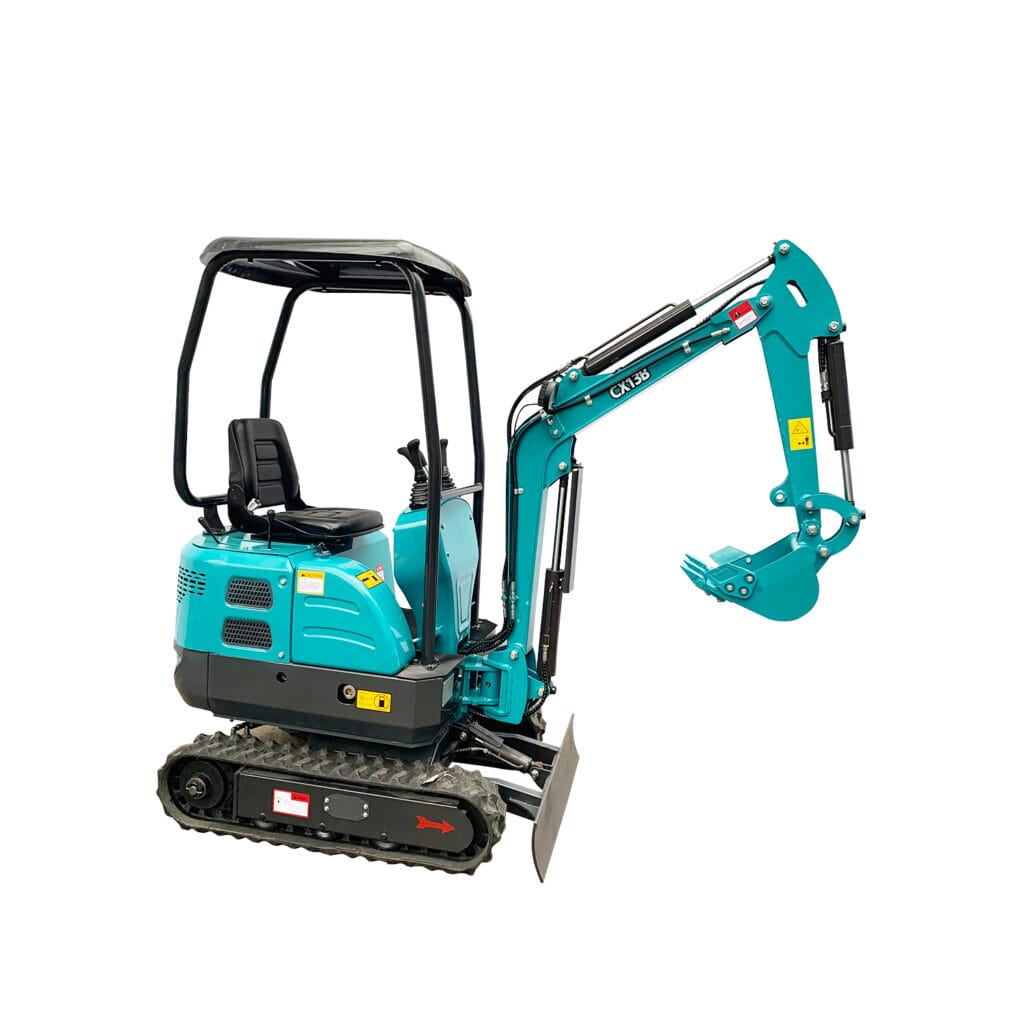
A mini excavator is already a useful machine. Add the right tools, and it becomes the site’s hardest-working employee. One minute it is digging a trench. The next minute it is breaking concrete, drilling post holes, clearing roots or trimming ground levels. That is why mini excavator attachments matter so much. They do not just add functions. They change how much work one machine can finish in a day.
Many buyers make the same mistake at this stage. They focus on the machine first and treat attachments as an afterthought. That sounds harmless, but it usually leads to wasted money, slower work and a bucket doing jobs it was never meant to do. A bucket can dig well, of course, but asking it to do everything is like asking one spanner to build the whole project. It will try. It just will not enjoy it.
The smarter approach is to understand which attachment suits which task, and why. Once that part is clear, choosing tools becomes much easier. This guide breaks down the main types of excavator attachments, explains where each one works best, and shows how to build a setup that is practical, productive and worth the investment.
Types of Excavator Attachments
Most attachments for a mini excavator fall into a few simple groups. First, there are digging and grading tools. These include the standard mini excavator bucket attachment, finishing buckets and tilt buckets. Second, there are hydraulic work tools, such as breakers, augers and cutters. Third, there are handling tools, such as grapples and thumbs. Finally, there are connection systems like the mini excavator quick hitch, which make changing tools much faster.
This grouping matters because it reflects how machines are used on site. Some jobs need force. Some need control. Some need reach, and some need speed between tasks. When you look at attachments in working groups rather than one long shopping list, it becomes easier to see what your machine is missing.
Best Mini Excavator Attachments for Everyday Work
When people search for the best mini excavator attachments, they usually want a simple answer. Sadly, the honest answer is a little less dramatic: the best attachment depends on the work. A contractor digging service trenches does not need the same setup as a landscaper clearing roots or a team breaking old concrete.
That said, a few attachments appear again and again because they solve common site problems. A bucket set is always the starting point. A quick hitch saves time every single day. A breaker helps when the ground turns stubborn. A grapple or thumb improves handling. An auger speeds up hole drilling. These are the tools that turn a small excavator into a flexible site machine rather than just a neat little digger.
Mini Excavator Bucket Attachment Options
The mini excavator bucket attachment is the most familiar tool, but it should never be treated as just one thing. Different buckets are designed for different results, and the choice affects both speed and finish quality.
Mini Excavator Bucket Types
Among the most useful mini excavator bucket types are general digging buckets, trenching buckets, ditch cleaning buckets and finishing buckets. A narrow bucket works well for trench lines and utility runs. A wider bucket moves more soil in open digging. A finishing bucket helps create cleaner surfaces and better profiles. In short, the bucket is not only about digging the hole. It is also about how tidy the hole looks when you are done.
Grading Bucket for Mini Excavator
A grading bucket for mini excavator work is ideal when you need to shape, level or clean up loose material. It is commonly used for landscaping, drainage channels and surface preparation. It does not dig as aggressively as a narrow toothed bucket, but that is the point. It is designed for control, not brute force.
Tilting Bucket for Mini Excavator
A tilting bucket for mini excavator use adds even more flexibility. It allows the operator to work on slopes, batters and uneven edges without constantly moving the machine. That saves time, improves finish quality and reduces awkward repositioning. On some sites, it feels less like an attachment and more like a cheat code.
Hydraulic Breaker for Mini Excavator
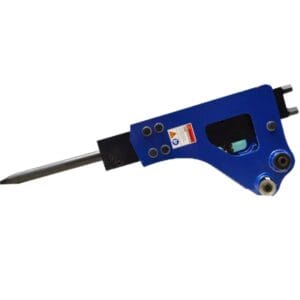
A hydraulic breaker for mini excavator work becomes essential when the bucket reaches its limit. Concrete slabs, asphalt, compacted ground and broken rock all demand more impact than a standard digging tool can deliver. This is where the breaker earns its keep.
However, bigger is not always better. A breaker must match the machine’s hydraulic flow, pressure and stability. If the carrier is too small, performance suffers. If the breaker is too heavy, the excavator becomes less balanced and less efficient. So the right choice is not the loudest one. It is the one that works properly with the machine.
Mini Excavator Grapple Attachment and Mini Excavator Thumb Attachment
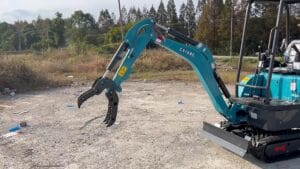
If your work involves logs, stones, scrap or demolition waste, then handling tools matter. A mini excavator grapple attachment is excellent for grabbing loose, irregular or bulky material. It is especially useful for site clearance and sorting mixed debris.
A mini excavator thumb attachment does a similar job, but in a simpler way. It works with the bucket to grip material for lifting and placing. For lighter handling work, it is often a very sensible option. Think of the grapple as the stronger specialist, and the thumb as the practical all-round helper. Both are useful. The better choice depends on how much gripping work you really do.
Mini Excavator Brush Cutter Attachment
A mini excavator brush cutter attachment is a smart choice for vegetation control, verge maintenance and rough site preparation. Instead of bringing in another machine for light cutting work, the excavator can handle the task directly. This is especially useful on overgrown land, awkward corners and access routes where space is limited. It is one of those attachments that quietly saves hours while asking for very little attention.
Mini Excavator Auger Attachment and Ground Preparation Tools
A mini excavator auger attachment is built for drilling neat, repeatable holes. It is ideal for fencing, planting, sign installation and small foundation work. On jobs with many holes, it saves a huge amount of labour. More importantly, it gives a more consistent result.
For rougher ground preparation, other tools also play a role. An excavator ripper attachment helps break through roots, compacted soil and stubborn ground before digging begins. An excavator rake attachment is useful for clearing roots, sorting debris and gathering loose material. These tools may not be used every day, but when the site conditions are difficult, they can make a very ordinary machine look surprisingly clever.
Mini Excavator Quick Hitch: Small Part, Big Difference
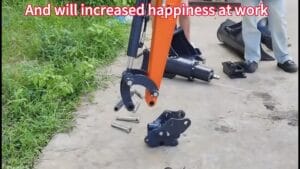
The mini excavator quick hitch does not dig, drill or break anything by itself. Even so, it may be one of the most valuable additions to the machine. Why? Because it cuts downtime between tasks. Instead of stopping work for a slow manual change, the operator can switch attachments far more quickly.
This matters most on mixed jobs. If the day includes digging, grading, lifting and clearing, fast tool changes keep the work flowing. A quick hitch also encourages operators to use the correct tool instead of forcing one attachment to do everything. That alone can improve both productivity and finish quality.
How to Choose the Right Attachment
A good attachment choice starts with the machine, not the catalogue. First, check operating weight and lift capacity. Then confirm hydraulic flow and pressure for powered tools. After that, review pin dimensions, coupler type and linkage fit. Finally, think about the material and the job frequency. Buying an attachment for a task you do twice a year may look exciting, but it rarely makes the best business sense.
The most efficient setup is usually a balanced one. Start with the attachments you use most often, then add specialist tools where they remove real site delays. That way, your excavator stays productive instead of collecting expensive metal in the yard.
Final Thoughts
The real value of mini excavator attachments is simple. They help one compact machine do more jobs, with better speed and better results. The trick is not to buy every attachment on the market. The trick is to choose tools that match your machine, your materials and your daily work pattern.
A good bucket setup, a quick hitch, one handling tool and one hydraulic tool will cover a surprising number of site tasks. Add the right extras over time, and your mini excavator stops being just a digging machine. It becomes the machine everyone keeps borrowing because it can do nearly everything.