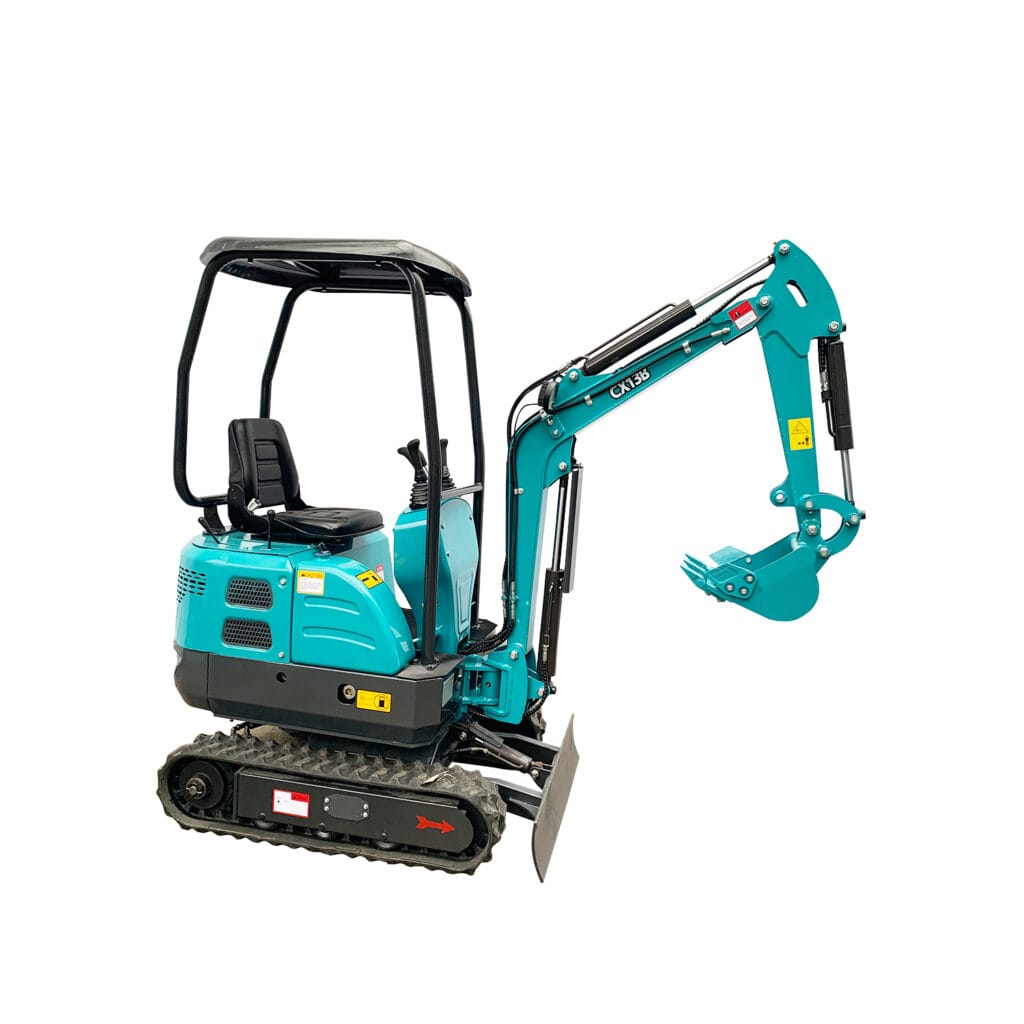

Mini excavator hydraulic breaker troubleshooting works best when you describe the symptom first, check the approved setup and leave instrument testing to qualified personnel. This guide helps contractors, dealers and rental teams organise that process. It does not replace the operating or service instructions for the actual excavator and breaker.
Start With What Changed, Not What Might Be Broken
The first useful question is simple: has this breaker ever worked correctly on this excavator? If it has never worked, begin with the installation and machine configuration. A bracket that fits does not prove the hydraulic circuit is suitable. Our hydraulic breaker sizing and flow guide explains why machine weight, attachment weight, hydraulic requirements and mounting details must be considered together.
If the combination previously worked, the timeline becomes more useful. Did the problem begin after servicing, a hose replacement or a change of attachment? Did performance decline gradually, or disappear suddenly? Record these details before changing anything else. Otherwise, the technician may end up investigating both the original fault and the adjustments made while looking for it.
Before inspection, follow the manufacturer’s parking, attachment-support, isolation and pressure-release procedures. An engine that has stopped does not necessarily mean the hydraulic system is safe to open. Epiroc warns that residual pressure can remain even after couplings are disconnected or shut-off valves are closed. Never loosen a fitting just to check whether oil is present. See Epiroc’s pressure-release guidance.
| What You Observe | Useful Details to Record | What It Does Not Establish |
|---|---|---|
| No hammering after installation | Models, controls, installation record and warnings | The new breaker is defective |
| Weak blows after normal use | When performance changed and whether the material changed | Nitrogen pressure is necessarily low |
| Slow or uneven hammering | Constant or intermittent behaviour; cold or warm conditions | More engine speed will solve it |
| Works initially, then loses performance | Time before the change, displayed temperature and warnings | The hydraulic pump needs replacing |
Hydraulic Breaker Not Hammering: Check the Setup First
Confirm the Controls and Installation Information
Start with the excavator’s operating instructions. Confirm the intended attachment control is selected and record any warning indicators. A setting used successfully for another attachment is not automatically correct for a breaker. Starting conditions and anti-blank-firing features also vary by model, so check what the actual equipment requires rather than assuming every hammer behaves alike.
After safe isolation, inspect the external items permitted by the manual, including visible hose damage, connection identification and mounting condition. Valve positions and pressure/return connections must be checked against the correct instructions. Do not rely on a general rule about which side of the excavator supplies pressure; a familiar-looking hose is not a hydraulic diagram.
Know When Measurements Are Needed
If the approved external checks do not explain the fault, the next step is qualified hydraulic testing. Epiroc’s troubleshooting guidance lists several possible reasons for non-starting, including connection problems, inadequate operating pressure and excessive return pressure. That is why “it does not hammer” is a symptom, not a diagnosis. Refer to the Epiroc SB safety and operating instructions for examples specific to those models.
A technician should compare measured flow, operating pressure and return conditions with the breaker’s requirements under the specified test conditions. The boom lifting normally does not confirm that the auxiliary circuit supplies the correct flow to the attachment. One working function does not clear every other circuit of suspicion.
Weak Impact and Slow Hammering Are Different Problems
Describe the Blows, Not Just the Noise
A breaker that strikes slowly is not showing exactly the same symptom as one that keeps its usual rhythm but struggles to break material. Irregular hammering is another distinction worth recording. Compare similar material and working conditions where safe; harder concrete or a different working position can make the attachment seem weaker even when the comparison itself has changed.
Working-tool contact, lubrication, wear and hydraulic supply may all need investigation. Depending on the design, internal or gas-system conditions may also be relevant. Epiroc separates low impact force from slow operation in its troubleshooting instructions. The appropriate test therefore depends on the symptom and breaker design, not a universal adjustment. See the Epiroc EC troubleshooting information.
Record What Happens as the Machine Warms Up
If performance changes after several minutes, note the time, displayed temperature, warnings and operating conditions. These details help a technician assess whether cooling, circuit restrictions, hydraulic supply or internal leakage requires investigation. Do not continue operating just to reproduce a suspected overheating problem.
Avoid borrowing another model’s pressure, nitrogen charge or temperature limit. Those numbers belong to a particular configuration and procedure. The objective is to reduce uncertainty, not introduce a new setting that nobody can explain later.
Stop When the Problem Becomes a Safety Concern
Stop operation if there is a hydraulic leak, damaged hose, insecure mounting, unusual attachment movement or a warning requiring shutdown. Keep people clear and follow the relevant isolation procedure. Never use a hand to search for a pressurised leak, and do not repeatedly restart equipment that may be unsafe.
Pressure adjustments, gas charging, accumulator work and internal disassembly require appropriate training, equipment and model-specific instructions. A good checklist helps identify the next safe step; it does not turn an unfamiliar repair into an operator task.
Prepare a Useful Service Request Before Ordering Parts
Once the symptom is clearly recorded, the supplier or service technician can ask more focused questions. “The breaker has no power” starts the conversation. The information below gives that conversation somewhere useful to go.
| Information | What to Provide |
|---|---|
| Equipment identity | Excavator and breaker models, serial numbers and identification-plate photos |
| Fault history | Whether it ever worked correctly and how the problem developed |
| Operating conditions | Material, control mode, displayed temperatures and warnings |
| Recent changes | Servicing, hose or coupling replacement, attachments or settings changed |
| Technical evidence | Approved test results, units, test conditions and installation documents |
For new purchases, ask for the technical sheet, mounting drawing and operating instructions before confirming the order. Use our attachment compatibility checklist alongside the ACE hydraulic breaker product information. Clear specifications help prevent an installation problem from becoming a discussion about replacement parts.
Contact ACE Machinery with your equipment details, symptoms and any approved test results so our team can review the information and discuss the next support step.
Frequently Asked Questions
Why Does a New Breaker Fit but Not Work?
Mechanical fit confirms only part of the installation. Hydraulic requirements, controls, connections and model-specific starting conditions must also match. Review the approved configuration before assuming the attachment is faulty.
Does Weak Impact Always Mean Low Nitrogen Pressure?
No. Weak impact can have several causes, and breaker designs differ. Nitrogen-related checks are appropriate only where applicable and must follow the correct service procedure.
Why Does My Breaker Work Cold but Lose Power When Warm?
That pattern is a useful diagnostic clue, not proof of a failed pump or seal. Record when the change occurs, check for warnings and arrange testing under the manufacturer’s specified conditions.