
Skid Steer Cranks but Will Not Start: Battery, Fuel or Safety Interlock?
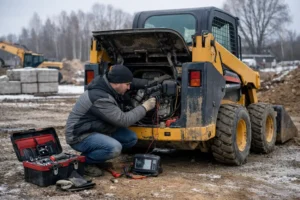
When a skid steer cranks but will not start, the problem can feel confusing at first. The engine turns over, so the machine seems close to starting, but it still does not fire. In most cases, this kind of skid steer no start diagnosis comes down to three main areas: the battery and starting circuit, the fuel system, or the safety interlock system. That is why the best way to solve the issue is not to replace parts at random. Instead, you need to follow a clear path and check what the machine is trying to tell you. If you look at the symptoms in the right order, you can often find the fault much faster and avoid unnecessary repairs.
What does “cranks but will not start” really mean?
Before checking parts, it helps to understand the symptom clearly. If the skid steer cranks, the starter is turning the engine. That means the machine is not completely dead. However, cranking alone does not mean the battery is healthy, the fuel is reaching the engine correctly, or the machine is allowing the engine to start.
This is where many operators lose time. They hear the engine turning and immediately assume the battery is fine. Then they move straight to the fuel pump or injectors. In reality, a weak electrical supply can still crank the engine but fail to support proper starting. In the same way, a machine with fuel in the tank may still have blocked flow, air in the line, or a shut-off problem. Sometimes the real issue is even simpler: the skid steer safety interlock problems may be stopping the starting process.
So the smartest approach is to stop guessing and begin with the most likely paths: battery, fuel, and safety interlock.
Battery problems can still allow cranking
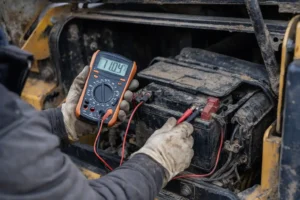
The first area to check is the battery system. Many people think that if the skid steer cranks, the battery cannot be the problem. That sounds logical, but it is not always true. A battery may have just enough power to turn the engine but still not provide stable voltage for a proper start. This is especially common in cold weather or on machines with weak terminals, poor grounding, or old wiring.
If you are dealing with skid steer battery problems, look closely at voltage drop during cranking. A low battery, corroded terminals, loose ground straps, or poor cable connections can all create a skid steer battery voltage too low to start situation. In that case, the machine may crank normally for a short moment, then slow down or fail to fire at all.
Cold mornings make this worse. That is why cold weather skid steer starting problems often begin with weak battery output. If the machine struggles more when temperatures drop, battery condition should be one of your first checks. At the same time, do not forget related parts such as the starter relay, starter solenoid, and power feed cables. Sometimes the real fault is not the battery itself, but poor current flow through the starting circuit.
Fuel system problems are the next place to look
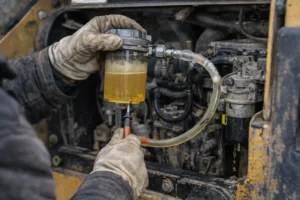
If the battery and starting circuit seem acceptable, the next step is the fuel system. This is often where a skid steer cranks but will not start fault becomes easier to understand. A diesel engine needs clean fuel, steady flow, and correct timing. If any part of that chain is interrupted, the engine may crank without firing.
Common skid steer fuel system problems include a clogged fuel filter, air in the fuel lines, contaminated diesel, a failed lift pump, or a faulty fuel shut-off solenoid. A machine can also develop trouble after sitting for a long time, after running low on fuel, or after a filter replacement.
Skid steer cranks but will not start after fuel filter change
This is one of the most common service-related issues. If the machine ran before maintenance but will only crank after a new filter was fitted, air in the fuel system is a strong possibility. In this case, bleeding the diesel fuel line becomes an important part of the repair process. If air remains trapped in the line, the engine may keep turning over without proper fuel reaching the injectors.
That is also why skid steer cranks but will not start after fuel filter change is such an important search topic. It reflects a real field problem and helps the reader connect a specific symptom with a practical fix.
What no smoke or white smoke can tell you
Smoke during cranking is another useful clue. If there is no smoke, fuel may not be reaching the combustion chamber at all. That often points to blocked flow, air in fuel lines, or no fuel delivery. On the other hand, if you see white smoke, fuel may be entering the engine but not burning properly. This can happen in cold weather, with poor compression, or when the fuel is not atomising well.
So if someone asks, what does no smoke mean when a skid steer cranks but will not start, the answer is usually simple: the problem may be early in the fuel delivery path. If the machine shows white smoke, fuel may be present, but combustion is weak or incomplete.
Safety interlock problems are often overlooked
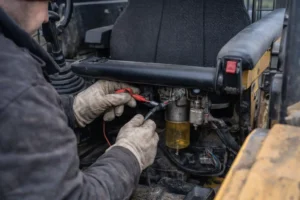
After battery and fuel, the third major area is the safety system. This is where many operators get caught out, because they do not expect a safety function to cause a starting fault. Yet skid steer safety interlock problems are common enough to deserve serious attention.
Modern skid steers often rely on seat sensors, seat bars, armrests, parking switches, and other operator presence controls. If one of these signals is missing or incorrect, the machine may stop the starting sequence or block some part of the system logic. In that case, the engine may crank, but the machine still will not start normally.
A faulty skid steer seat bar switch not working, a bad seat sensor, or a skid steer park switch not engaged condition can all create confusing symptoms. The problem becomes even harder to spot because the machine may seem mechanically fine. Fuel is in the tank, the battery looks acceptable, and the starter turns the engine, yet the system still prevents a proper start.
That is why many operators ask whether a safety interlock can stop a skid steer from starting. In practice, the answer is yes. If the interlock logic is not satisfied, the machine may refuse to start even when the engine and fuel system appear normal.
A simple skid steer no start diagnosis that works faster
Once the symptoms are clear, the best repair path is fairly straightforward. Start with the battery and voltage condition. Make sure the machine is getting enough stable electrical power, not just enough to spin the starter. Then move to the fuel side. Check the filter, the fuel line, the shut-off solenoid, and signs of air or contamination. After that, inspect the safety interlock system, especially the seat bar, seat sensor, and parking switch.
This order works well because it follows the most common fault pattern while keeping the diagnosis practical. It also helps avoid an expensive mistake: replacing fuel parts when the problem is electrical, or chasing wiring faults when the real issue is air in the fuel system.
In other words, if the main question is battery, fuel, or safety interlock, the answer is not to choose one at random. The answer is to test each path in the right order and let the symptoms guide the repair.
How to reduce repeat no-start problems
Once the machine is running again, prevention matters just as much as repair. Many starting problems begin with small issues that are easy to ignore at first. A weak battery, dirty cable connection, old filter, poor fuel storage habit, or worn sensor may not stop the machine today, but it can easily stop it next week.
To reduce future trouble, keep the battery charged and tested, clean the terminals regularly, replace filters on schedule, and make sure diesel stays clean and dry. During colder months, pay more attention to battery strength and fuel condition. If the machine has warning lights or fault codes, do not ignore them. Early checks are always cheaper than repeated downtime.
Final thoughts
A skid steer cranks but will not start problem is frustrating, but it does not have to stay complicated. In most cases, the fault is found in one of three places: battery, fuel, or safety interlock. The key is to read the signs carefully and follow a logical process instead of changing parts without a plan.
When you do that, the diagnosis becomes much clearer. Slow cranking points you towards power supply. No smoke often points you towards fuel delivery. White smoke suggests fuel is present but not burning well. Strange warning behaviour or inconsistent starting points you towards the interlock system. Once these clues are understood, even a difficult no-start problem becomes easier to solve.