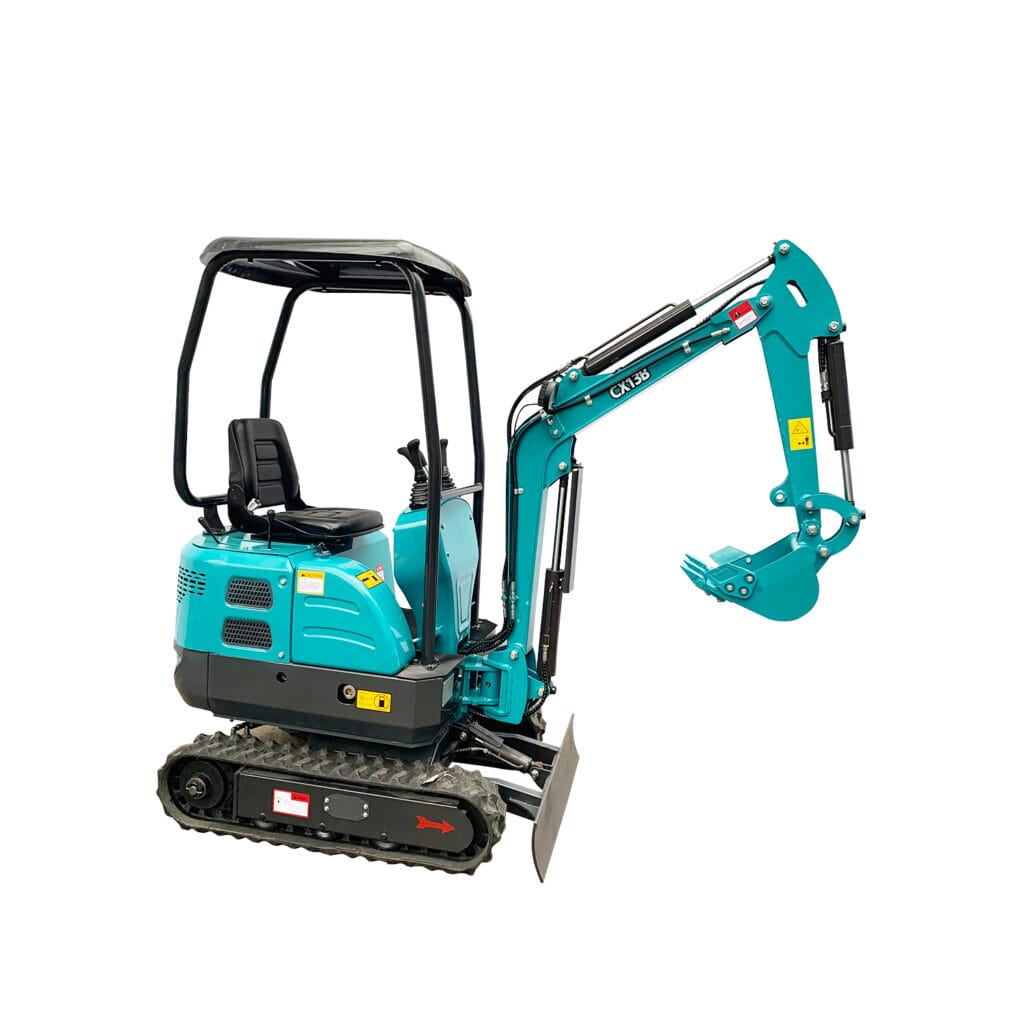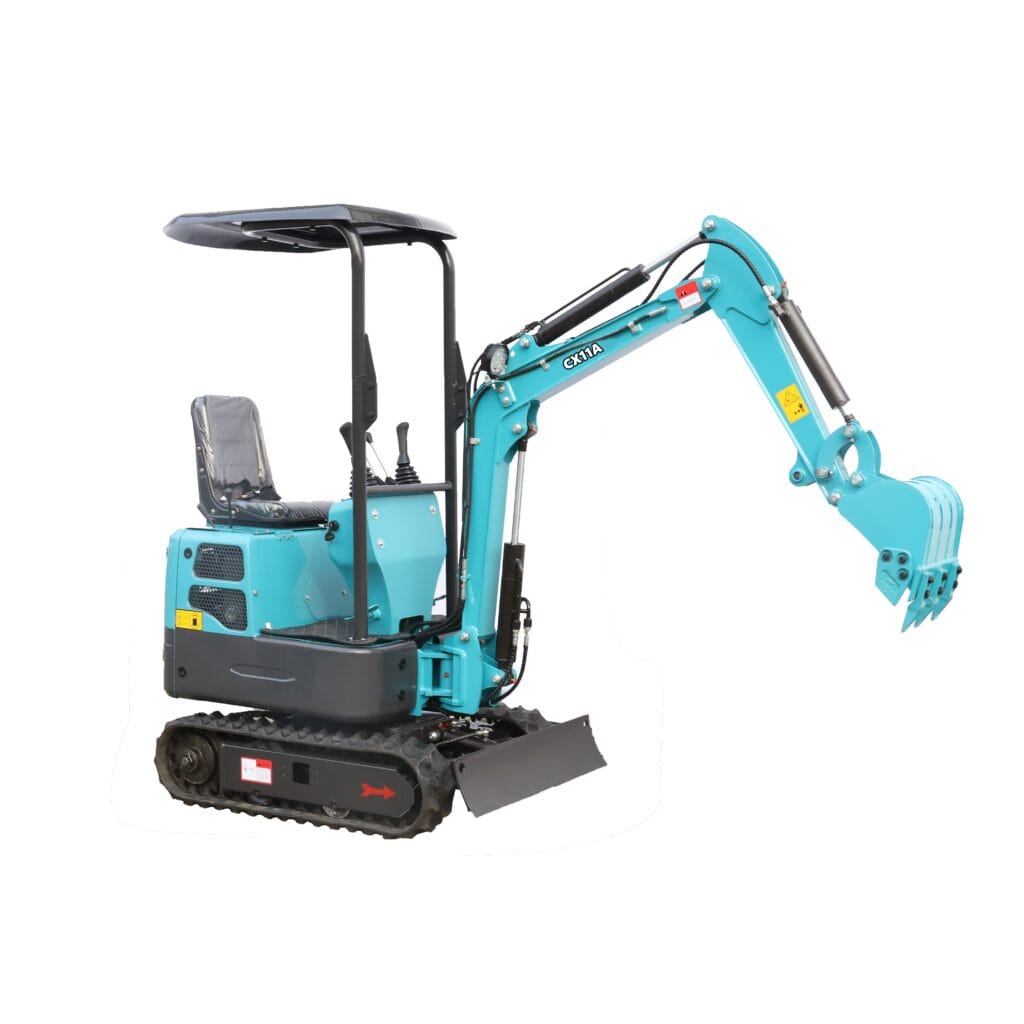

In the context of modern agriculture’s trend towards precision and intensive farming, greenhouses, as the core cultivation platform for high-value crops, demand stringent requirements for the flexibility, precision, and low-impact nature of operating equipment. Mini excavators, with their compact size, multi-functional adaptability, and low consumption and high efficiency, have become the ideal equipment for the entire process of greenhouse preparation, planting, and maintenance.
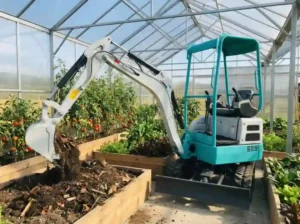
Adaptability of Mini Excavators to Greenhouse Operations
Mini excavators are particularly well-suited for greenhouse operations. Their compact size saves space and allows for flexible movement in narrow aisles. The tracks minimize damage to the ground and do not disrupt soil structure, making operation flexible and convenient. Furthermore, they are equipped with engines that meet Euro 5/EPA emission standards, resulting in low noise and pollution, making them suitable for prolonged operation even in enclosed greenhouses. The low operating threshold means even novices can quickly learn to use them. With different attachments, they can easily cover all greenhouse operation scenarios, from infrastructure construction and land preparation to daily maintenance.
From Confined Spaces to Increased Productivity
Daily Maintenance and Facility Upgrades
After harvesting, the mini excavator can quickly clear debris from the greenhouse and then use the dozer blade to level the ground, preparing for the next planting cycle. For facility upgrades, a breaker attachment can be used to break up old flooring, and it can also assist in replacing greenhouse frames and repairing facilities, saving time and increasing efficiency.
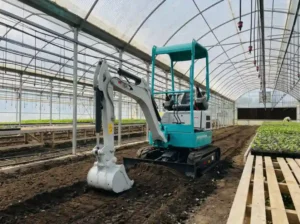
Greenhouse Infrastructure and Soil Preparation
Mini excavators are excellent helpers for greenhouse infrastructure and soil preparation. A rotary tiller attachment can be used for deep plowing and breaking up compacted soil, and mixing in organic fertilizer for improved fertility. A ridging attachment can create neat planting ridges, and can also be used to dig trenches outside the greenhouse to reinforce the foundation and prevent rainwater backflow.
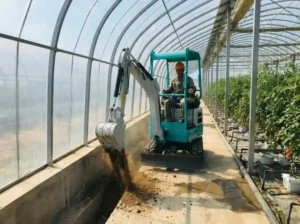
Crop Planting and Transplanting Assistance
When planting fruit trees and seedlings, the mini excavator digs holes of consistent size, saving considerable labor compared to manual digging. During transplanting, a grapple attachment can be used to stably move seedlings, allowing for precise placement and protecting the root system, resulting in a higher survival rate.
Recommended Key Attachments for Greenhouse Operations
Auger Drill: The Key to a Revolution in Efficiency
As an essential tool for modern greenhouses, its core value lies in the efficient drilling of holes for the support posts of trellising systems for vine crops (such as tomatoes and cucumbers). It can complete in minutes what would take hours manually, and its drilling depth, verticality, and consistency far surpass manual methods, making it an irreplaceable tool for improving planting standardization and efficiency.
Narrow Bucket: Achieving Planting Standardization
Designed specifically for excavating planting trenches, fertilization trenches, and drainage ditches. Its width matches standard row spacing, allowing for the creation of trenches with uniform depth and neat walls in a single pass, laying the foundation for precise sowing, irrigation, and fertilization. It is a core tool for standardizing agricultural operations and improving land utilization.
Standard General-Purpose Bucket: The Mainstay of Multifunctional Operations
Handles most basic operations in greenhouses, including earthmoving, site leveling, substrate backfilling, and daily cleaning. As the most frequently used attachment, it is the foundation for the excavator’s versatility and flexibility, meeting diverse daily needs.
Soil Ripper: The Deep-Level Manager of Soil Health
Specifically designed to address soil compaction caused by continuous cropping and mechanical compaction. Its unique structure allows for deep loosening of the soil, effectively breaking up the plow pan, significantly improving soil aeration and permeability, without disturbing the fertile topsoil layer, creating an ideal environment for root growth.
Hydraulic Quick Coupler: The Hub for Increasing Return on Investment
This device allows operators to safely switch between different attachments in 1-2 minutes without leaving the cab. It is the core component that transforms a single excavator into a multifunctional work platform, greatly reducing equipment downtime and is a key investment for maximizing machine utilization and shortening the return on investment cycle.
Summary
Choosing the right mini excavator and configuring it with appropriate attachments is a wise investment that can yield significant returns within 1-2 production seasons.
Tags:mini excavator;auger drill;narrow bucket;standard general-purpose bucket;soil ripper;Mini excavator attachments;hydraulic quick coupler
FAQ
How much does a mini excavator cost?
Mini excavator prices generally range from USD 5,000 to USD 30,000, depending on size, configuration, brand, and optional features. Additional costs may include freight, taxes, and local handling fees.
How wide is a mini excavator?
Most mini excavators measure between 700 mm and 1,600 mm in width. Many compact models feature adjustable tracks that allow the machine to access narrow spaces while providing stability during operation.
How much can a mini excavator lift?
Lifting capacity varies by model and operating weight. Standard mini excavators can typically lift 300 kg to 1,000 kg at close range. Larger models may offer higher capacity, though lifting performance decreases as working distance increases.
How deep can a mini excavator dig?
Depending on boom design and machine size, typical digging depths range from 1.5 m to 3.5 m. This depth is suitable for landscaping, utility trenching, small construction projects, and general site preparation.
How hard is it to operate a mini excavator?
Mini excavators are considered easy to learn and operate. Basic controls can be mastered quickly with proper instruction, while advanced control and precision improve with experience. Operators benefit from safety training and familiarity with on-site working conditions.